ABOUT THIS RECIPEGinger at just the right moment
Shōgayaki roughly means ‘cooked with ginger’. In Japan, it’s known as a practical pork dish whose flavor comes mainly from fresh ginger and a simple combination of soy sauce, sake and mirin. There are many home-style versions; the slices of meat, ginger flavor and quick cooking are the familiar foundation. The sauce is savory, slightly sweet and aromatic all at once, without the meat needing to simmer for long.
Thinly sliced pork is important for getting the timing right. Slices about two to three millimeters thick cook quickly and can brown briefly in a hot pan. Ask your butcher for thin slices of pork shoulder or pork tenderloin for stir-frying; if the meat is too thick, it’s harder to keep it tender while the sauce reduces. Cook in two batches if needed. An overcrowded pan cools down and makes the meat release moisture rather than brown.
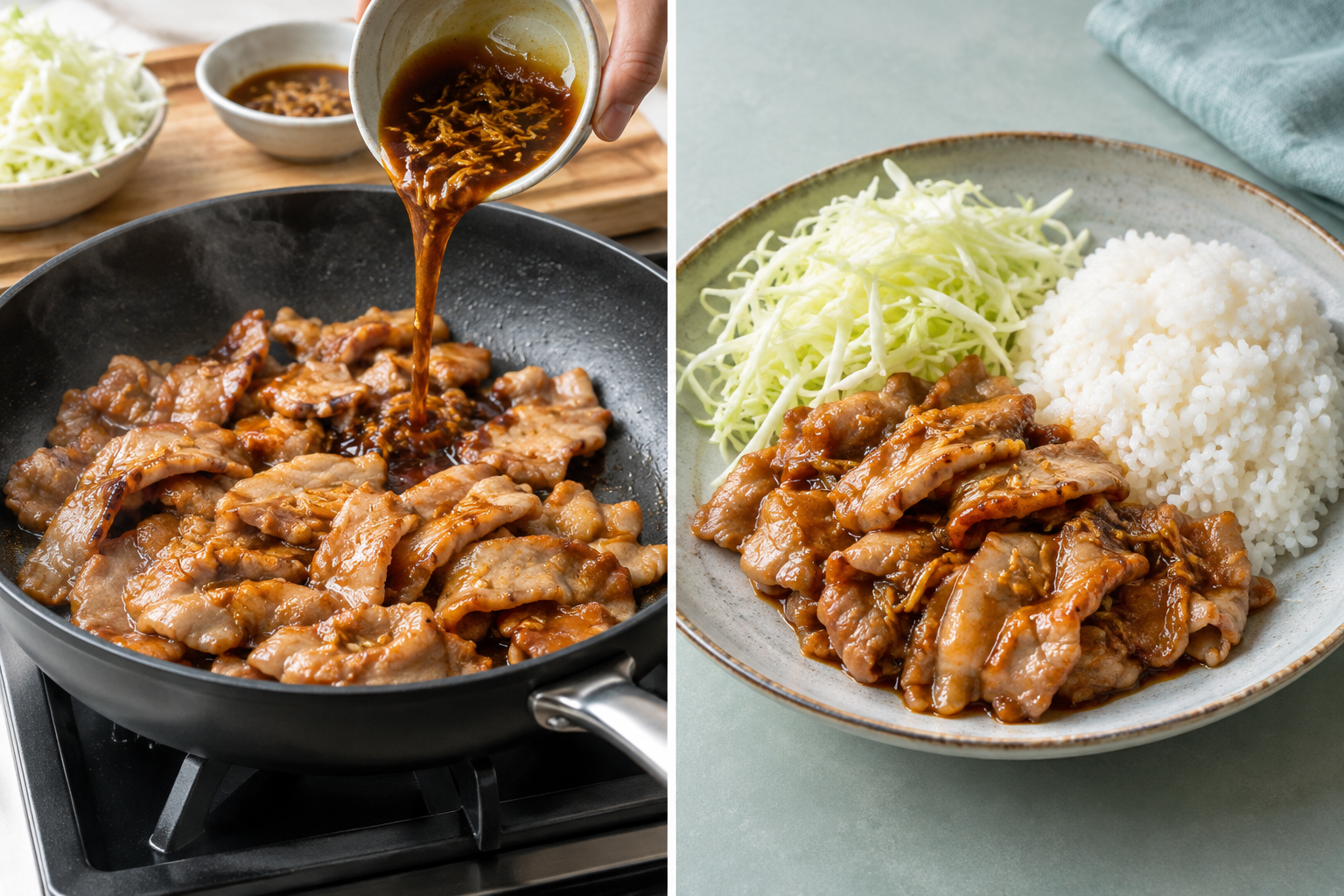
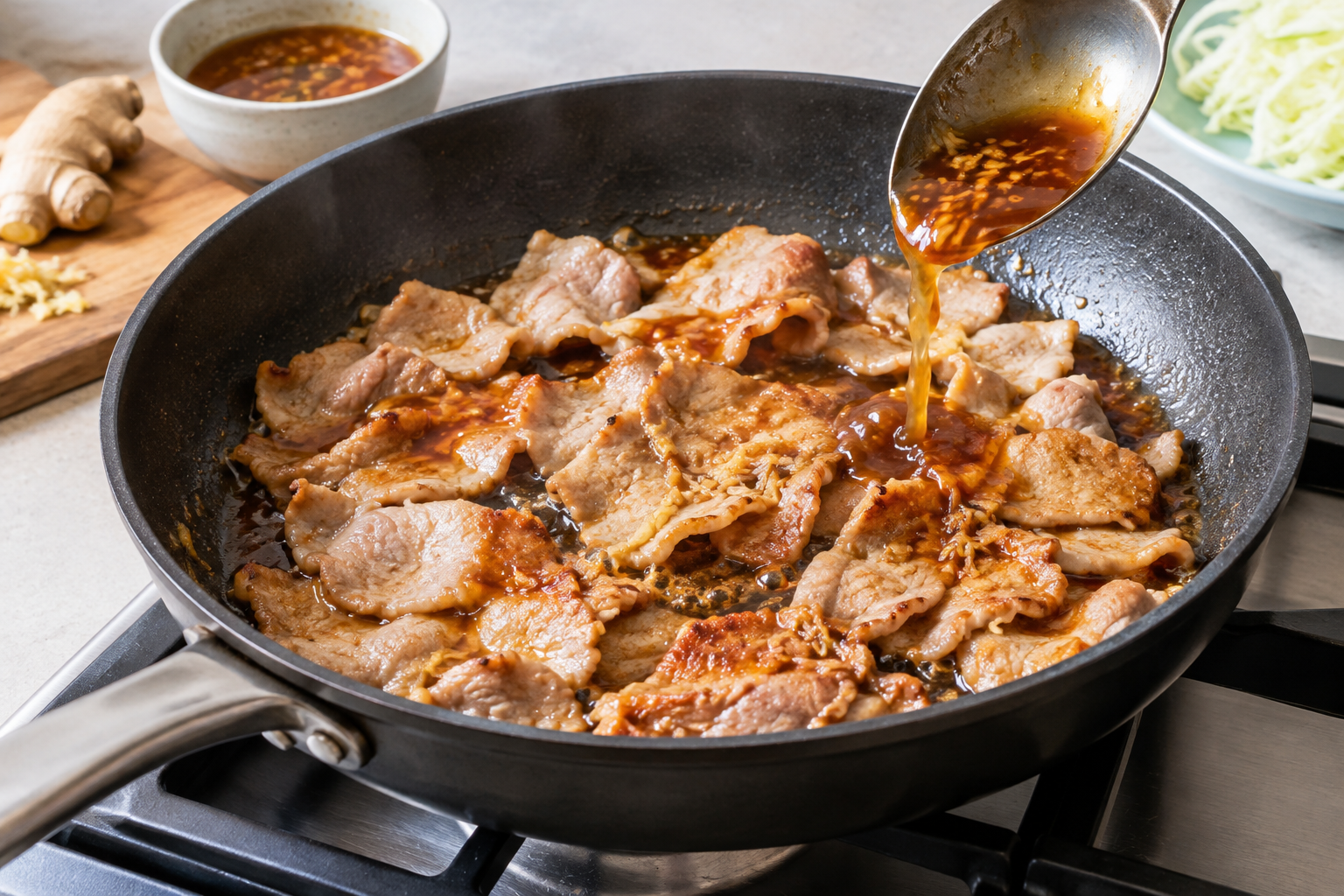
Finely grate the ginger so its sharp, fresh flavor is evenly distributed through the sauce. Fresh ginger brings more brightness than dried ginger powder. Mix the sauce ahead of time and add it to the meat only when the slices are nearly cooked through. The sake and mirin partly evaporate as the sauce reduces briefly, making it glossy and allowing it to cling to the meat. Don’t let it simmer for long, or it may become too salty or syrupy. Mirin is a sweet rice wine used for cooking; don’t substitute seasoned rice vinegar.
For an alcohol-free version, you can replace the sake with water and the mirin with a smaller amount of water and a pinch of sugar. The flavor will be a little less complex, but the ginger and soy sauce will still come through clearly. It’s best not to add extra salt to the sauce: the soy sauce provides plenty of savoriness already. A neutral oil such as sunflower or rapeseed oil works well for frying the meat.
Serve the pork with warm Japanese short-grain rice and thinly sliced white cabbage. The rice soaks up the sauce, while the raw cabbage provides a cool, crisp contrast. Slice the cabbage as thinly as possible with a sharp knife and keep it cool until serving. Bring everything to the table as soon as the meat is ready; it cooks quickly, and the texture is best when the sauce hasn’t been left on the heat for long.
 Main course

