ABOUT THIS RECIPEThe right balance of cookie and syrup
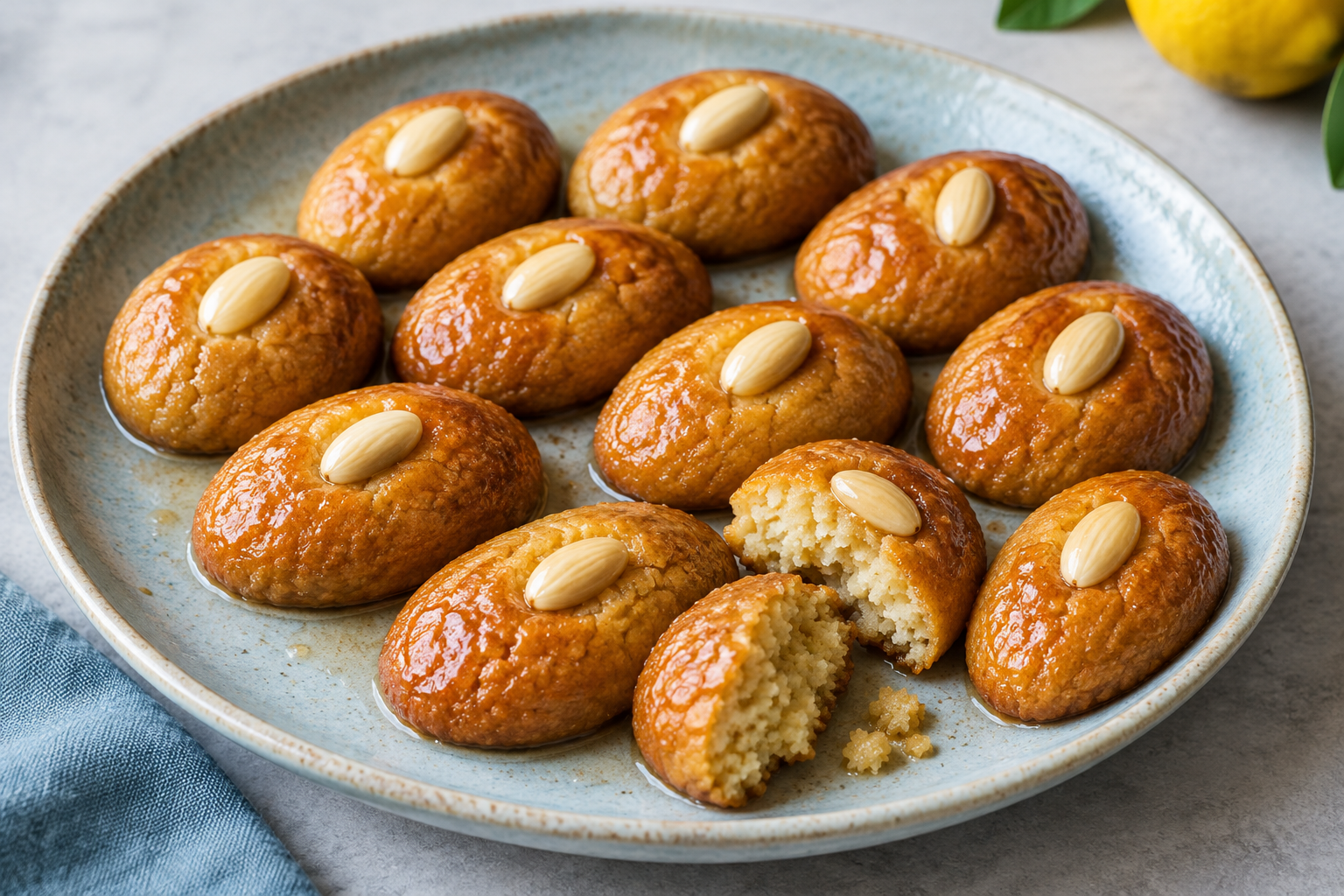
Şekerpare roughly means “a piece of sweetness” and refers to small baked cookies that soak up syrup after baking. They’re part of Turkey’s tradition of sweets, where syrup-soaked pastries come in many forms. This recipe sticks to a familiar combination of butter, flour, semolina and almonds. These aren’t meant to be crisp shortbread cookies: the outside turns golden in the oven, while the crumb stays soft and later holds on to some of the syrup.
Fine semolina gives the dough a subtly grainy bite and a different texture from a cookie made with flour alone. Use fine semolina, not the coarse kind used for porridge or couscous; coarse semolina makes the dough harder to shape evenly. Soft butter mixes easily into the dough, but melted butter can make the cookies flatter and greasier. Knead only until the dough comes together. Kneading for too long develops the gluten in the flour and can make the cookies firmer than you want.
The syrup is simple: sugar, water and lemon. Lemon cuts through the sweetness and helps keep the syrup bright in flavor. Let it cool while the cookies bake. Pouring cold or lukewarm syrup over cookies straight from the oven lets them absorb moisture without immediately losing their shape. Don’t move them after pouring; give them time to absorb the syrup. The exact amount they soak up can vary a little depending on the size of the cookies and how long they’ve baked.
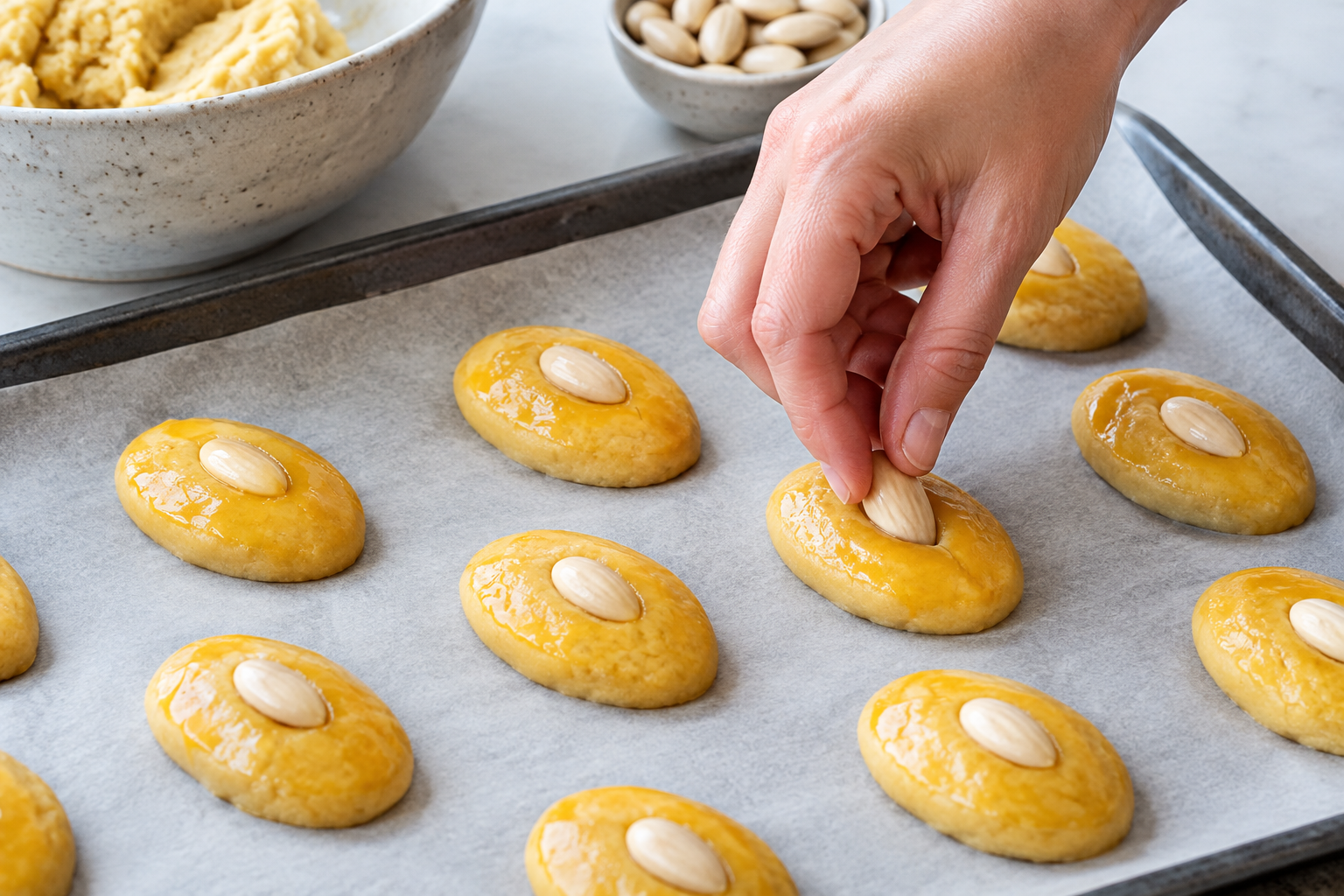
A blanched almond is a classic, simple topping that stands out against the golden surface. If you only have unblanched almonds, you can use those; the flavor is similar, though the cookies will look a little different. Serve şekerpare at room temperature with strong coffee or tea. Arrange them in a single layer in an airtight container in the refrigerator and use within three days; their texture will generally become a little softer. Let them come to room temperature before serving so the butter and syrup don’t feel hard.
 Main course

