ABOUT THIS RECIPEA Light Broth with Tender Cauliflower
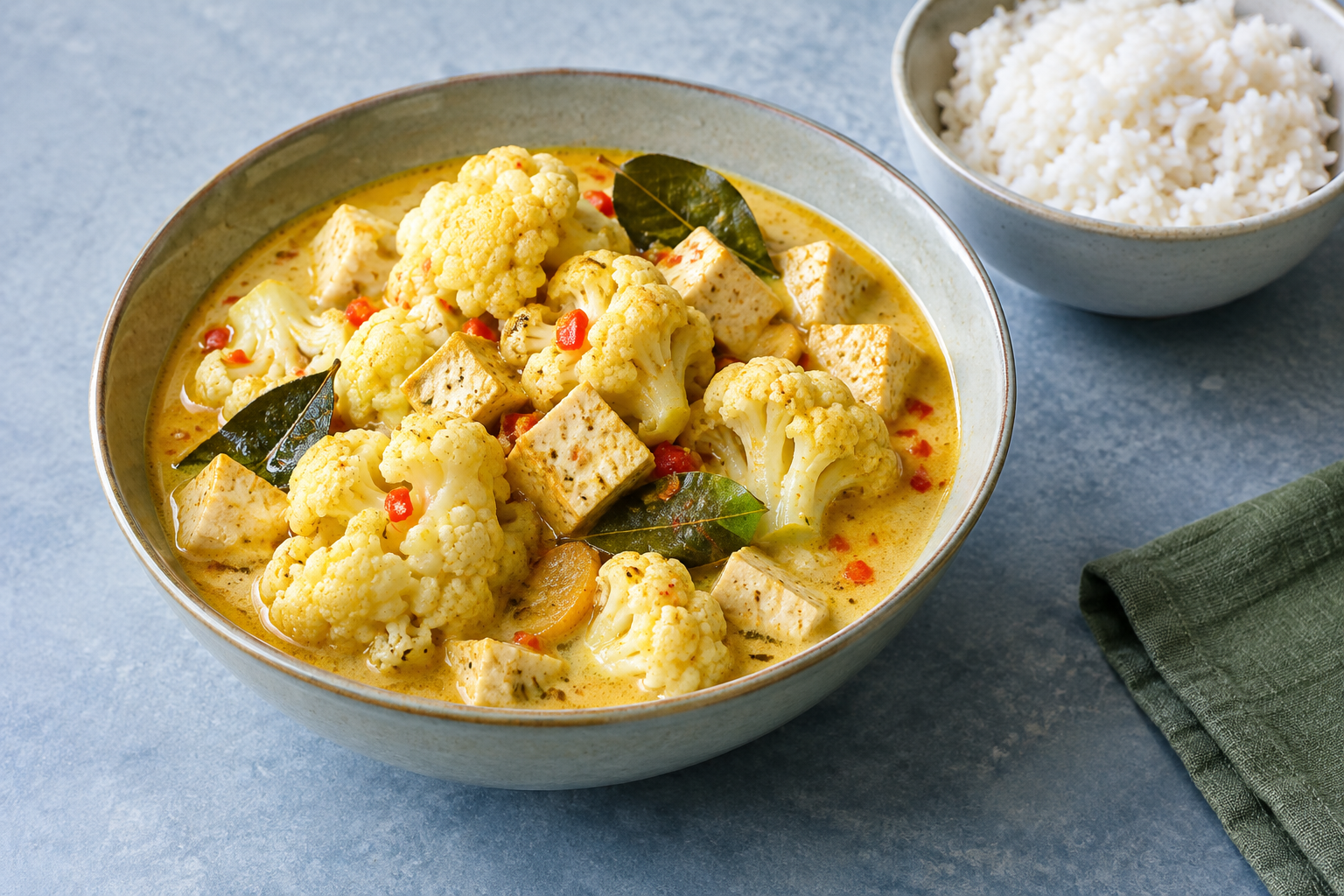
Sayur lodeh is an Indonesian vegetable stew in which vegetables gently cook in a spiced coconut broth. The exact ingredients vary from cook to cook and from region to region; there is no single set mix of vegetables. In this version, the selection is deliberately simple: cauliflower is the main ingredient, tofu makes the dish more substantial, and the broth stays thin enough to spoon over rice. The flavor is savory and aromatic, with gentle warmth from the chili and a soft, creamy note from the coconut.
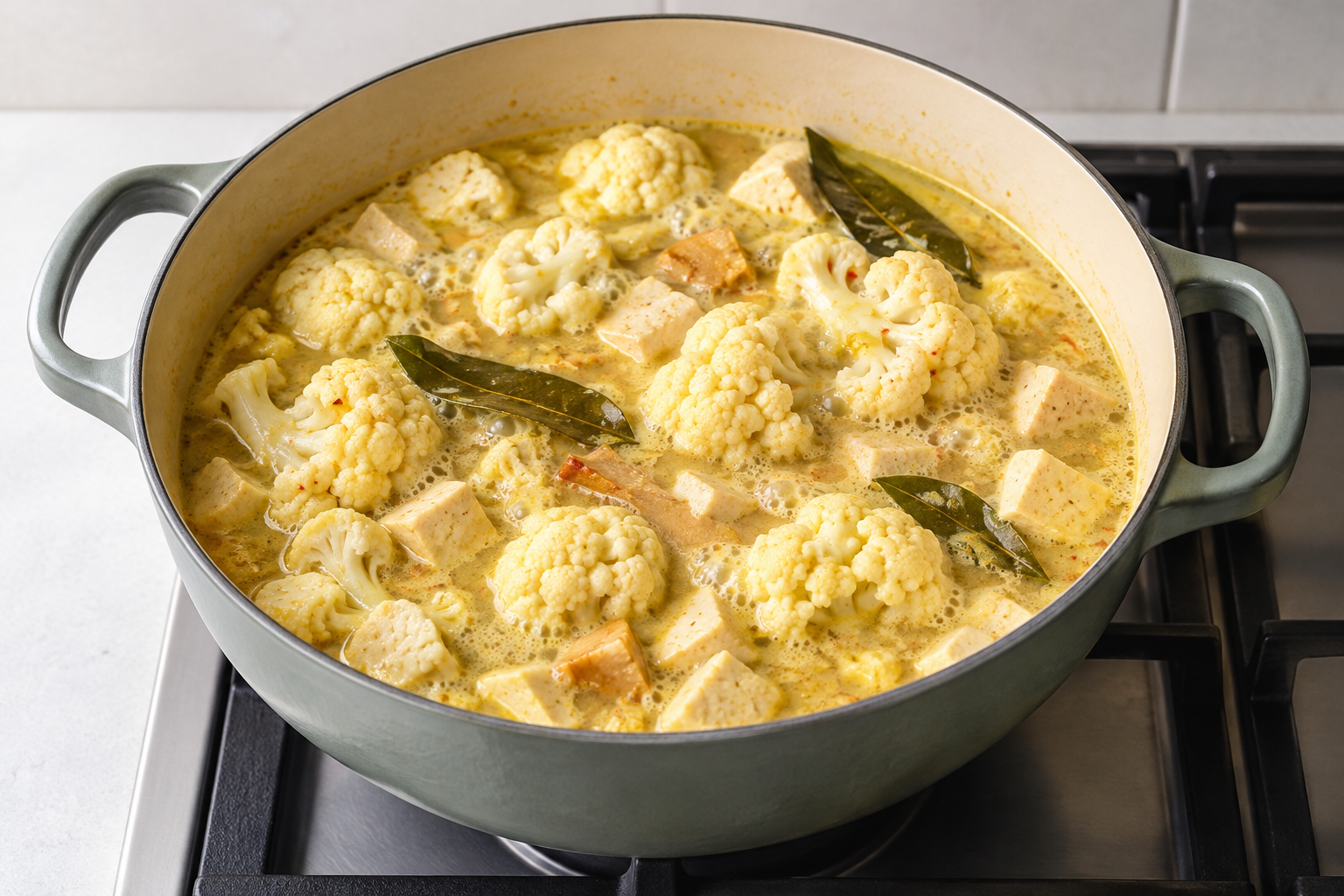
Cut the cauliflower into generous florets, keeping them roughly the same size so they cook evenly and don’t fall apart right away. First fry the spice paste of shallot, garlic, chili, candlenuts and coriander seeds in oil. This is important: the raw, sharp smell fades, and the spices release their aroma into the oil. Add the galangal and salam leaves, then pour in the coconut milk and water. Let the pan simmer gently; boiling hard can break up the cauliflower and make the broth cloudy.
In the Netherlands, cauliflower is most plentiful locally during the cooler months, but it is available year-round. Choose a firm head with compact florets. Fresh galangal and salam leaves can be found at Asian grocery stores; frozen salam leaves work too. If salam leaves aren’t available, leave them out rather than replacing them with a completely different herb. Candlenuts give the spice paste body. If you don’t have any, use a small amount of unsalted cashew nuts, or leave them out; the flavor will be a little less rounded. Adjust the amount of chili to suit your own preference.
Use firm tofu, such as plain block tofu, so the cubes hold their shape in the pan. Lightly frying it can add extra color, but it isn’t necessary for this stew. If you want an even lighter broth, replace some of the coconut milk with water; it’s best not to add more coconut milk, as that would make the cauliflower less prominent. A pinch of sugar balances the flavors, while salt seasons the broth.
Serve the sayur lodeh with cooked white rice and spoon plenty of broth over it. You can serve a fresh vegetable or a spicy sambal on the side, but the dish is complete without any extras too. Cover leftovers and refrigerate them within two hours, then use within two days. Reheat gently in a pan until piping hot throughout; stir carefully so the cauliflower florets stay whole.
 Main course

