ABOUT THIS RECIPEA gentle base with fresh contrasts
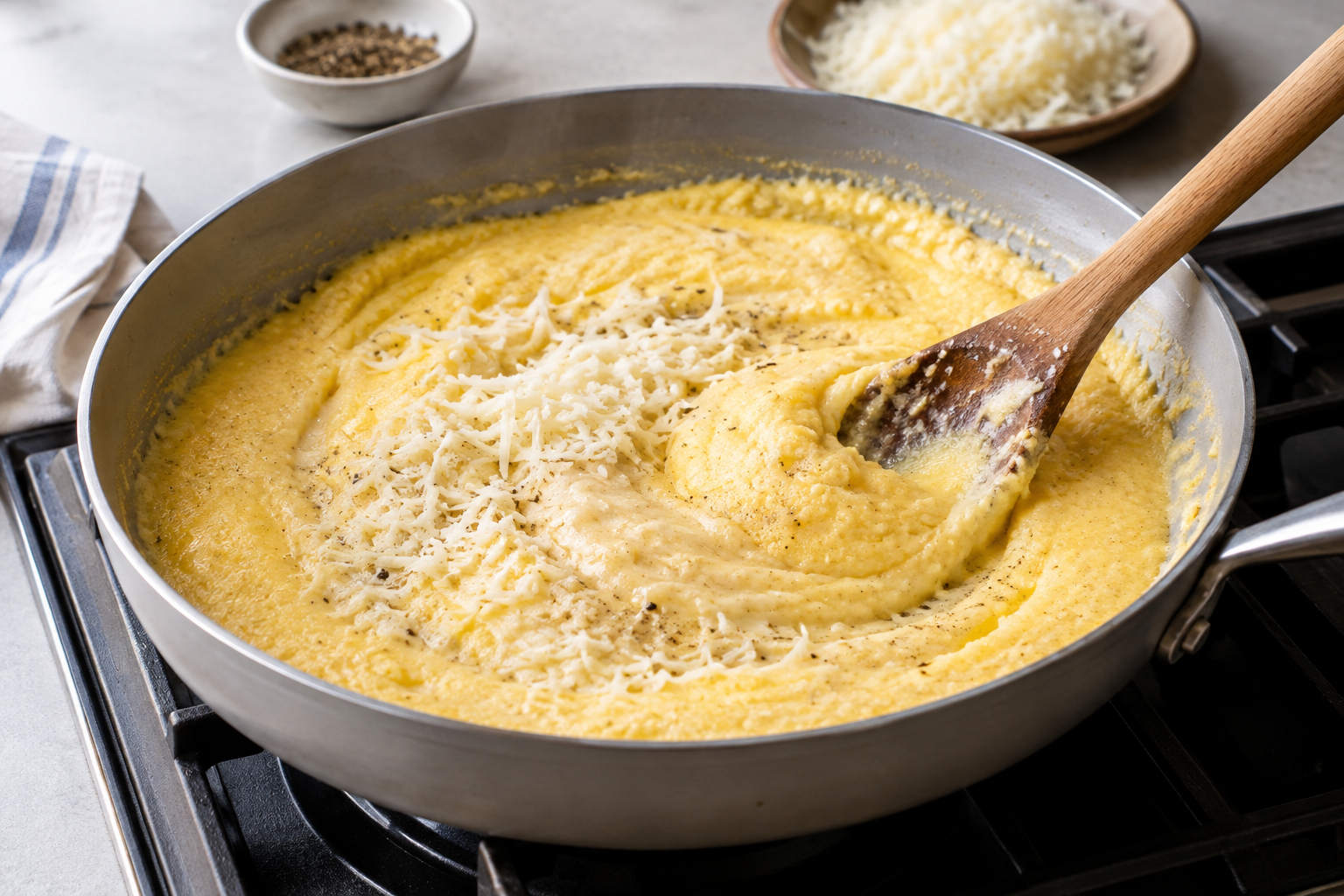
Polenta is cornmeal cooked with liquid until it becomes a soft porridge or a firmer mixture. For this breakfast, the goal is a creamy version: the polenta should stay warm and spoonable, so the yolk and tomato juices can mix into it. Use quick-cooking polenta if you want to serve quickly; cooking times vary by brand, so follow the package instructions. Regular polenta may take longer and needs frequent stirring. If the porridge gets too thick, add a splash of hot water as it cooks.
Water keeps the flavor bright and lets the Parmesan shine. Replacing some of the water with milk gives you a softer, richer base, but it isn’t necessary. Stir the cheese into the cooked polenta: this way it melts evenly without sticking to the bottom. Black pepper adds warmth and a little bite. Parmesan is salty, so taste before adding extra salt. A little butter makes the texture smoother; leave it out if you prefer a less rich polenta.
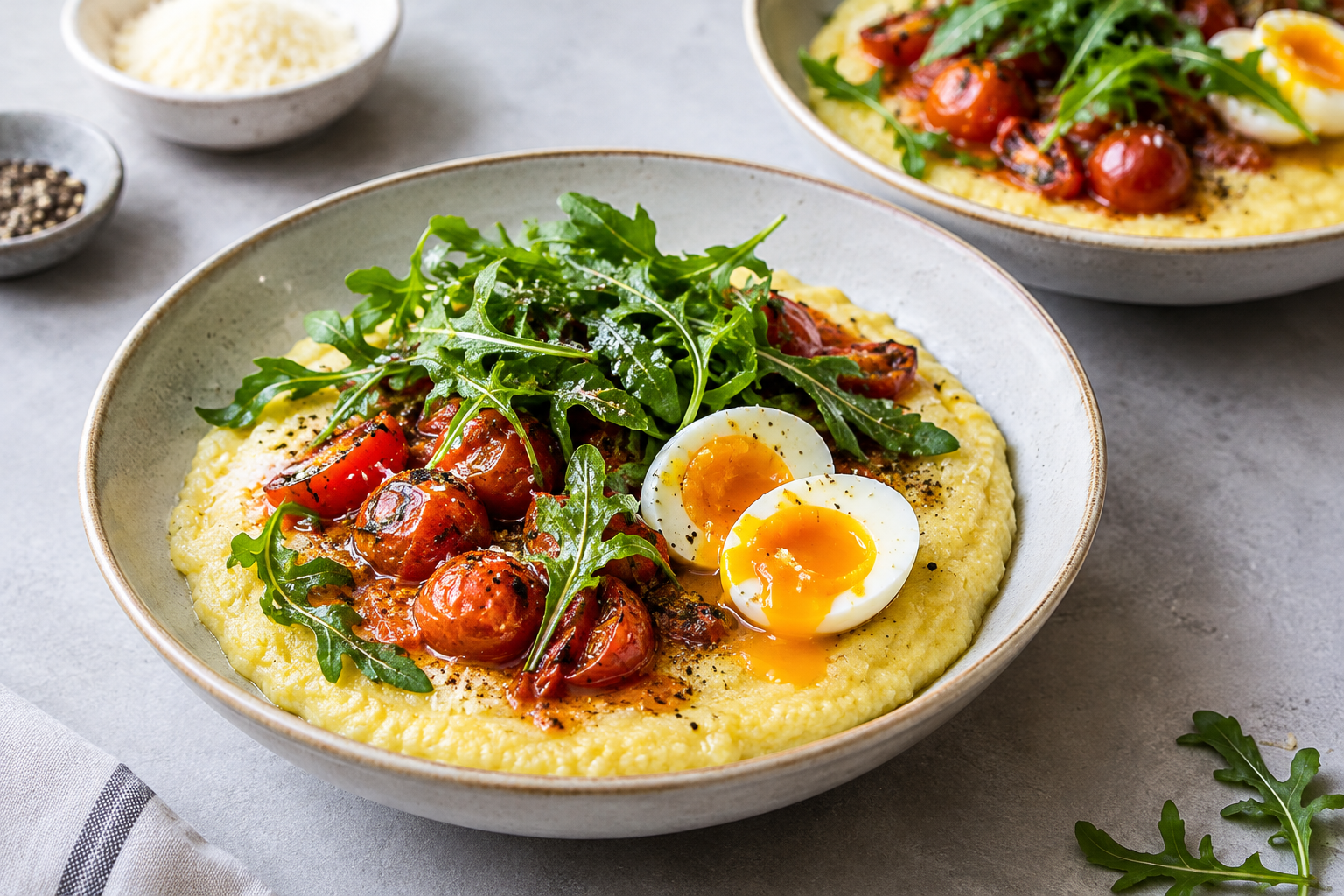
Roast small tomatoes in a hot oven until their skins start to wrinkle and they release their juices. Their concentrated, slightly sweet flavor works well with the savory cheese. Halve larger tomatoes so they cook at roughly the same time. Ripe tomatoes are often easier to find in summer, but firm cherry tomatoes work all year round. The garlic roasts alongside them and becomes milder in flavor; finely chop the clove and scatter it over the tomatoes so it doesn’t burn in one spot.
The egg is an important part of the sauce: a soft-boiled egg with a still-runny yolk mixes with the polenta as soon as you cut into it. After cooking, briefly plunge the eggs into cold water; this stops them cooking and makes them easier to peel. Keep size and fridge temperature in mind: a large egg generally needs about six to seven minutes in boiling water for a soft yolk. If you don’t want a runny yolk, cook the egg a little longer.
Arugula and lemon keep every bite fresh. Toss the leaves with lemon juice and olive oil just before serving so they don’t wilt. You can replace the arugula with baby spinach or watercress; the latter is pepperier, while spinach has a milder flavor. Serve the bowls right away, while the polenta is warm and smooth. A little extra black pepper and the roasted tomato juices are all you need; bread isn’t necessary, but a crisp slice of sourdough goes well if you’d like a heartier breakfast.
 Main course

