ABOUT THIS RECIPEThe Art of Gentle Frying
Salsa macha is a Mexican sauce made with dried chilies and oil, with many variations featuring different nuts, seeds and seasonings. In this version, peanuts bring a toasted, hearty bite, while sesame adds a lightly nutty flavor. Guajillo lends depth; small, fiery árbol chilies bring the heat. You can adjust the proportions: use fewer árbol chilies for a milder sauce, or add one more if you want more heat.
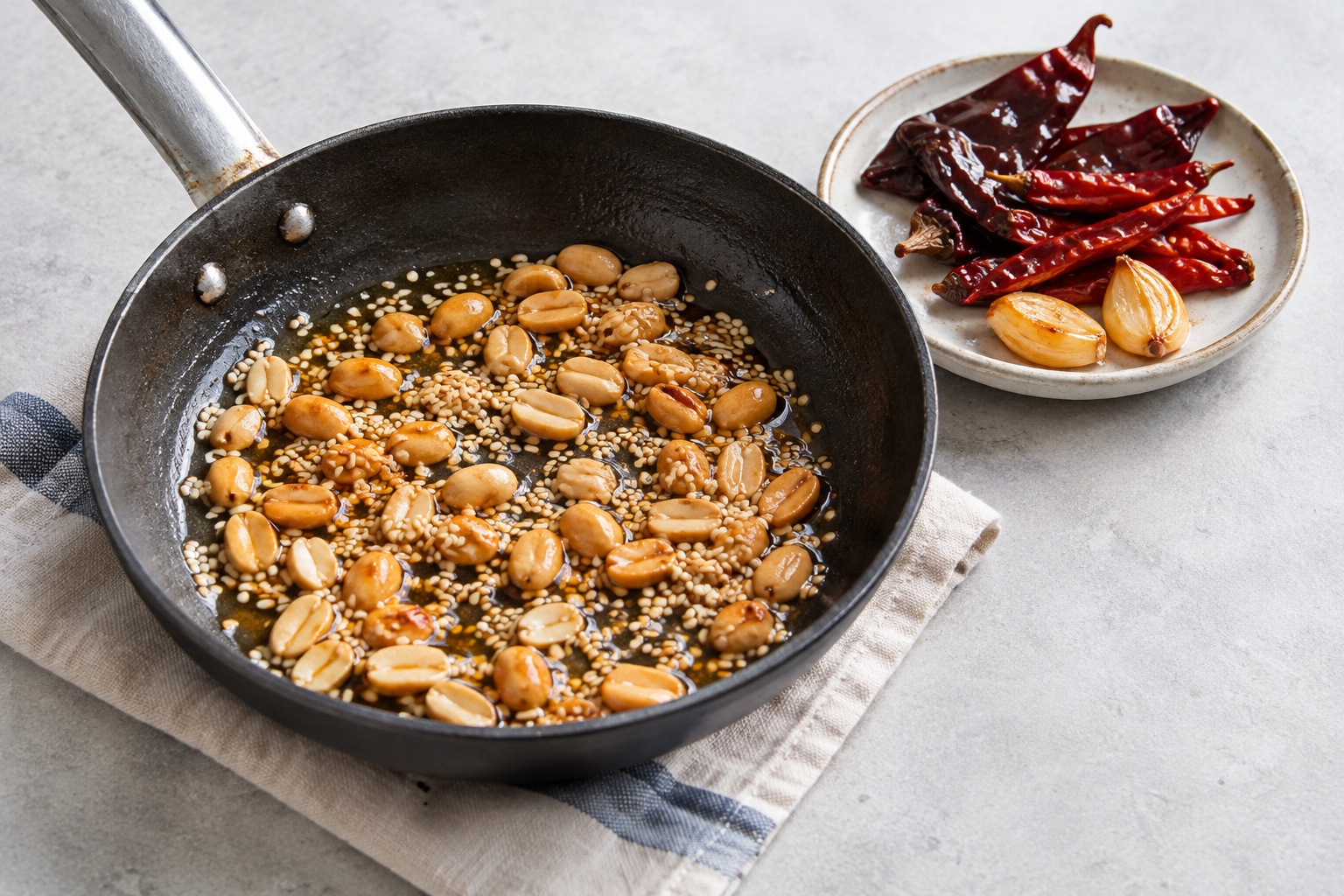
The key technique is gentle frying, not deep-frying at high heat. Dried chilies color and become fragrant quickly, but turn bitter if they fry for too long. So warm the oil over low heat and remove the chilies as soon as they smell fragrant and become just a little darker. Peanuts and garlic take longer; sesame seeds need very little time. Frying the ingredients one after another in the same oil lets it absorb their aromas and form the base of the sauce.
Let the oil cool first before roughly grinding everything with a mortar and pestle. A mortar gives you control over the texture: keep the peanuts and sesame recognizable, and don’t grind the chilies into a powder. Don’t have a mortar and pestle? Chop the fried ingredients with a knife and stir them into the oil. For a different nutty variation, replace some of the peanuts with almonds, but leave the sesame in for its distinctive flavor and little crunchy seeds.
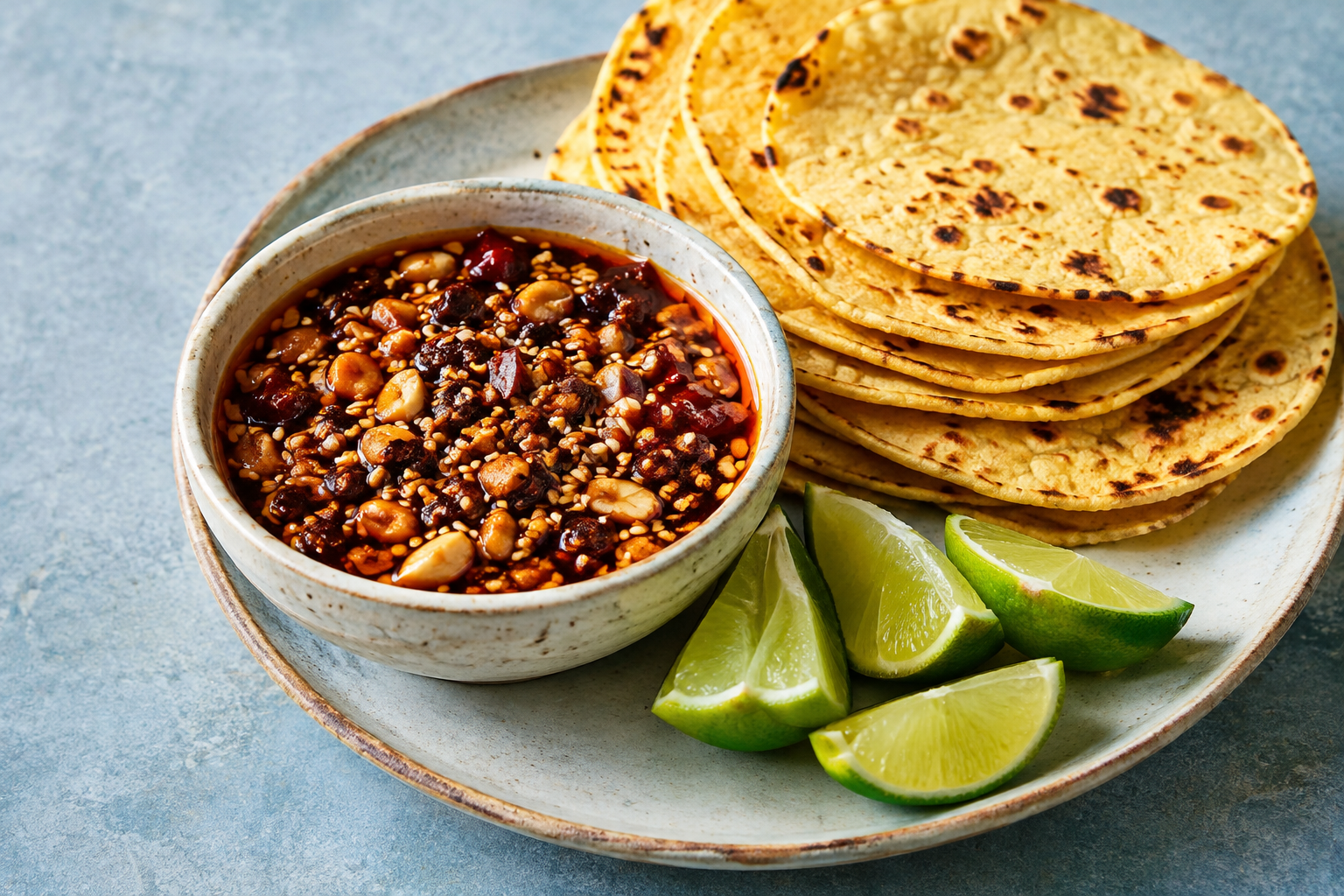
Serve the salsa with warm corn tortillas and lime wedges. The fresh citrus livens up the oily sauce; squeeze the lime over it to taste rather than mixing it into the whole jar ahead of time. Salsa macha also goes well with grilled vegetables, fried eggs or beans. Spoon up both the chili-and-nut mixture and some of the oil when serving, so every bite has a mix of textures.
Store leftovers in a clean, sealed jar in the refrigerator and use within four days. Don’t leave the sauce at room temperature for an extended period, as it contains fried garlic. Use a clean spoon to serve it, and don’t return any portion you’ve served to the jar. Give it a quick stir before using: the nuts and seeds settle at the bottom.
 Main course

