ABOUT THIS RECIPEA light crust, fresh contrasts
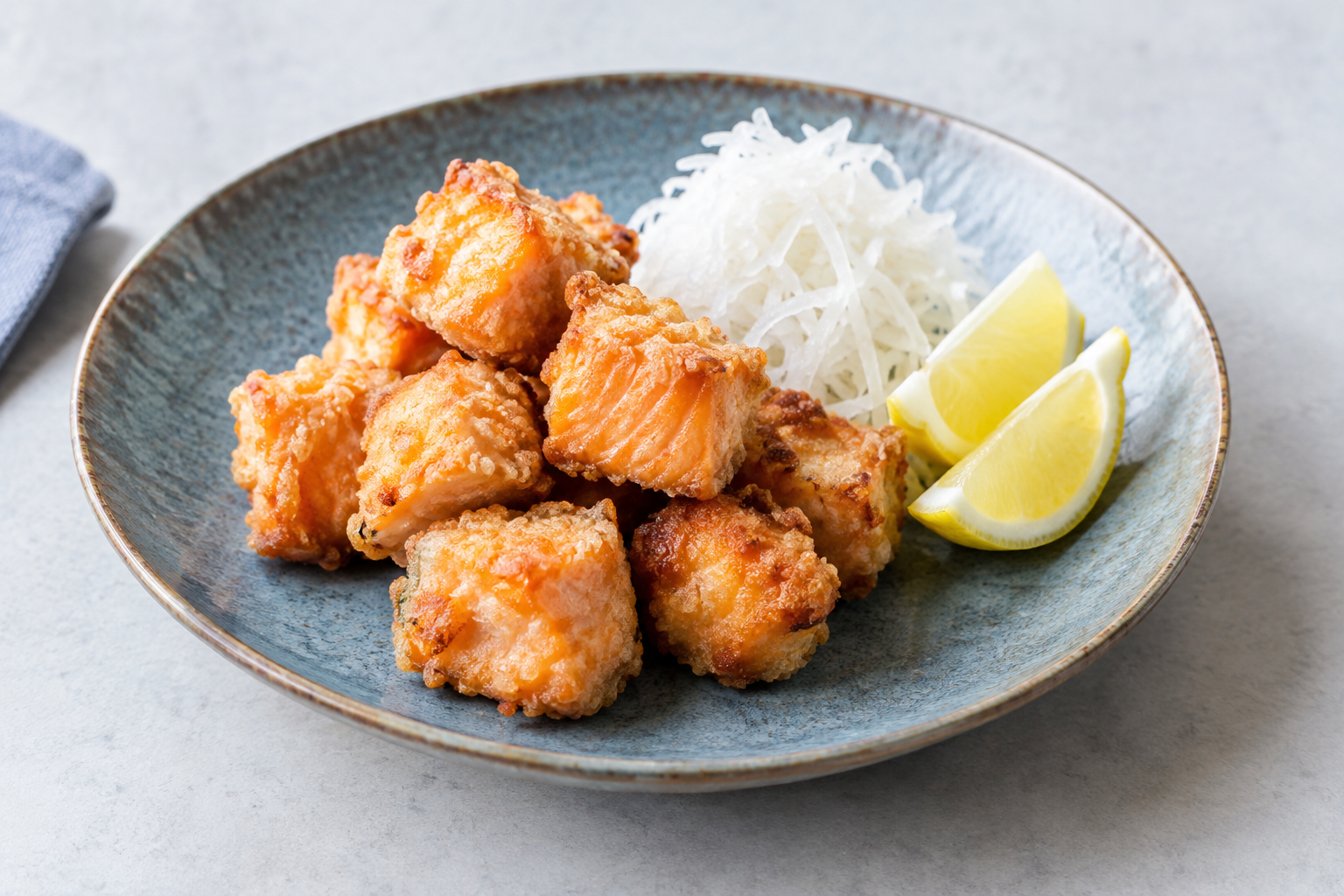
Tatsuta-age is a Japanese cooking method in which marinated ingredients are dusted with starch and deep-fried. The name refers to a technique, not one particular type of fish: chicken is a well-known version, but fish can be prepared this way too. For this version, salmon cut into chunks about three centimetres across is practical. It cooks quickly, and the pieces are large enough to stay juicy inside while turning crisp on the outside.
The marinade is deliberately short and simple. Soy sauce adds salt and umami, sake brings a gentle, lightly aromatic note, and fresh ginger adds a little heat. Ten minutes is enough to flavour the outside; marinating for longer makes the fish saltier and can make its texture less firm. After draining, carefully pat the chunks dry before coating them in potato starch. A dry surface helps form a thin crust rather than a sticky coating.
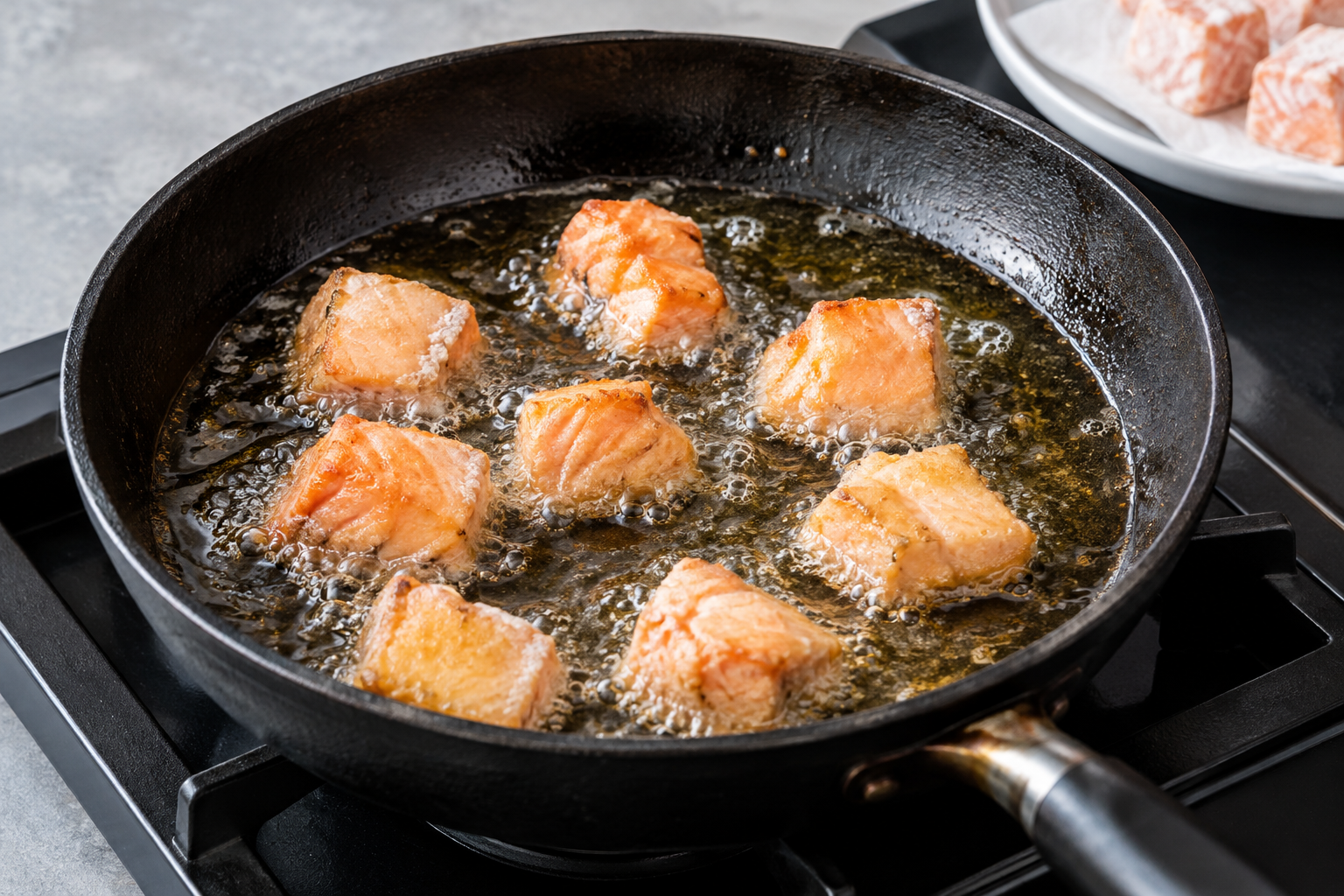
Potato starch, also sold as katakuriko, gives a light, crisp crust and is commonly used for tatsuta-age. Cornstarch is a useful alternative, though the crust may turn out a little differently. Don’t use a thick coating: shake off the excess starch and fry the salmon straight away. Keep the oil around 170 °C. Oil that’s too cool makes the crust greasy, while a much higher temperature browns the outside quickly before the fish cooks evenly. Fry in small batches so the temperature doesn’t drop too much.
Daikon adds a juicy, mildly sharp note that goes well with rich salmon. Grate the radish just before serving and, if you like, squeeze out a little of the liquid; this prevents it from pooling over the crisp coating. Lemon isn’t a required substitute for a particular Japanese citrus, but it works here as an easy-to-find fresh contrast. Serve both on the side or alongside the salmon, so everyone can add as much as they like.
Serve the salmon as soon as it’s fried: that’s when the crust is at its best. Serve it as a side dish with rice and a simple vegetable, or add small portions to a Japanese meal with several dishes. Leftovers can be refrigerated within two hours and reheated until piping hot within two days; the crust will be less crisp. Reheating in an oven or air fryer helps dry the outside better than reheating in the microwave.
 Main course

