ABOUT THIS RECIPETangy, savory and golden brown
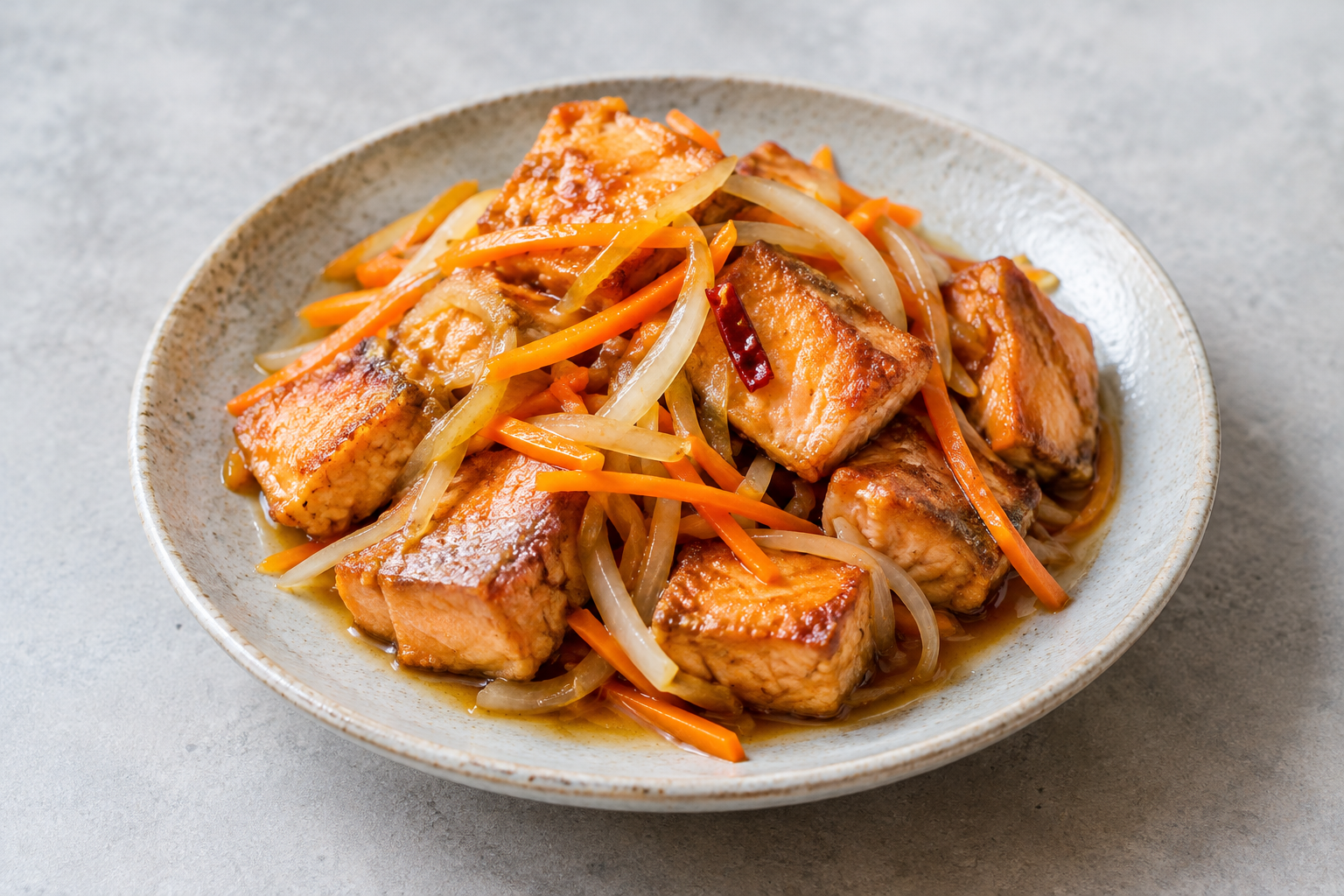
Nanbanzuke is a Japanese cooking method where fried fish is left to soak in a tangy marinade. For this version, we use salmon, rice vinegar, soy sauce and a little sugar, with thin strips of onion and carrot. Each ingredient has a purpose: the vinegar brightens the rich fish, while the soy sauce adds savoriness and the sugar rounds off the sharp edge. The vegetables soak up the marinade but still retain a little bite after a short marinating time. A dried chili adds gentle heat; leave it out if you prefer a mild marinade.
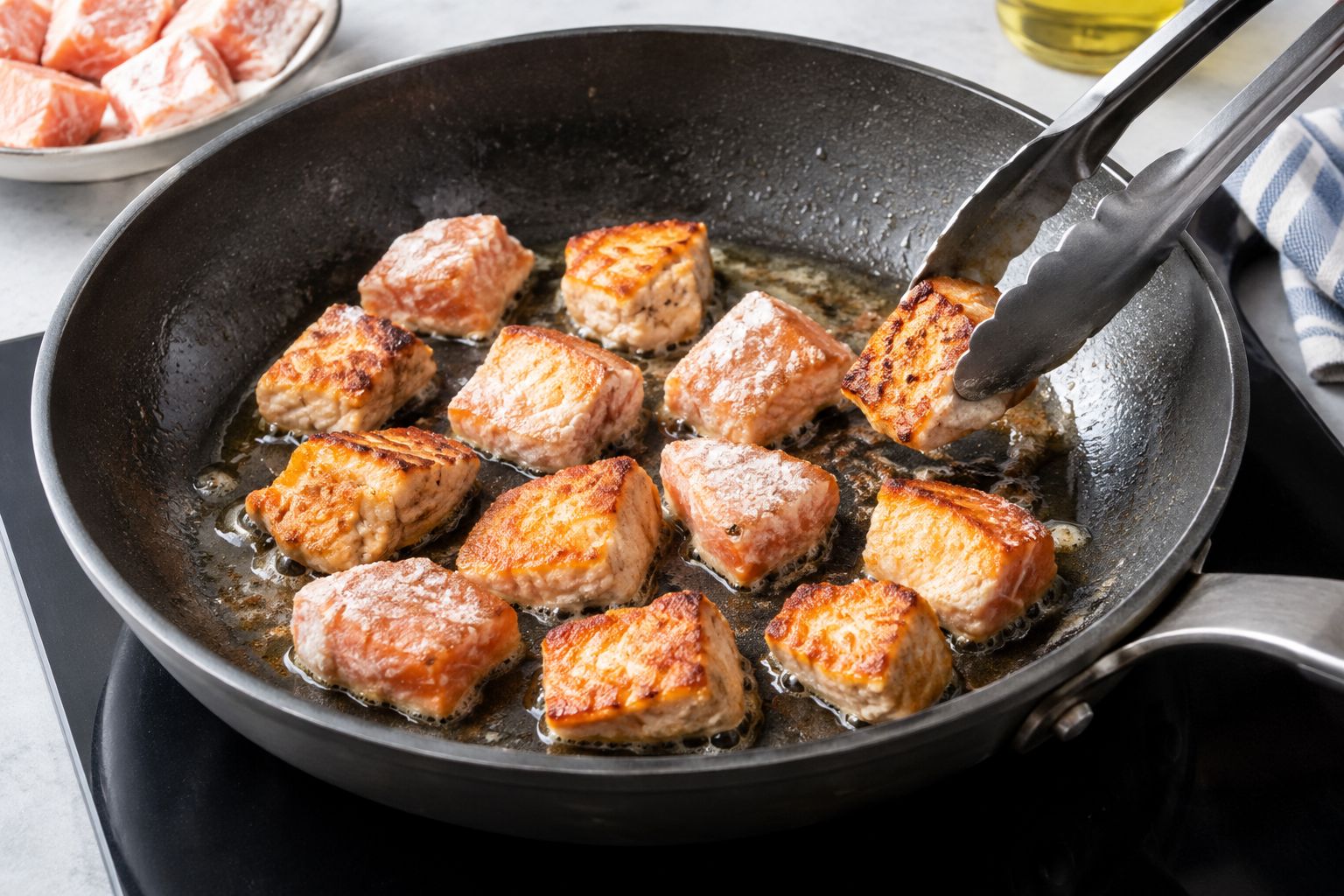
A light coating of flour is more important than a thick crust. Pat the salmon dry and dust the pieces lightly so they turn golden brown in the pan without becoming heavily coated. The outside will soak up some of the marinade and still stand out against the soft fish. Fry in batches if the pan is small: adding too many pieces at once lowers the temperature, so the salmon steams rather than browns. Use a wide frying pan and enough neutral oil to generously cover the bottom.
Slice the onion and carrot as thinly as possible, using a sharp knife or vegetable peeler, for example; wide, thick pieces take longer to absorb the flavor. Warm the marinade briefly to dissolve the sugar, but don’t let it boil vigorously. Bringing the warm fried salmon and the marinade together lets the flavors mingle right away. The dish is already pleasantly flavored after about half an hour, but a longer marinating time will also make the fish more tangy and softer. So taste it after an hour and keep an eye on the texture.
Rice vinegar gives a mild, clean acidity. If you don’t have any, you can use a light vinegar, but avoid strong malt vinegar: it will overpower the salmon. Use regular soy sauce and don’t add extra salt before tasting. A neutral oil such as sunflower or peanut oil works well for frying. The same method can work with another firm fish, but adjust the cooking time to the thickness of the pieces.
Serve the salmon chilled or at room temperature in small portions, for example as a starter alongside a simple bowl of rice or as part of a light meal with Japanese flavors. Take it out of the refrigerator shortly before serving; don’t leave fish at room temperature for a long time. Once cooled, cover and refrigerate leftovers, and preferably eat them within one to two days. The marinade stays tangy and fresh, but the salmon gets softer over time.
 Main course

