ABOUT THIS RECIPEA gentle braise with a glossy sauce
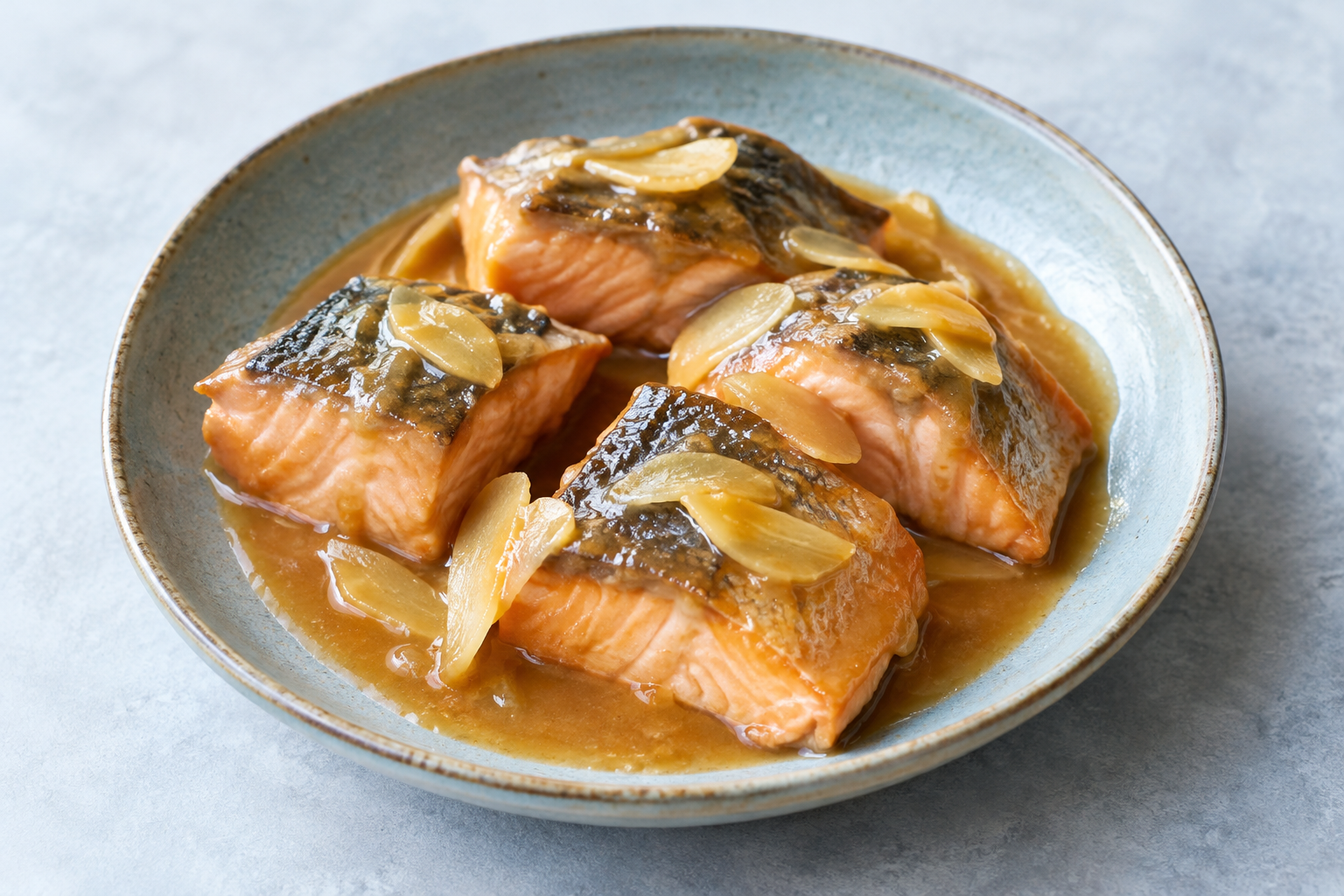
Misoni is a Japanese cooking method in which fish is gently braised in a sauce made with miso. In sake no misoni, salmon is paired with sake, mirin and ginger: sake gives the braising liquid depth, mirin adds mild sweetness, and ginger keeps the sauce lively. Miso brings salt and umami, but shouldn’t overpower the rich salmon. The result is different from pan-fried salmon: the fish stays tender, and the sauce clings to it in a thin, glossy layer.
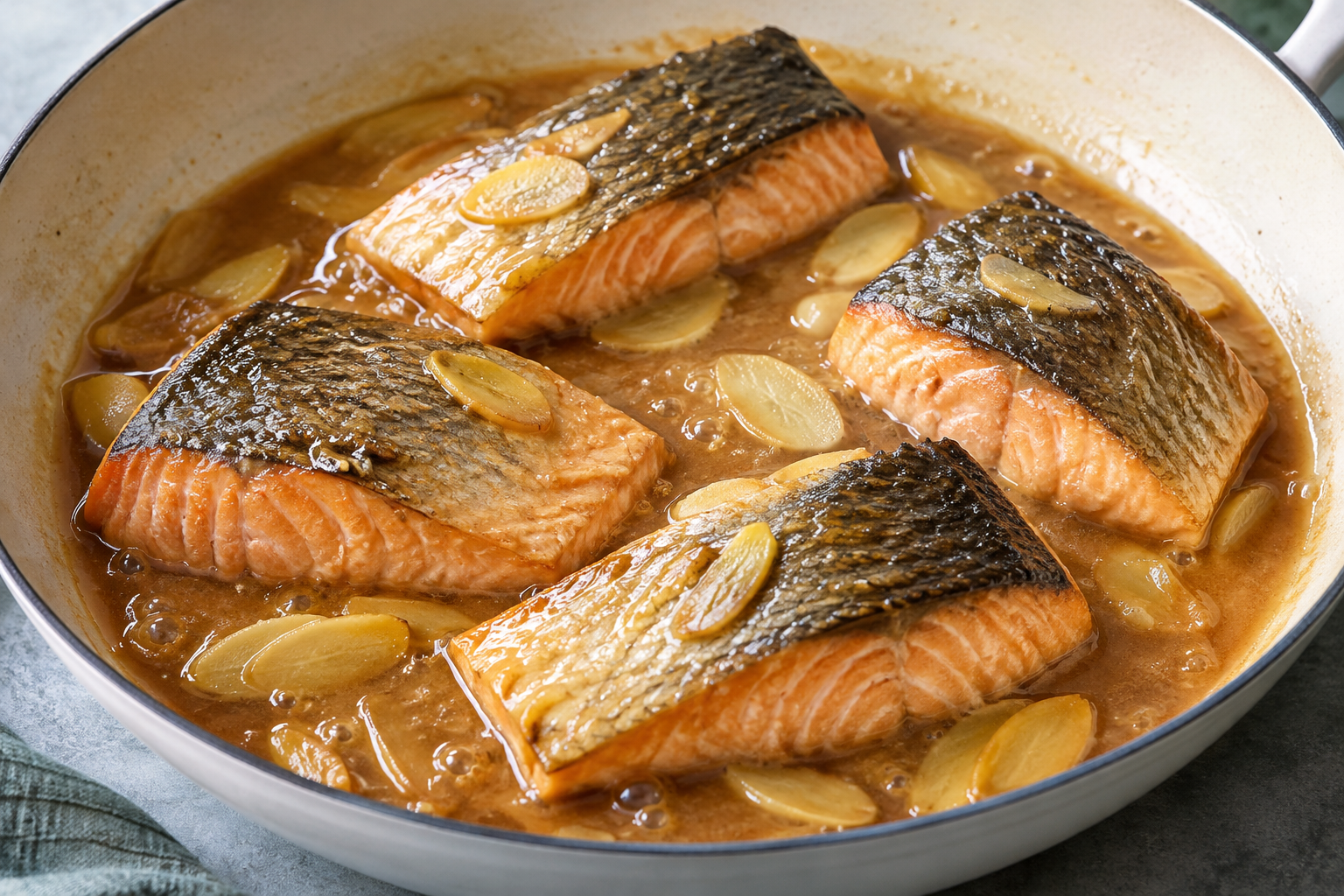
The order matters. First, briefly boil the sake, water, mirin, sugar and ginger so the alcohol aroma can evaporate from the sake. Then gently cook the salmon in the liquid. Miso contains salt and can stick to the pan or taste harsh if boiled vigorously, so whisk it smooth with a little warm braising liquid and stir it in over low heat. A piece of baking paper laid over the fish works like a well-fitting lid: it keeps the fish moist and helps the sauce move over its surface. If you don’t have any, use a lid left slightly ajar.
Choose salmon pieces that are about the same thickness, preferably with the skin on; the skin helps keep the fish intact while braising. Check for pin bones and pat the fish dry. Awase miso, a blend of light and dark miso, gives a balanced flavor. White miso makes the sauce milder and sweeter; red miso is stronger and saltier, so start with less and taste before adding more. You can use water instead of sake, though the sauce will have a little less aroma. Mirin is not the same as rice wine vinegar: its sour flavor doesn’t work as a substitute here.
Keep an eye on the salmon as it cooks. The exact timing depends on its thickness; it’s ready when the flesh is just opaque and flakes easily. If using a thermometer, 63 °C in the thickest part is a clear guide. Then reduce the sauce only briefly: it should lightly coat a spoon, not turn into a thick paste. Serve the salmon in small portions alongside steamed rice, spinach with sesame or a bowl of clear miso soup. Store leftovers covered in the refrigerator and reheat them gently until heated through; don’t let them boil again for long, or the fish will dry out.
 Main course

