ABOUT THIS RECIPEA brief rest between sheets of seaweed
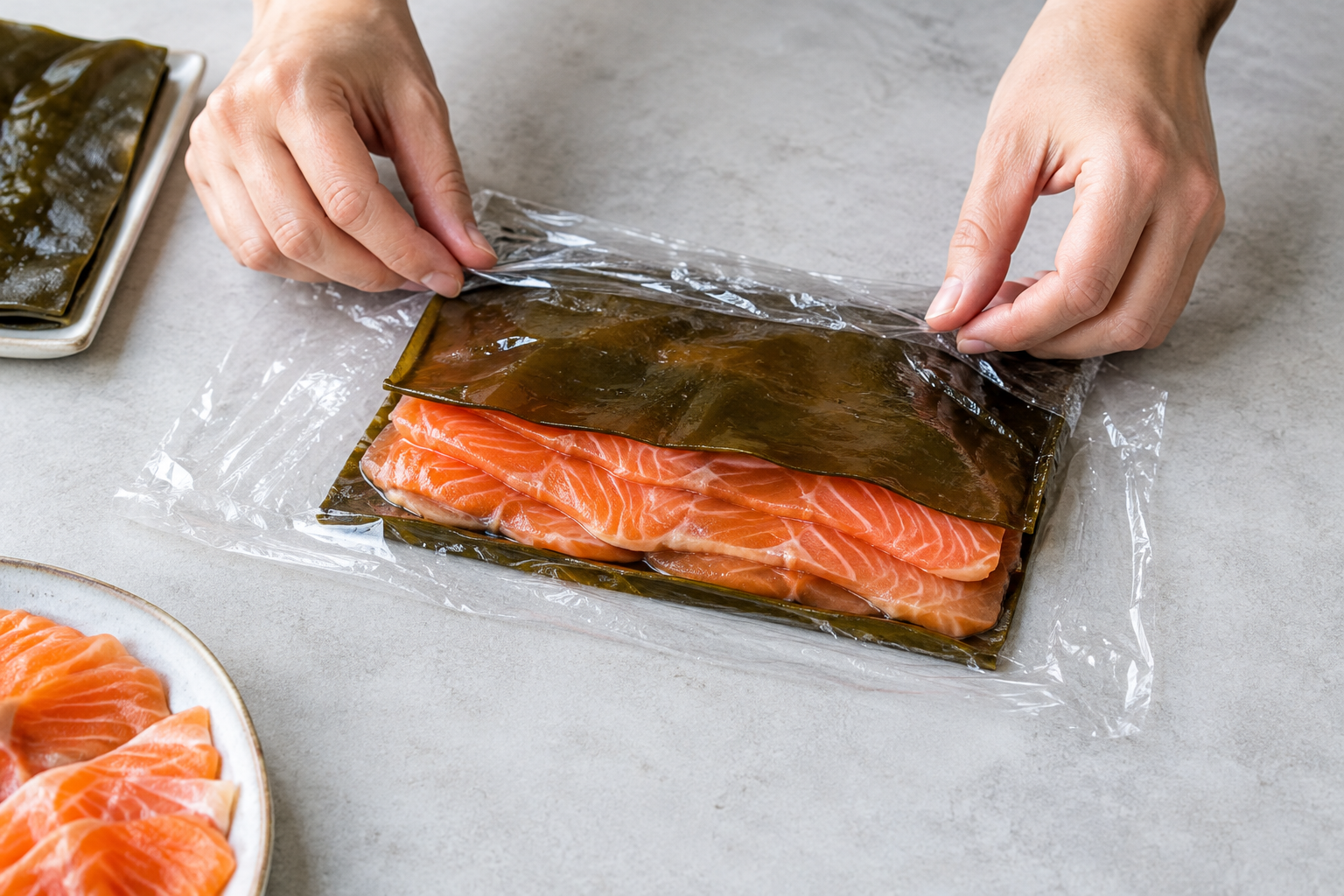
Kobujime is a Japanese technique in which fish rests between sheets of kombu, a type of dried seaweed. The method is often used with white fish; this recipe deliberately uses salmon instead. Contact with the kombu firms the surface slightly and gives the fish a subtle, savory seaweed flavor. The salmon remains raw: this method does not cook the fish or improve its food safety.
Choose salmon explicitly labelled as suitable for eating raw, and ask your fishmonger for advice if in doubt. Keep the fish chilled while slicing and resting, and follow local food safety advice for raw fish. Freezing it at home is not always a reliable substitute for the required treatment. Since this dish is served raw, it’s best to put it on the table immediately after preparing it and not keep any leftovers.
First, slice the salmon into even, thin pieces. This gives each piece similar contact with the kombu and keeps the resting time short. Dampen the seaweed only lightly: kombu that is too wet becomes limp and difficult to handle. Resting the salmon in the refrigerator for 30 to 45 minutes gives it a more pronounced bite without letting the seaweed flavor overpower it. You can rest it for less time if you prefer a subtler result.
Kombu is essential to kobujime; nori is not an equivalent substitute. Use a clean, slightly damp cloth to moisten the sheets, and wrap the fish so it is covered and doesn’t absorb other refrigerator odors. If you like, you can use a lower-sodium soy sauce, but keep the amount small: the salmon and kombu already have plenty of flavor. Wasabi from a tube is convenient; fresh wasabi works too, if available.
Arrange the slices loosely on a chilled plate and serve the soy sauce and wasabi alongside, so everyone can add as much as they like. Keep the accompaniments simple: extra citrus or strong sauces can easily overpower the delicate kombu flavor. Serve as a starter, perhaps before a light Japanese meal with rice and vegetables. The fish tastes best chilled, but not ice-cold; take it out of the refrigerator just before serving.

 Main course

