ABOUT THIS RECIPESweet, creamy and tangy
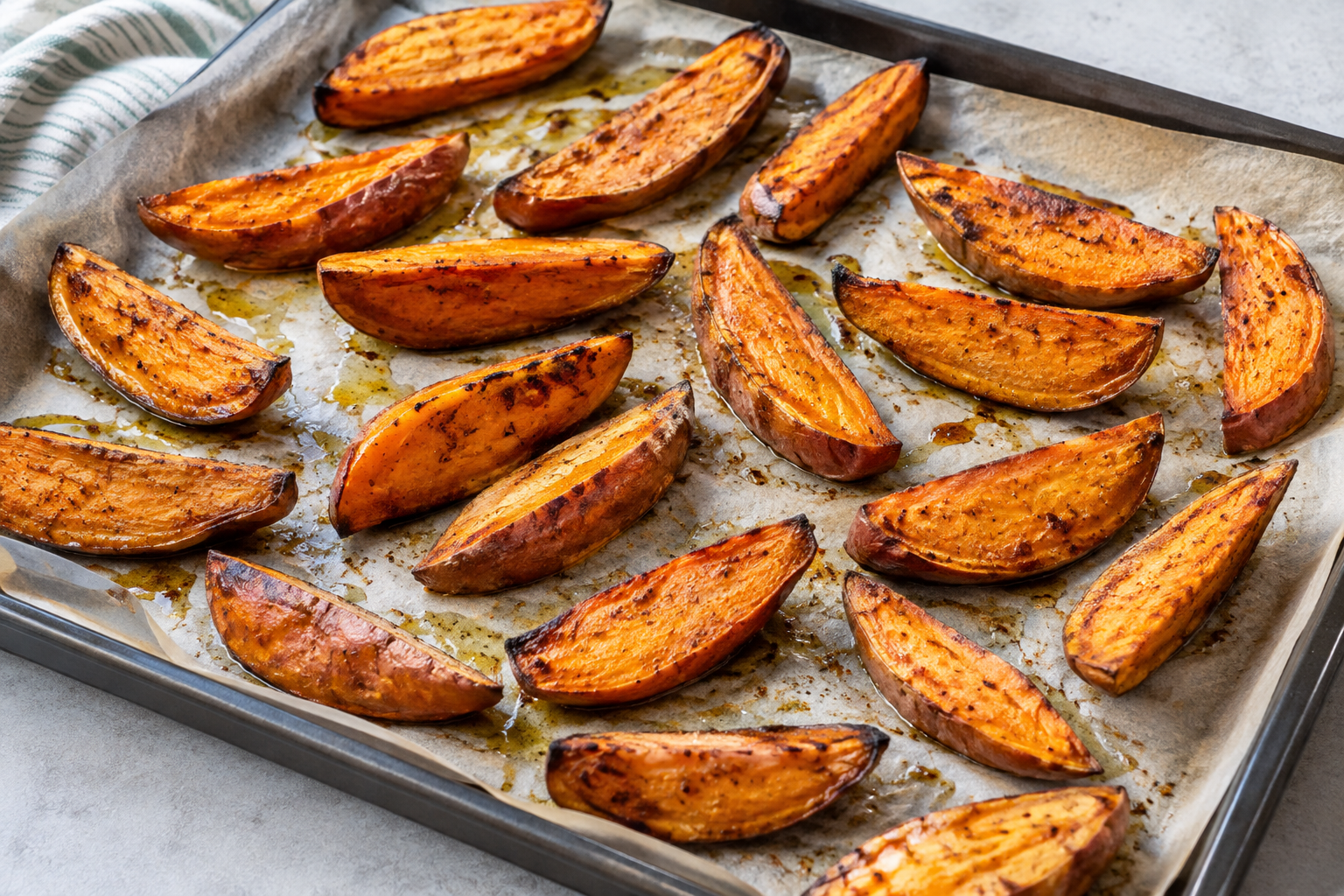
Sweet potatoes have a naturally rich, sweet flavor. Cut the tubers into thick wedges and roast them at a high temperature, and that sweetness gets a savory counterpoint: the outside browns and caramelizes while the center stays soft. Give the wedges plenty of space on the baking sheet. If they are crowded together, they release moisture more readily and brown less. A little oil helps the edges color; turning them halfway through helps them cook evenly.
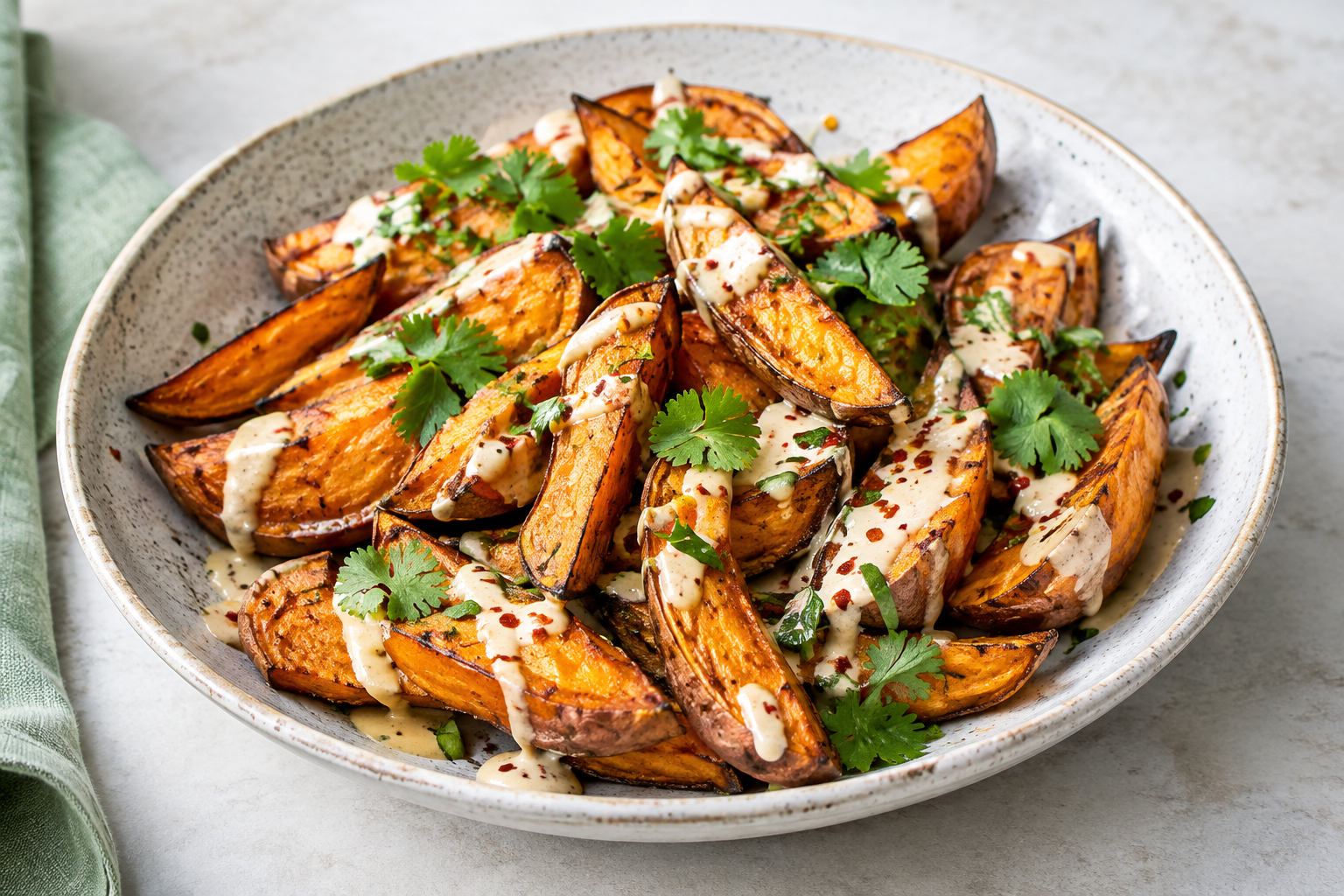
The sauce brings a different kind of softness. Tahini, a paste made from ground sesame seeds, is creamy and slightly bitter. Lime juice brightens the flavor and cuts through the sweetness and richness of the potatoes. Stir in cold water a little at a time: tahini may thicken at first, but then becomes smooth and pourable. The amount of water you need depends on how thick the tahini is. Make the sauce thin enough to spoon over the wedges, but not so watery that it runs off them.
Coriander adds a green, herbal note, and chili flakes bring a gentle heat. Use less chili if you would rather taste mostly the fresh sauce, or leave it out. No coriander on hand? Flat-leaf parsley brings a different, but equally fresh, herbal flavor. Lemon can replace lime; the flavor will be a little less distinctly aromatic. Stir the sauce again just before serving if it has been sitting.
Serve the wedges as a side dish with roasted vegetables, pan-fried fish, or a platter of legumes and grains. They also work well as part of a meal with several small dishes. Spoon the sauce over them just before eating so the roasted edges do not soften unnecessarily; serve extra sauce on the side. Store leftovers covered in the refrigerator and later reheat them thoroughly in the oven or in a pan. The wedges will be less crisp after storing. Bring the sauce to room temperature separately and stir it smooth with a small splash of water if it has thickened.
 Main course

