ABOUT THIS RECIPESquash with Golden-Brown Edges
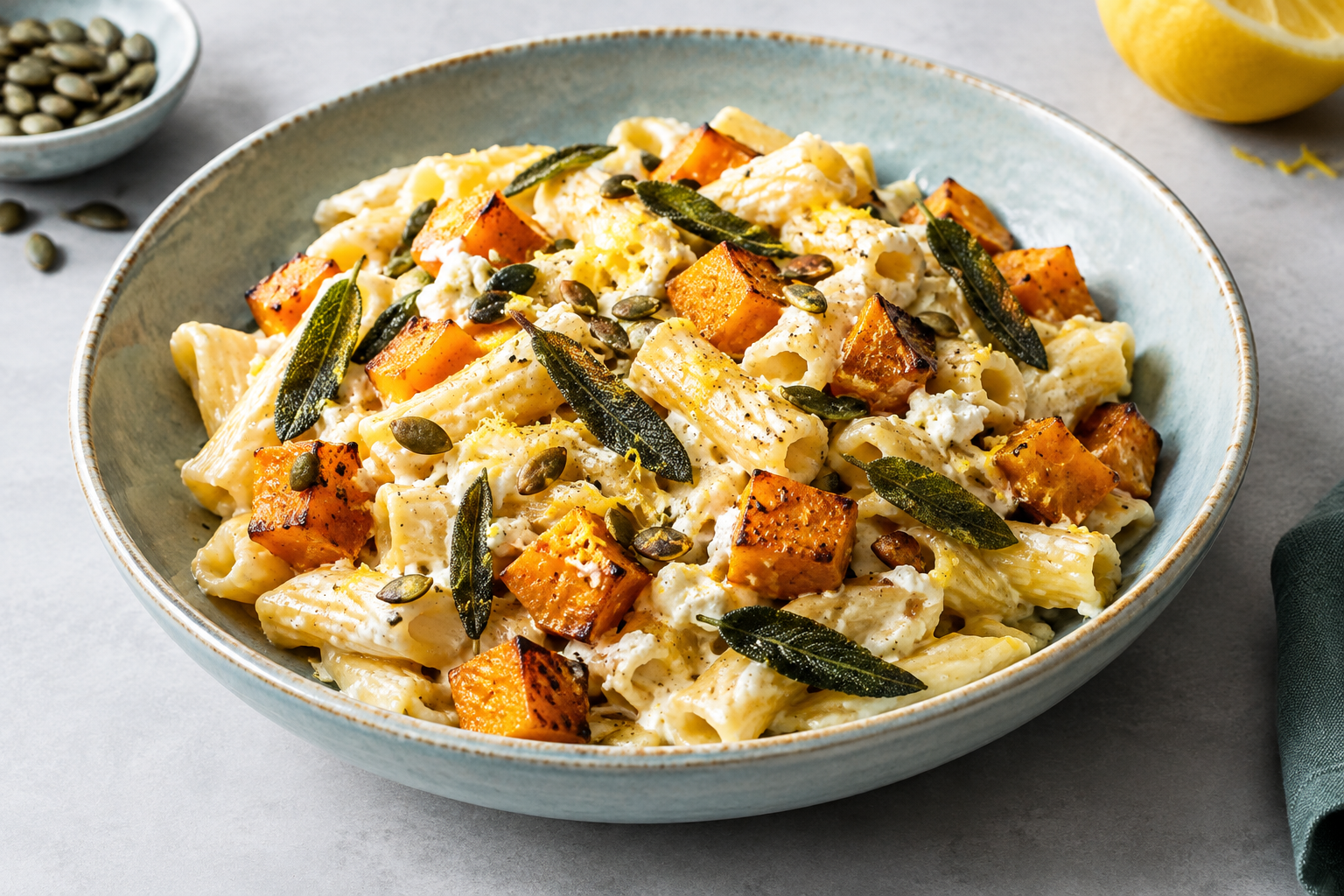
Squash gets sweeter in the oven and develops caramelized edges while staying tender inside. That roasted quality gives the pasta more depth than squash cooked only in a sauce. Cut the cubes to roughly the same size so they cook at the same time, and spread them out on the baking sheet. If they’re crowded together, they’ll steam instead of browning. Butternut squash is easy to peel and cut; with some types of squash, you can leave the firm, edible skin on.
Squash is widely available, especially in fall and winter, but refrigerated or stored squash can also be found outside those months. The combination with pasta, ricotta and sage is inspired by Italian cooking, without aiming to recreate one particular regional classic. Short pasta such as rigatoni, penne or fusilli works well: the ridges and hollows catch little pieces of squash and sauce. Cook the pasta until al dente and save some of the cooking water. The starch in it helps the butter and ricotta cling to the pasta.
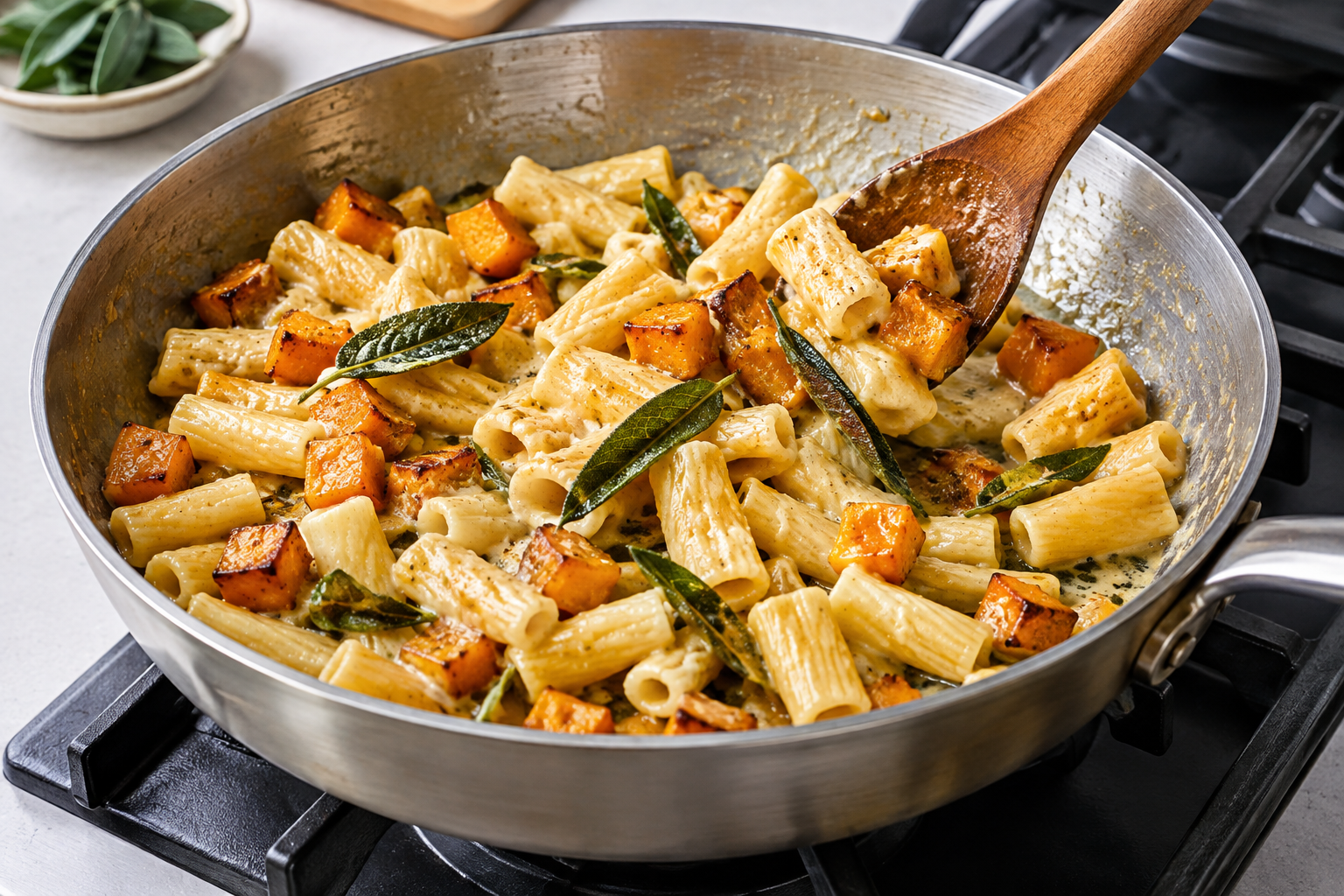
Cook the sage gently in butter until the leaves are crisp and the butter smells nutty. Keep the heat moderate: sage darkens quickly, and bitter butter can overpower the squash’s delicate flavor. Toss the pasta and squash with a splash of cooking water in the sage butter; add more water if it looks dry. Mix the ricotta with lemon zest and a little juice, then fold it through the pasta at the end. This keeps the lemon bright and prevents the ricotta from turning grainy from too much heat.
Pumpkin seeds add a toasted, crunchy contrast. Toast them briefly in a dry skillet, keeping an eye on them because they can brown quickly. No ricotta on hand? Use full-fat quark for a fresher, slightly less creamy sauce, or mascarpone with extra lemon juice for a richer version. Dried sage is not an equivalent substitute for the crisp fried leaves; it’s better to leave it out than to use a lot.
Serve the pasta straight away, while the sauce is glossy and the seeds are crunchy. A simple green salad with a tart dressing goes well with it and keeps the meal light. If you have leftover pasta, cover and refrigerate it within two hours, and eat it within three days. Reheat gently in a pan with a splash of water; add ricotta or a little extra lemon only once the pasta is no longer boiling hard.
 Main course

