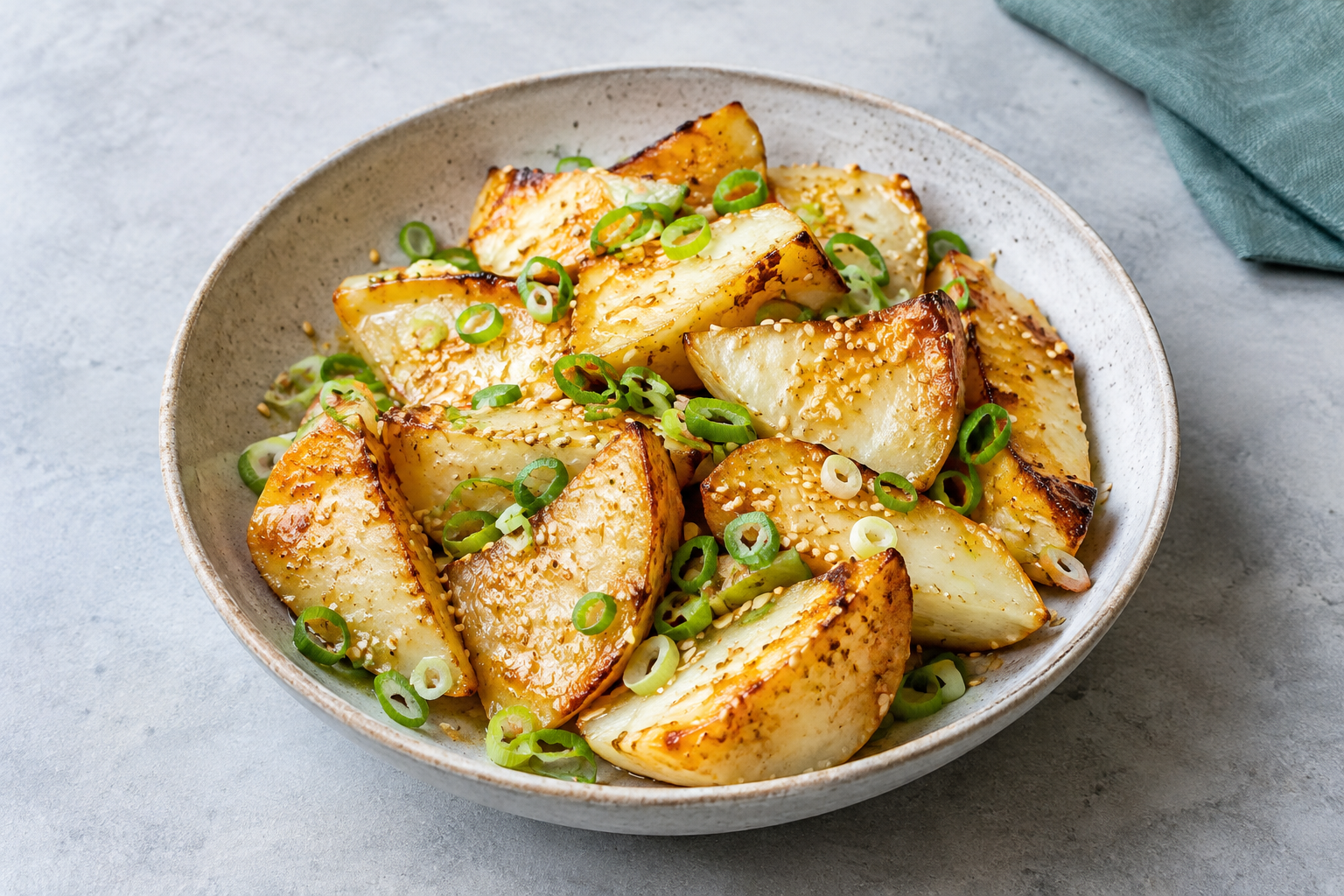
ABOUT THIS RECIPEKohlrabi with Golden-Brown Edges
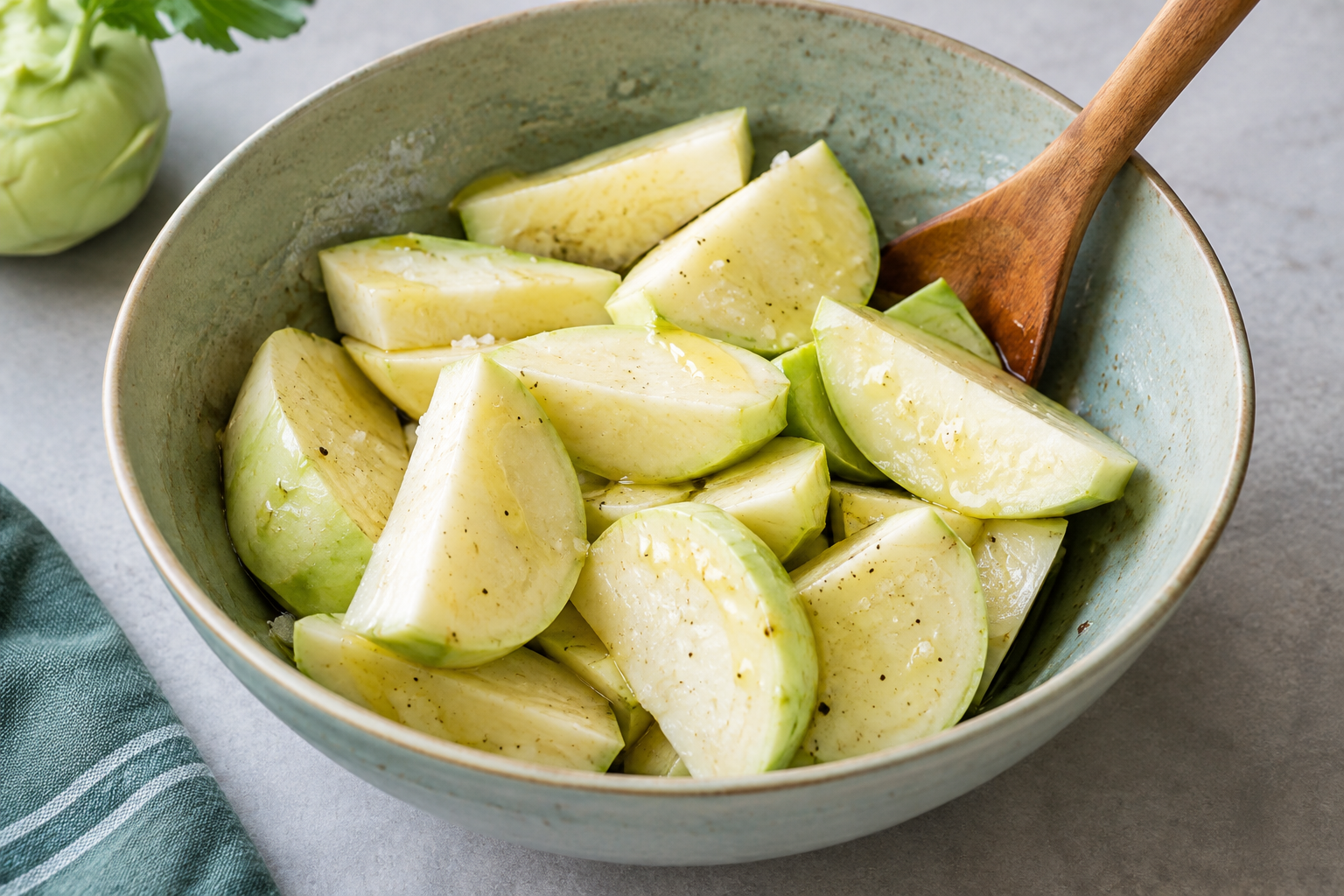
Kohlrabi has a mild, slightly peppery flavor and stays firmer after roasting than, for example, zucchini. Cut the bulbs into wedges about two centimeters thick: thinner pieces cook faster, but also dry out sooner. Peel off the tough skin generously with a vegetable peeler or knife; there can be a fibrous layer just beneath the skin. In the Netherlands, kohlrabi is widely available in spring and early summer, but it is often available outside that season too. Choose bulbs that feel firm and don’t look dried out.
Space on the baking sheet matters more than any complicated technique. If the wedges are touching, they’ll steam rather than develop browned edges. Spread them out on one large baking sheet and toss with oil and salt. In a hot oven, the outsides caramelize while the inside stays juicy. The exact timing depends on the thickness and your oven; after about 25 minutes, pierce a thick piece with a knife. It should slide in without much resistance, while the wedges still hold their shape.
White miso works well here because its flavor is usually mild and rounded. Stir it into softened butter and brush it over the kohlrabi only after roasting. This keeps the butter creamy and prevents the miso from getting too dark on the hot baking sheet. Miso is naturally salty, so taste the butter before adding extra salt. Don’t have white miso? Another mild miso works too, but start with a little less and adjust to taste. The color and intensity vary by type.
In a dry frying pan, sesame seeds develop a nutty aroma in just a few minutes; shake the pan regularly and remove the seeds as soon as they turn lightly golden. Keep a close eye on them, as they brown quickly. Spring onion adds a fresh, gentle sharpness and makes the rich butter feel less heavy. Serve the kohlrabi as a side dish with rice and tofu or with pan-fried fish. It also goes well alongside a simple bowl of noodles. Store leftovers covered in the refrigerator and heat them through in the oven or a frying pan; the sesame is best added just before serving.
 Main course

