ABOUT THIS RECIPEA hearty vegetable, served fresh
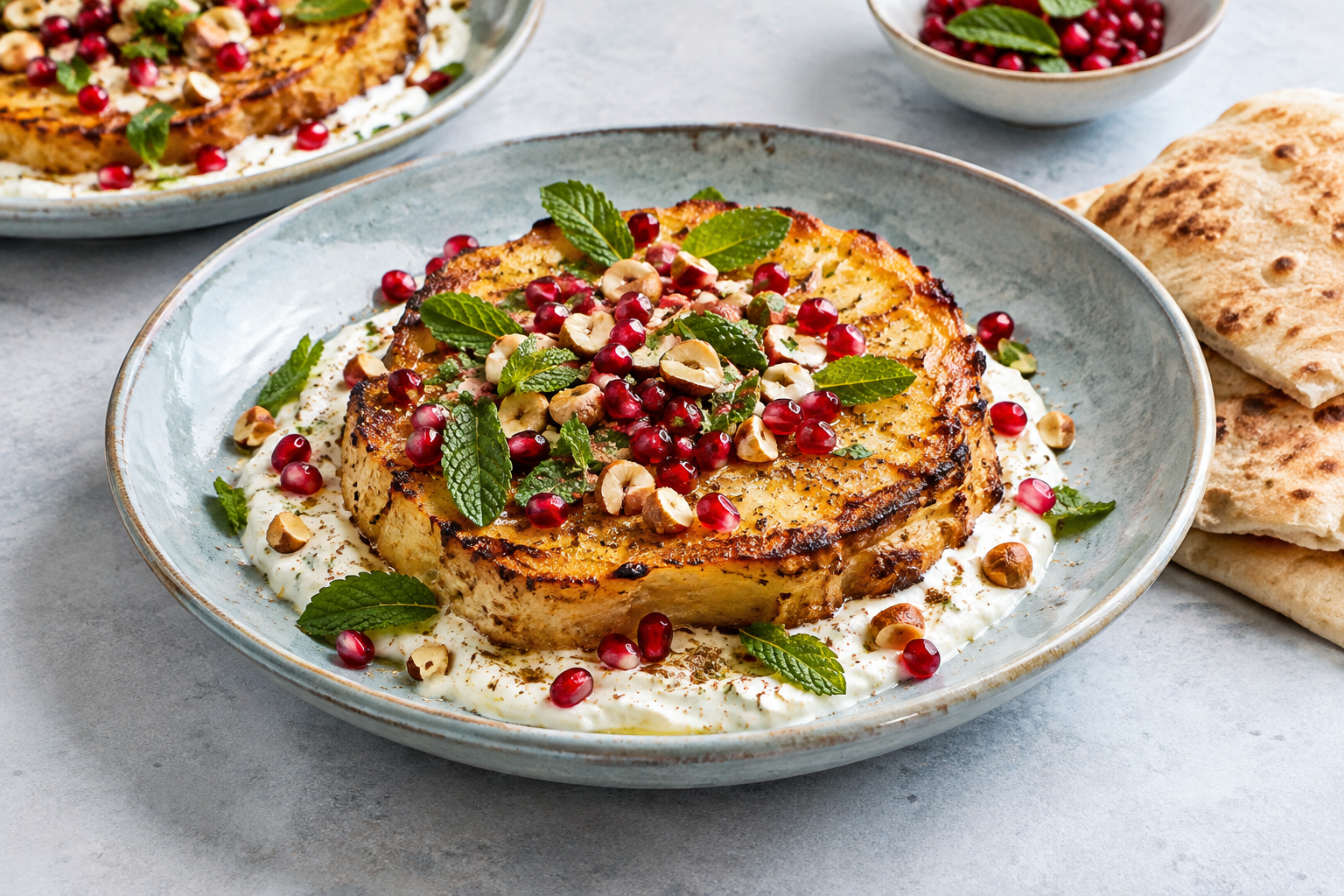
Celeriac has a firm texture and an earthy, slightly nutty flavor. Roasted in thick slices, the inside turns tender without falling apart; the edges brown and develop a deeper flavor. This makes it a good centerpiece for a plate, rather than just one ingredient in a soup or mash. Choose a firm celeriac with no soft spots. Celeriac is widely available in the colder months, when hearty storage vegetables work well in an oven-baked meal.
The thickness of the slices matters: cut them about two centimeters thick so they have enough time to roast until tender while still holding their shape. Thin slices brown faster, but can dry out before they cook through. Leave space between the pieces on the baking sheet; if they’re crowded, they’re more likely to steam than brown. A little oil helps the outside color, while cumin complements celeriac’s earthy flavor.
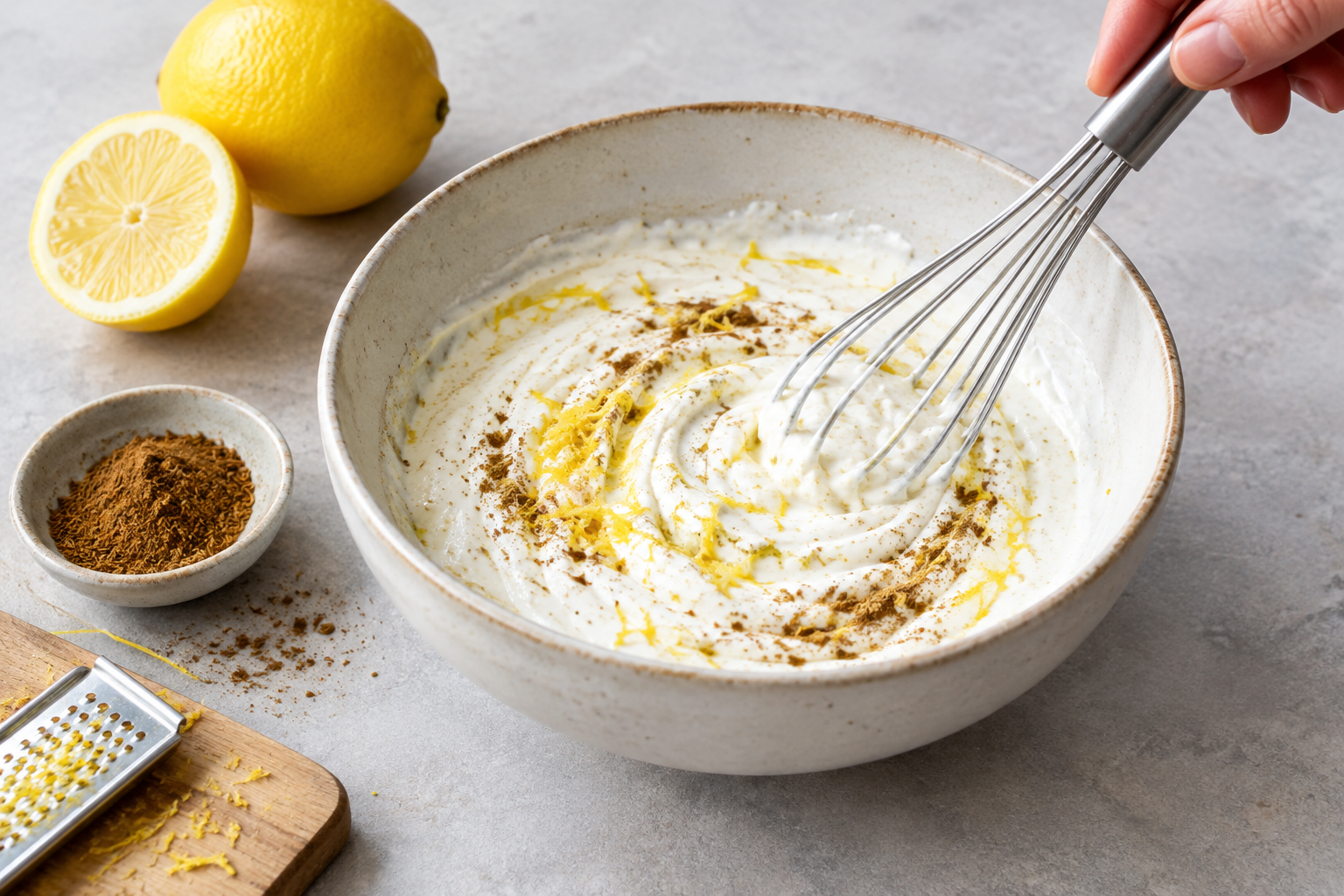
The yogurt brings a cooling tang to balance the warm, roasted vegetable. Lemon brightens the sauce, and cumin adds depth without overpowering the celeriac. Use full-fat yogurt for a creamy sauce that sits nicely on the plate. Greek yogurt works too, but it’s thicker; stir in a small splash of water if needed. For a plant-based version, unsweetened, thick soy yogurt usually works well; taste and adjust the lemon and salt carefully.
Pomegranate seeds add juicy, fresh pops of flavor. Mint brings a cool herbal note, while toasted hazelnuts add a dry, crunchy bite. Chop the nuts coarsely so they don’t get lost among the other textures. No pomegranate on hand? A small amount of tart apple, diced, also adds freshness and crunch, though it changes the character of the dish. Serve with warm flatbread for scooping up the yogurt; for a more substantial meal, add a simple grain salad on the side.
You can store the celeriac and yogurt separately if you have leftovers. Cover and refrigerate leftovers after eating, and use within three days. Reheat the vegetable in the oven or a skillet; the microwave works too, but makes the roasted edges less crisp. It’s best to store the pomegranate, mint and hazelnuts separately and add them just before serving so they keep their fresh, crunchy texture.
 Main course

