ABOUT THIS RECIPEGolden-brown edges, bright sauce
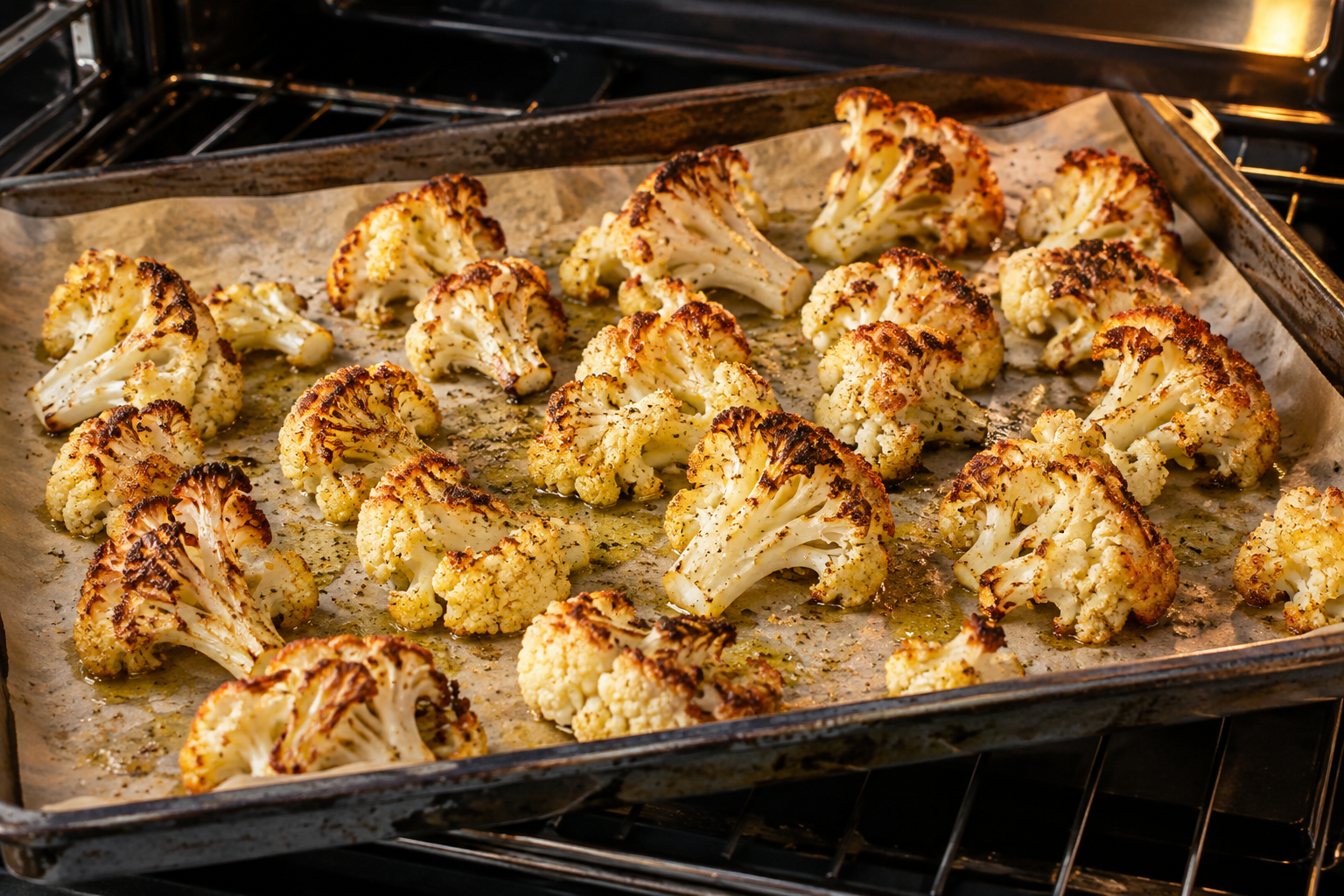
Cauliflower has a mild, slightly earthy flavor of its own. Roasting the florets at a high temperature gives it more depth: the protruding edges turn brown and firm up, while the center stays tender. Cut the florets to roughly the same size so they cook at the same time. Leave some space between them on the baking sheet; if they’re crowded, they’ll steam rather than roast. A large cauliflower may need two baking sheets.
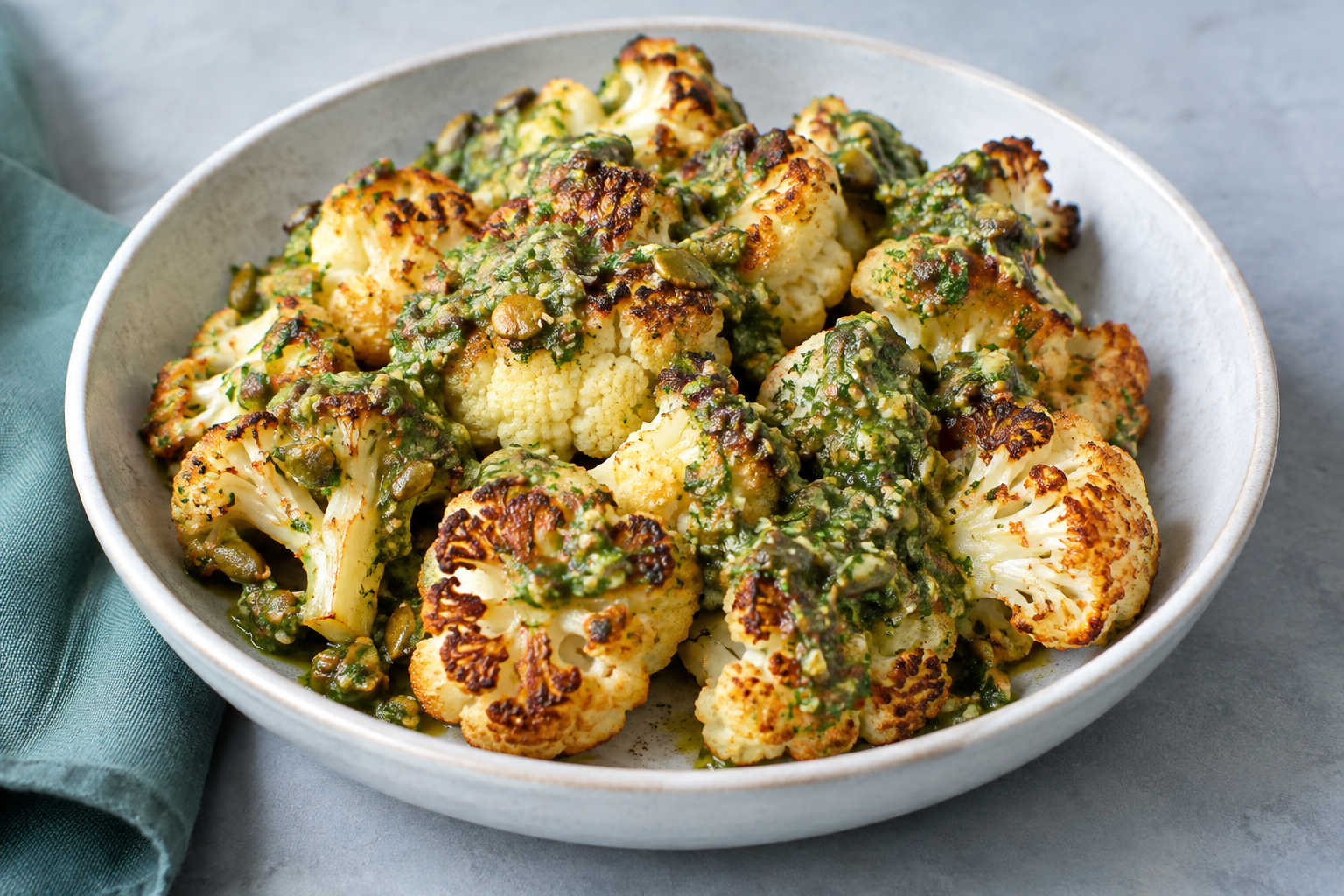
The pumpkin seed sauce is deliberately chunky, not smooth like pesto. Pumpkin seeds add a nutty flavor and a little bite; coriander and lime keep everything fresh. Toast the seeds briefly in a dry frying pan and take them out as soon as they smell fragrant and begin to color. They can burn quickly, so keep an eye on them. Let them cool briefly before grinding or crushing them. A small food processor makes quick work of it, but a mortar and pestle works too: crush the seeds first, then stir in the rest.
Lime brightens the sauce and cuts through the roasted flavor. Zest the lime before juicing it, and add the juice gradually; limes vary in size and juiciness. The sauce should be thick enough to sit on the cauliflower, but a spoonful of water will make it easier to spread. Use the tender coriander stems too, if possible. They add flavor and can be finely chopped or ground.
Cauliflower is available year-round; the availability of seasonal Dutch cauliflower can vary by time of year and by store. Choose a firm head with compact florets and trim away any brown spots. No coriander on hand? Flat-leaf parsley gives a different, but equally fresh, herbal flavor. Pumpkin seeds can be replaced with sunflower seeds; the sauce will then be a little less distinctly nutty. Keep the rest simple so the lime, seeds and roasted cauliflower remain recognizable.
Serve this as a side dish with, for example, pan-fried fish, chicken or legumes, or alongside rice and a simple salad for a light meal. Spoon the sauce over the hot cauliflower just before serving so the edges don’t soften unnecessarily. Leftovers can be covered and stored in the refrigerator, then reheated thoroughly; keep the sauce separate if possible and add it after reheating. The cauliflower will lose some of its crisp edges in storage, but the bright sauce brings back the contrast.
 Main course

