ABOUT THIS RECIPEA Good Roll Starts with the Rice Paper
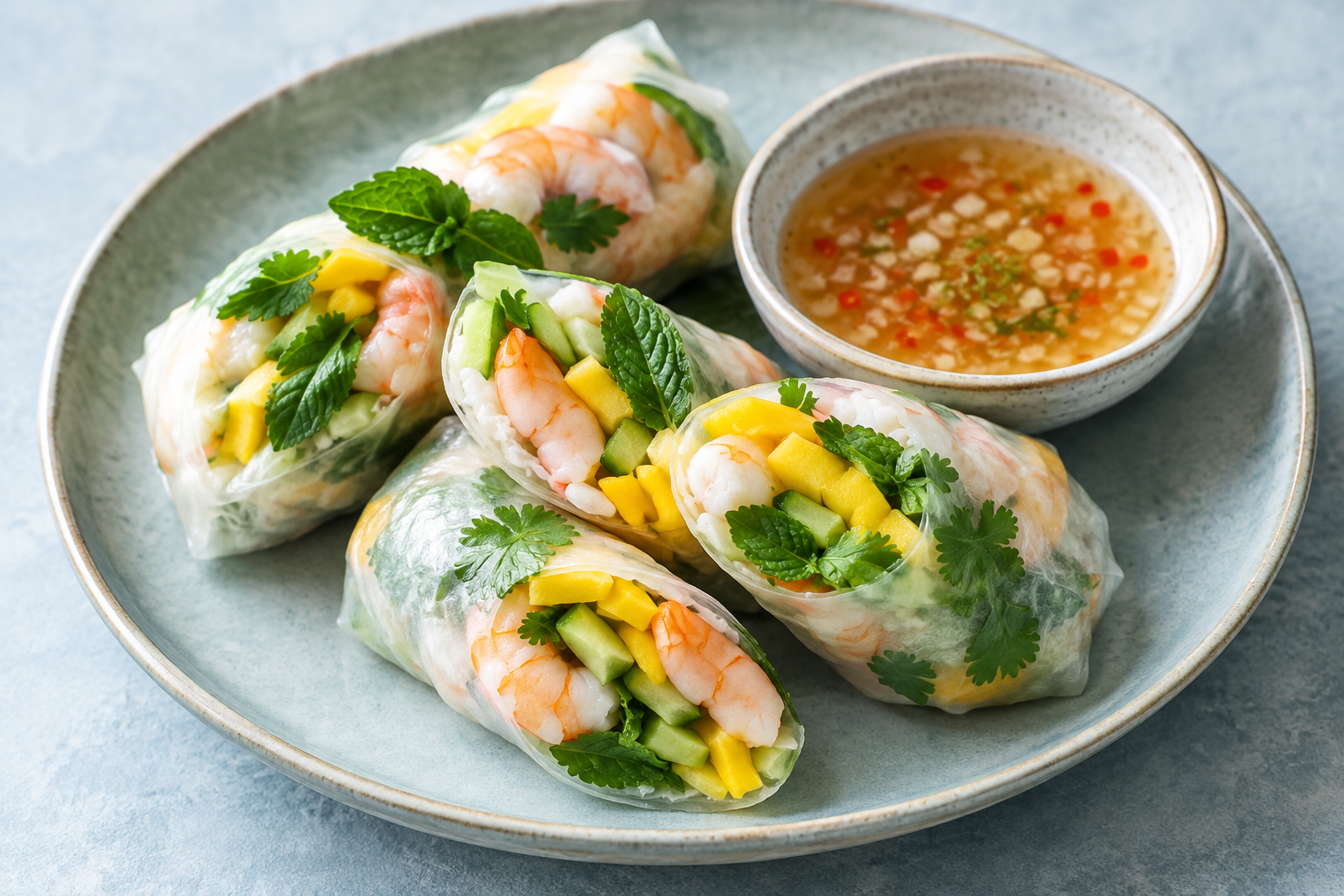
These rolls are all about contrast: firm, lightly briny shrimp alongside soft, sweet mango and cool, crunchy cucumber. Mint adds a fresh aroma; cilantro makes everything a little greener and more pronounced. Feel free to use both herbs, or choose just one if you want a more distinct herbal flavor. Cut the filling into thin strips so every bite has a little of everything and the rice paper can wrap tightly around it.
Rice paper softens when briefly dipped in lukewarm water. Don’t soak it until it feels limp: it will soften further on a clean cutting board and is more likely to tear as you roll it. Work with one sheet at a time and place the filling just below the center. First fold the bottom edge over the filling, fold the sides inward, then roll tightly. A slightly damp work surface helps prevent sticking; don’t stack the finished rolls on top of one another.
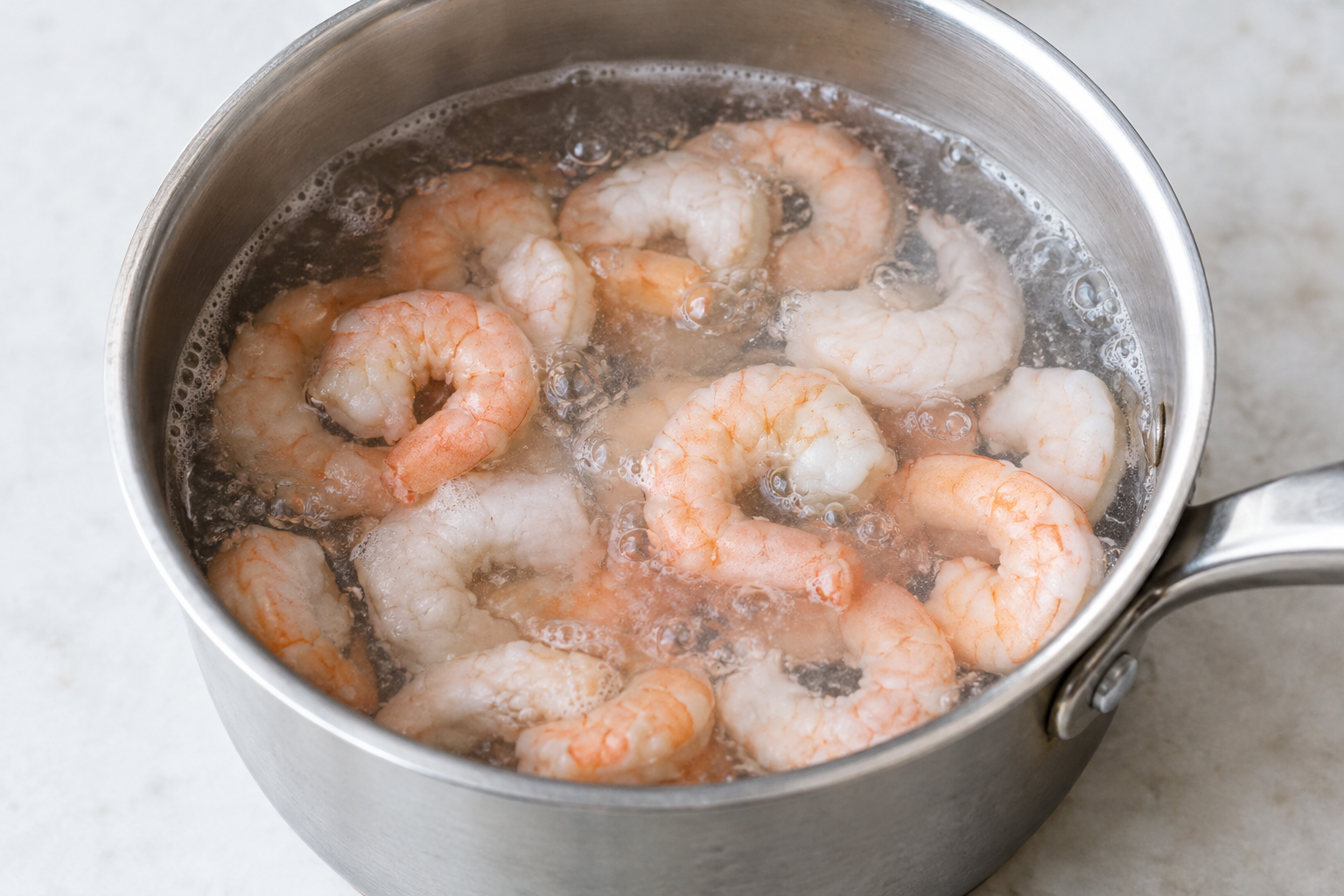
Shrimp cook quickly. Cook raw, peeled shrimp only until opaque all the way through, then let them cool before adding them to the rice paper. That way, they won’t warm the mango and herbs, and the rice paper will be easier to handle. You can halve large shrimp lengthwise after cooking; smaller ones fit whole in the rolls. If using cooked shrimp, drain them well and add them cold.
A ripe mango adds sweetness and a soft bite, while cucumber brings juiciness and crunch. Mangoes are usually imported in the Netherlands; choose one that gives slightly when pressed but isn’t mushy. Outside mango season, a firm, ripe peach works as an alternative. Use mostly the firm flesh of the cucumber; the watery seed core makes the filling wetter. Pat the sliced ingredients dry if needed.
The dip brings everything into balance: lime adds acidity, fish sauce adds savory depth, and a little sugar rounds off the sharper edges. Taste and add a few more drops of lime juice or fish sauce if you like, depending on how ripe the mango is. Serve the rolls for lunch with the dip on the side, and cut them diagonally just before serving. They’re best eaten the same day; cover and refrigerate any leftovers and eat them within 24 hours, as the rice paper will become firmer.
 Main course

