ABOUT THIS RECIPEThe balance between crust and custard
Quiche Lorraine is associated with Lorraine, a region in northeastern France. There are several versions of the dish; this one keeps the filling deliberately simple, with eggs, cream and bacon. Cheese features in many modern versions, but it isn't needed here for that familiar, creamy filling. The bacon adds salt and a smoky, savoury flavour, while a little nutmeg subtly spices the cream. Black pepper gives it a bit more bite without overpowering the other flavours.
The crust is more than just a container: it provides a crisp contrast to the soft custard. Working with cold ingredients helps. Butter that stays in small pieces throughout the flour gives the crust a crumbly texture when baked; kneading for too long makes the dough tougher. So let the dough rest in the fridge before rolling it out. Prick the base and bake it first with baking paper and pie weights. This stops it puffing up and helps it stay dry when you add the liquid filling.
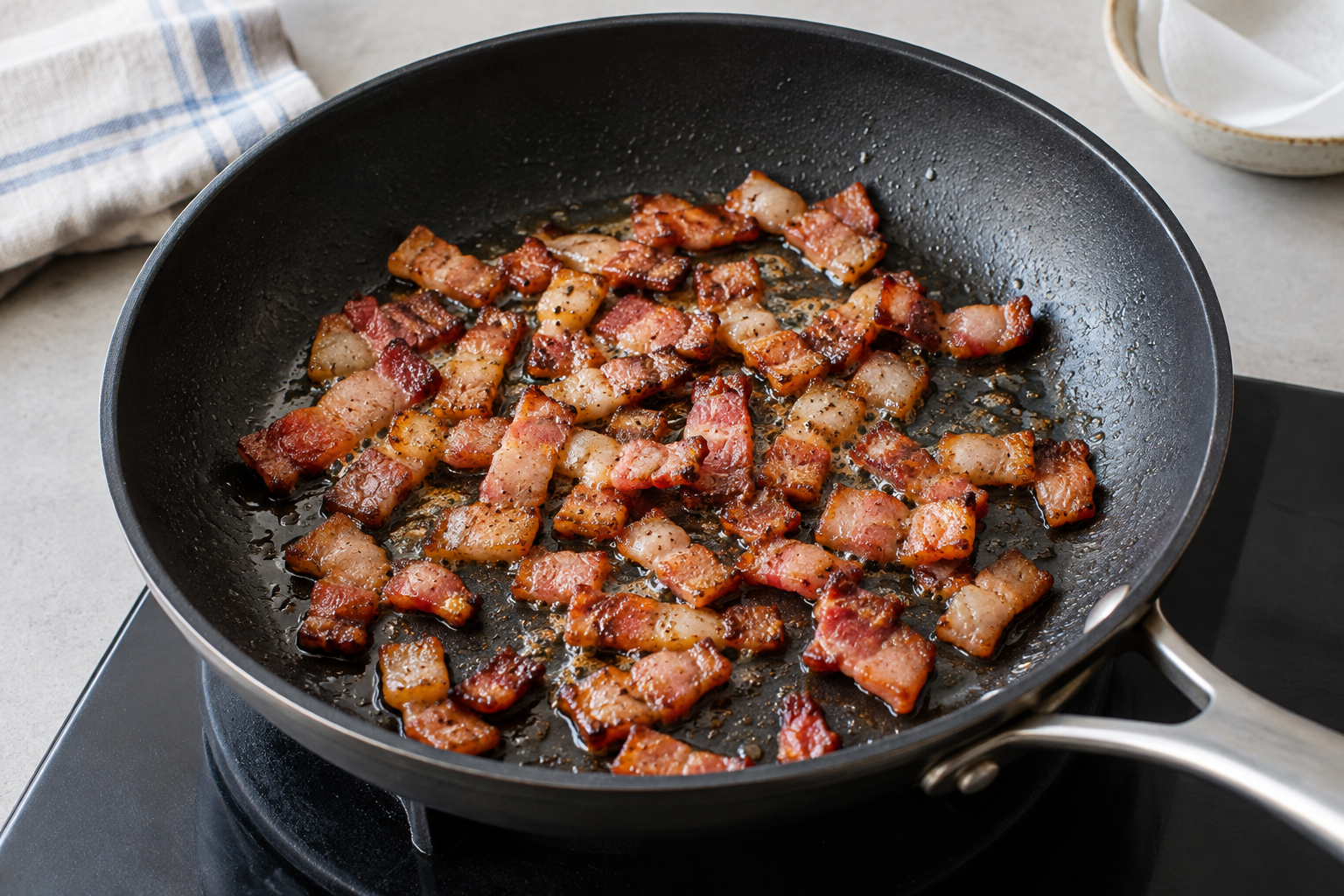
The eggs set the cream into a soft, sliceable filling. So bake the quiche gently and take it out of the oven while the centre still has a slight wobble: the residual heat will continue to set the custard. An oven that's too hot or baking for too long can make the filling grainy. Fry the bacon lardons first so excess fat doesn't end up in the quiche and the pieces develop more flavour. Let them cool briefly before adding them to the egg mixture.
For a full, soft texture, use whipping cream. For a slightly lighter filling, you can replace some of it with whole milk; the quiche will be less rich and may not slice quite as firmly. Thick slices of streaky bacon or pancetta can replace the bacon lardons, but cut them into small pieces and taste carefully before adding salt. In this recipe, extra salt in the filling is usually unnecessary because the bacon is already salty.
Serve the quiche with a green salad and a fresh vinaigrette; the acidity and crisp leaves keep the meal balanced. A slice is also ideal for a lunch buffet and tastes good warm or at room temperature. Store leftovers covered in the fridge and eat them within two days. Reheat a slice in the oven until piping hot throughout; this usually keeps the crust crisper than reheating it in the microwave.

 Main course

