ABOUT THIS RECIPEA balance of sweet, nutty and fresh
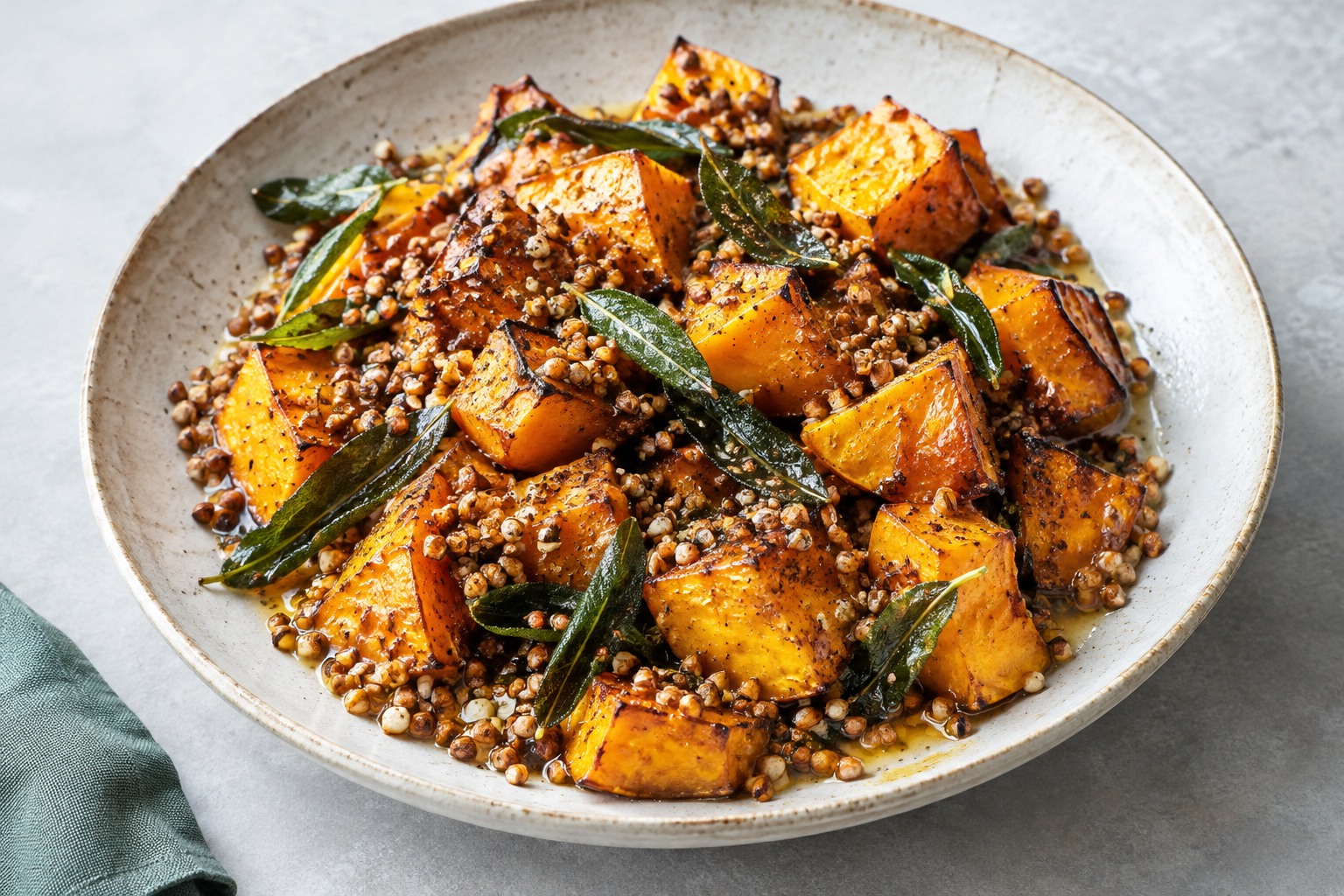
Pumpkin is at its best in autumn and winter, and a firm variety such as butternut squash or Hokkaido works well for this side dish. Butternut squash needs to be peeled; Hokkaido can be left unpeeled if the skin is clean and firm. Cut the pieces to roughly the same size so they cook at the same time. The oven browns the outside and concentrates the sweet flavor, while the flesh stays tender. Leave space between the cubes on the baking sheet: if they’re too close together, they’ll steam and won’t brown as well.
Brown butter, also known as beurre noisette, gets its aroma as the milk solids in the butter brown. Use a light-colored pan if you want to see when the solids turn golden brown. Take the pan off the heat in time; the butter will continue to cook for a little while. The sage can fry briefly in the butter, becoming crisp and releasing its herbal aroma. A little lemon juice at the end keeps the sauce lively and stops the combination of pumpkin and butter from tasting heavy.
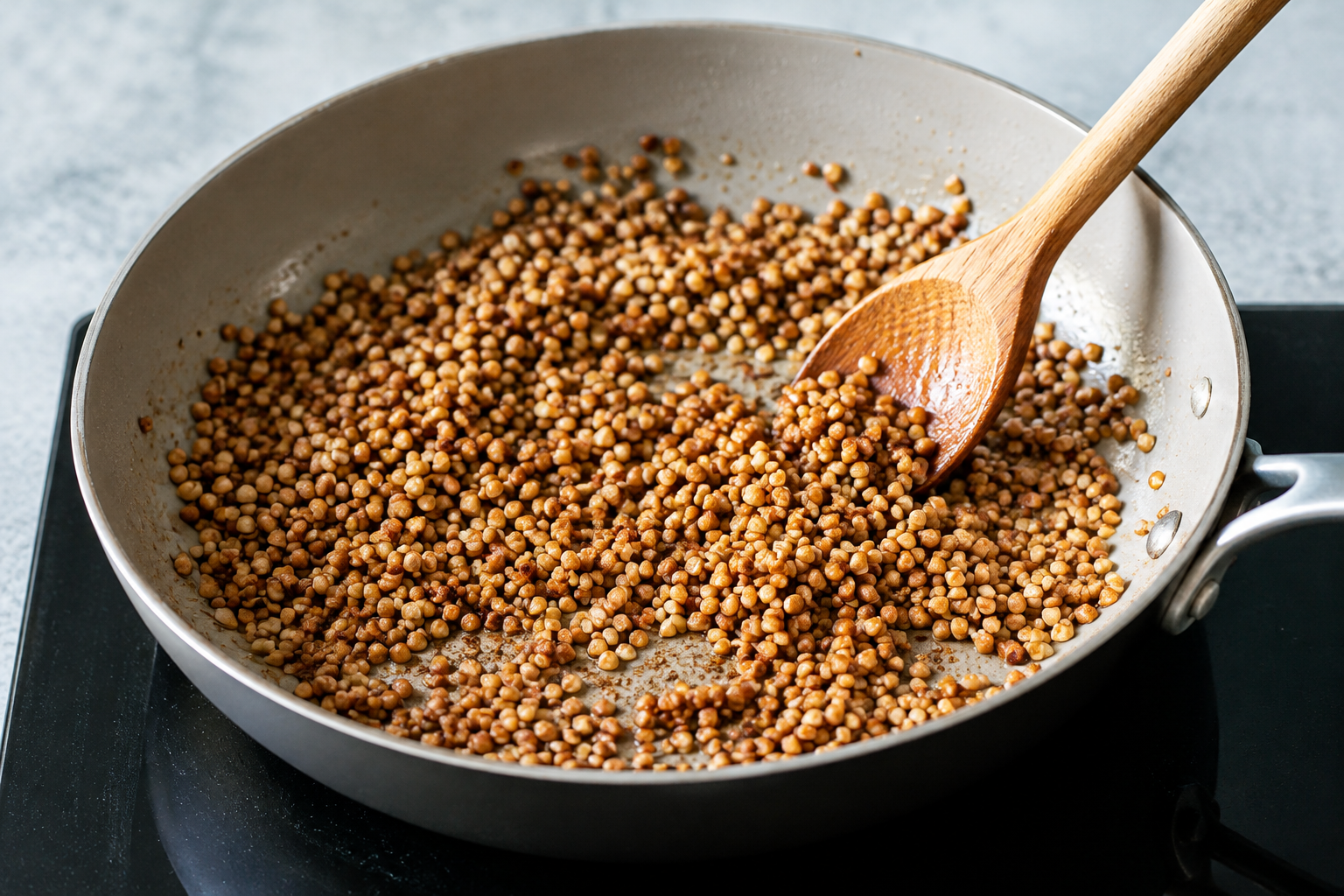
Buckwheat isn’t a grain but a seed, and for this recipe you need whole, hulled buckwheat groats—not buckwheat flour. Fry them gently in a thin layer of oil to toast and crisp them. Stir regularly and take them out of the pan as soon as they’re fragrant and starting to color; small groats can quickly get too dark. If you can’t find buckwheat, coarsely chopped hazelnuts can provide the same dry crunch, though they’ll noticeably change the flavor.
Serve the pumpkin as soon as you’ve added the sauce and buckwheat, so the crispy groats don’t soften. The dish goes well with lentils, roast chicken or a substantial salad with bitter leaves such as Belgian endive or radicchio. Cover leftovers and keep them in the refrigerator, then reheat them thoroughly within two days. If possible, store the buckwheat separately and sprinkle it over just before serving to help it keep its texture.
 Main course

