Kitchen classics, vegetables, and bold flavors.
All recipes
MAIN COURSE · NOORS KITCHEN

Potato Pavé with Chive Cream and Pickled Shallot

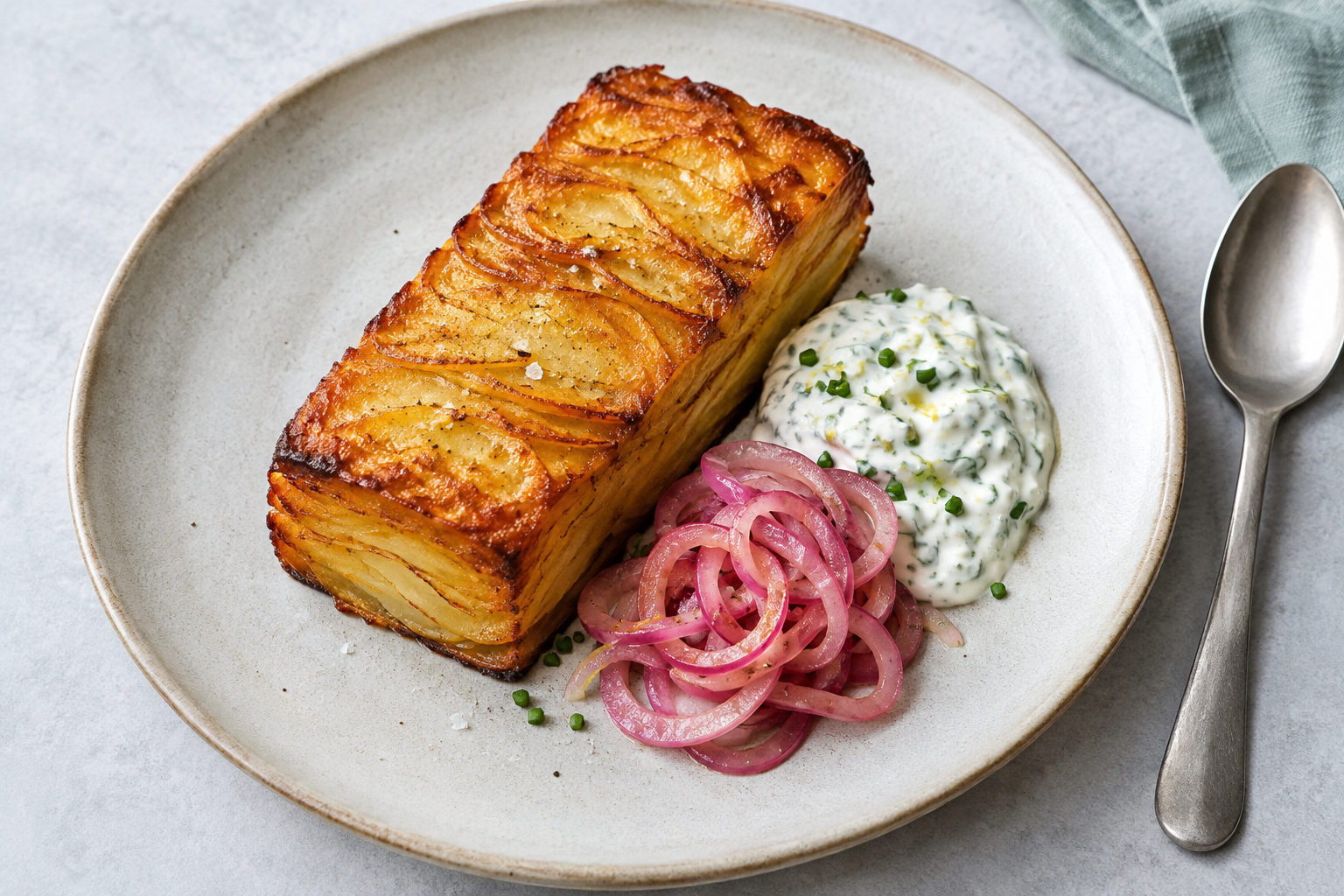
Paper-thin layers of potato turn tender and hold together in the oven, then crisp up all over in the pan. Chive cream and pickled shallot bring a bright acidity to the buttery pavé. Start ahead: the potato needs to cool and firm up before you fry it.

140 minutes4 servings
Jump to recipe
Golden-brown, crispy potato pavé with chive cream and pickled shallot.
ABOUT THIS RECIPE

Layers That Hold Their Shape

Pavé means “paving stone” in French and here refers mainly to the shape: a firm, rectangular block that is cut into portions after baking. In this contemporary main course, the shape doesn’t come from a pastry crust, but from thin slices of potato that bind together with butter, heat and pressure. The result has a tender centre with distinct layers and, after a short spell in the pan, a crisp outer crust.

For best results, use waxy potatoes that hold their shape, such as Nicola, or a slightly flourier variety if you want especially soft layers. Peel them for an even texture and slice them thinly and evenly with a mandoline; a sharp knife works too, but take your time and keep the slices roughly the same thickness. Don’t rinse them: the surface starch helps the layers bind together. Do pat any wet slices dry, though, so the butter isn’t unnecessarily diluted.

Slow baking under weight is the crucial step. The pressure keeps the layers compact as the potato cooks and prevents large gaps from forming in the block. Line the tin generously with baking paper so you can easily lift out the cooled pavé. The potato is cooked when a thin knife slides into the centre with little resistance. After baking, the block needs time to cool and firm up; a night in the fridge makes it especially easy to slice and crisp up all over. Planning ahead is useful, because a warm block is more likely to fall apart.

Chive cream adds a cool freshness, while the pickled shallot, with vinegar and a little sugar, cuts through the rich, buttery flavour. Slice the shallot thinly so it takes on the flavour quickly and is pleasant to eat alongside the potato. No crème fraîche on hand? Use thick, full-fat yoghurt for the sauce; if you like, stir in a spoonful of sour cream to make it richer. Red wine vinegar can replace the white wine vinegar, but it will give the shallot a darker colour.

Serve the pavé as a main course with a crisp green salad or quickly pan-fried green beans; these aren’t part of this recipe, but go well with the rich layers. Fry the blocks in a large skillet just before serving, giving them time to form a golden-brown crust. Store leftovers covered in the fridge and fry them in a skillet over medium heat until piping hot all the way through and crisp again.
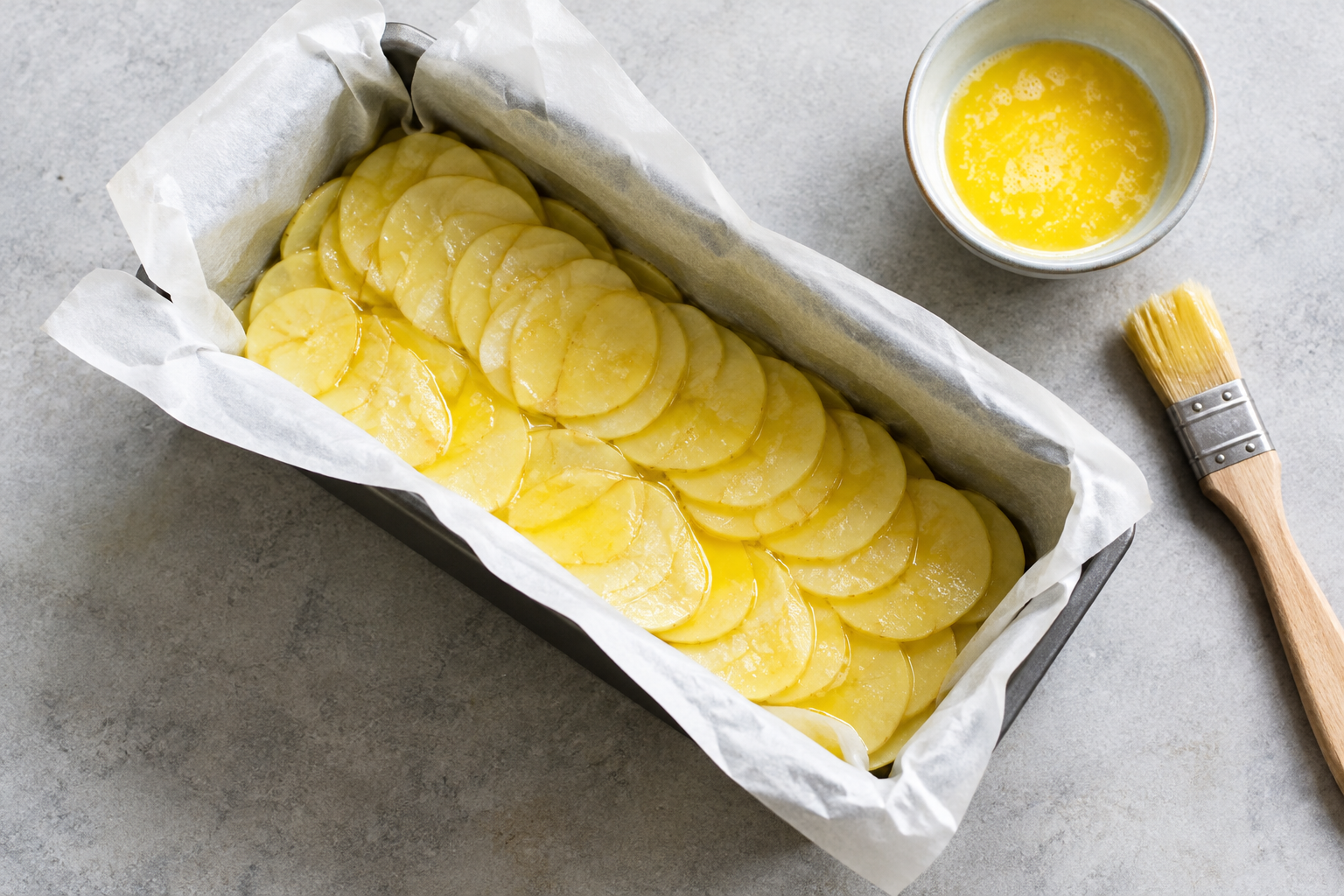
Thin slices of potato are layered with melted butter in a loaf tin.
GET STARTED

Potato Pavé with Chive Cream and Pickled Shallot

Prep 35 minCooking 105 minTotal 140 min

Ingredients

4 servings
Quantities scale with servings; adjust cooking times as needed.

How to make it

  1. 1

    Preheat the oven to 160 °C (conventional top and bottom heat). Lightly grease a loaf tin of about 20 x 10 cm and line it with baking paper, leaving plenty of overhang.

  2. 2

    Peel the potatoes and slice them into pieces about 2 mm thick using a mandoline or sharp knife. Don’t rinse them. Pat them dry if they’re damp.

  3. 3

    Lay a thin layer of potato slices in the tin, brush with a little melted butter and sprinkle with some salt. Repeat until all the potato, butter and 1¼ teaspoons of salt have been used. Press the layers down gently as you go.

  4. 4

    Cover the tin with baking paper and a layer of aluminium foil. Place a second, suitably sized oven dish or loaf tin on top as a weight. Bake for 75–90 minutes, until a thin knife slides into the centre with little resistance.

  5. 5

    Remove the tin from the oven and take off the weight. Leave the pavé to cool, put the weight back on and refrigerate, covered, for at least 3 hours, preferably overnight.

  6. 6

    Cut the shallots into thin rings. Heat the white wine vinegar with the water, sugar and ½ teaspoon of salt until the sugar has dissolved. Pour the mixture over the shallot and leave for at least 30 minutes.

  7. 7

    To make the chive cream, stir together the crème fraîche, yoghurt, chives and lemon zest. Season with a pinch of salt.

  8. 8

    Lift the cold pavé out of the tin using the baking paper and cut it into four blocks. Heat the oil in a large skillet over medium heat. Fry the blocks all over for 8–10 minutes, until golden brown and crisp; turn them carefully with a spatula.

  9. 9

    Serve the potato pavé straight away with the chive cream and drained pickled shallot.


