ABOUT THIS RECIPEFruit Beneath a Soft Crumb
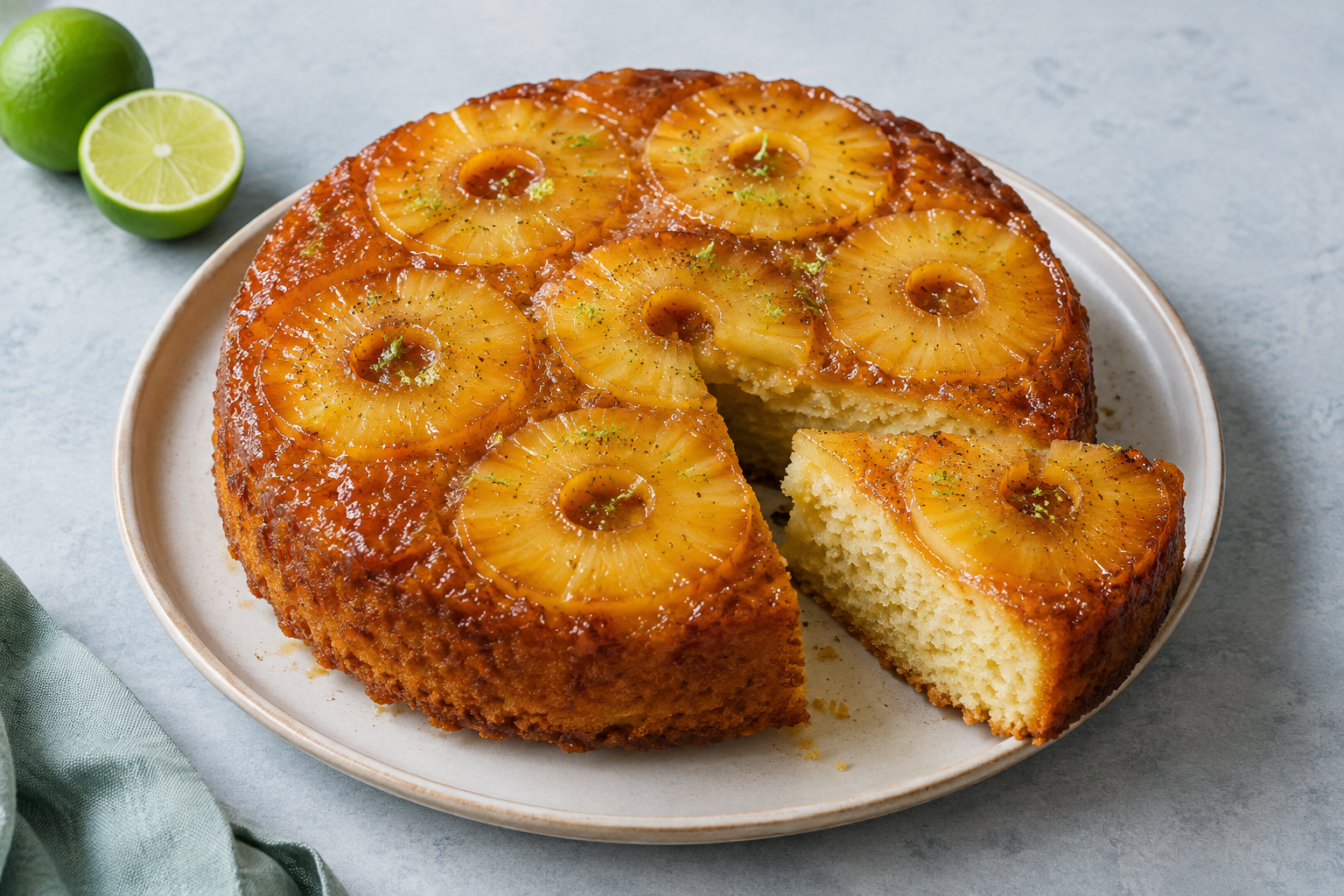
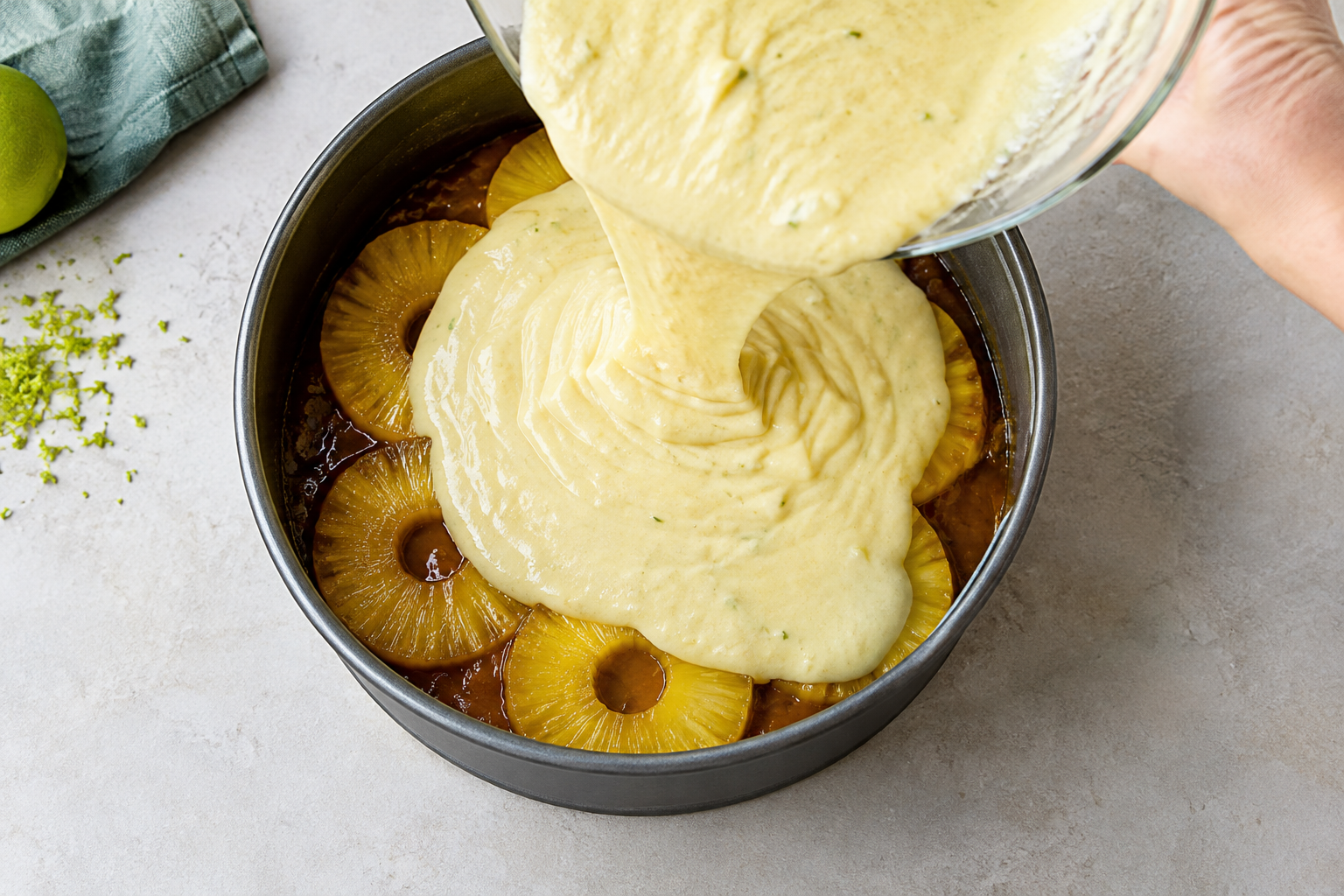
With an upside-down cake, the fruit goes into the pan first, with the batter on top. After baking, you turn the cake over to reveal the pineapple and caramel. A sturdy, round cake pan about 22 centimeters across works better for this than a springform pan: liquid caramel can leak through the seam. Turn the cake out onto a rimmed plate, as a little warm syrup may run out. Let the cake rest briefly, but turn it out while the caramel is still soft.
Pineapple is available year-round, both fresh and canned. If using fresh pineapple, choose a ripe one that smells fragrant and gives slightly when pressed; very unripe fruit tends to be sour and firm. Don’t cut the slices too thick, and pat them dry so excess moisture doesn’t end up in the cake. Canned pineapple is a practical substitute: drain the rings well and pat them dry. The flavor is generally a little milder, but the slices are uniform and fit easily into the baking pan.
The caramel gives the fruit a deep, slightly bitter edge that rounds out the sweetness of the pineapple. Cook the sugar to a golden amber, not dark brown: the caramel gets even hotter in the oven and may otherwise taste bitter. Once you add the butter, the mixture may bubble up; use a pan with plenty of room and stir carefully. For the cake, first beat the butter and sugar until light and fluffy, then add the eggs gradually. This helps create an even crumb. Once you add the flour, mix only as long as needed to keep the cake soft.
Lime zest adds a fresh aroma without adding moisture to the batter. Grate only the green part of the peel, as the white underneath can be bitter. Black pepper may sound unusual in cake, but in a small amount it mainly adds warmth and lets the fruity flavor shine; use freshly ground pepper if possible, and keep the amount modest. Serve the cake warm or at room temperature, optionally with unsweetened whipped cream or a spoonful of crème fraîche. Store any leftovers covered in the refrigerator, and let a slice come to room temperature before serving.
 Main course

