ABOUT THIS RECIPESweet green with a toasted crunch
Peas give this dip a gentle, slightly sweet flavour all on their own. Fresh peas are mainly available in late spring and summer; frozen peas are a practical choice the rest of the year and retain their colour well. Cook them briefly, just until tender. Overcooking makes them duller and can flatten their fresh flavour. Rinse them under cold water after cooking and drain well: this stops the cooking and keeps the dip from becoming watery.
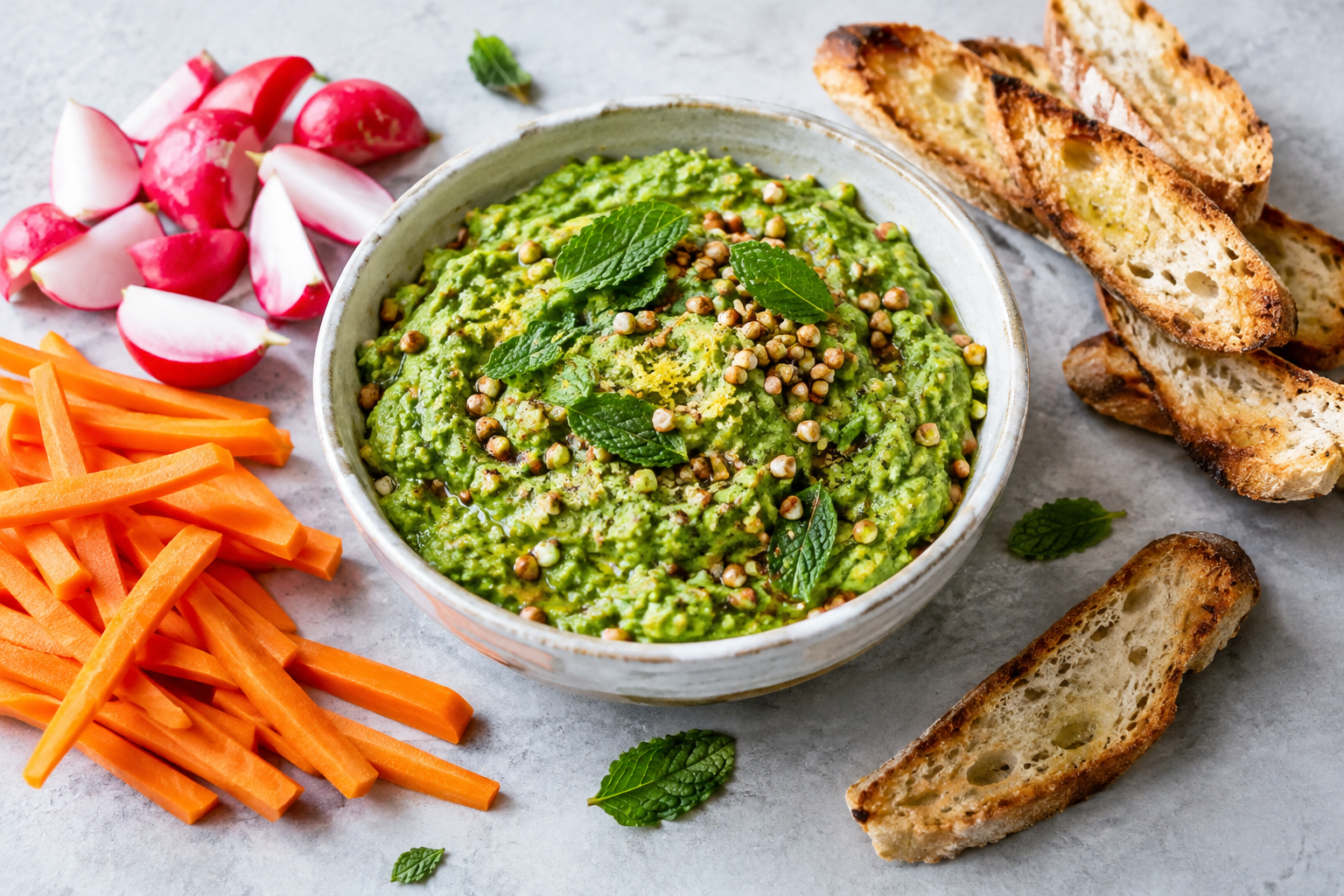
Purée the peas with olive oil, lemon zest and juice, and mint, but deliberately leave the texture coarse. An immersion blender quickly gives you a smooth result, so pulse briefly and scrape down the sides of the bowl in between. You can also mash the peas with a fork or potato masher. The zest brings out the lemon’s aroma, while the juice balances the sweetness. Add the juice a little at a time and taste as you go: the amount needed depends on how juicy and tart the lemon is.
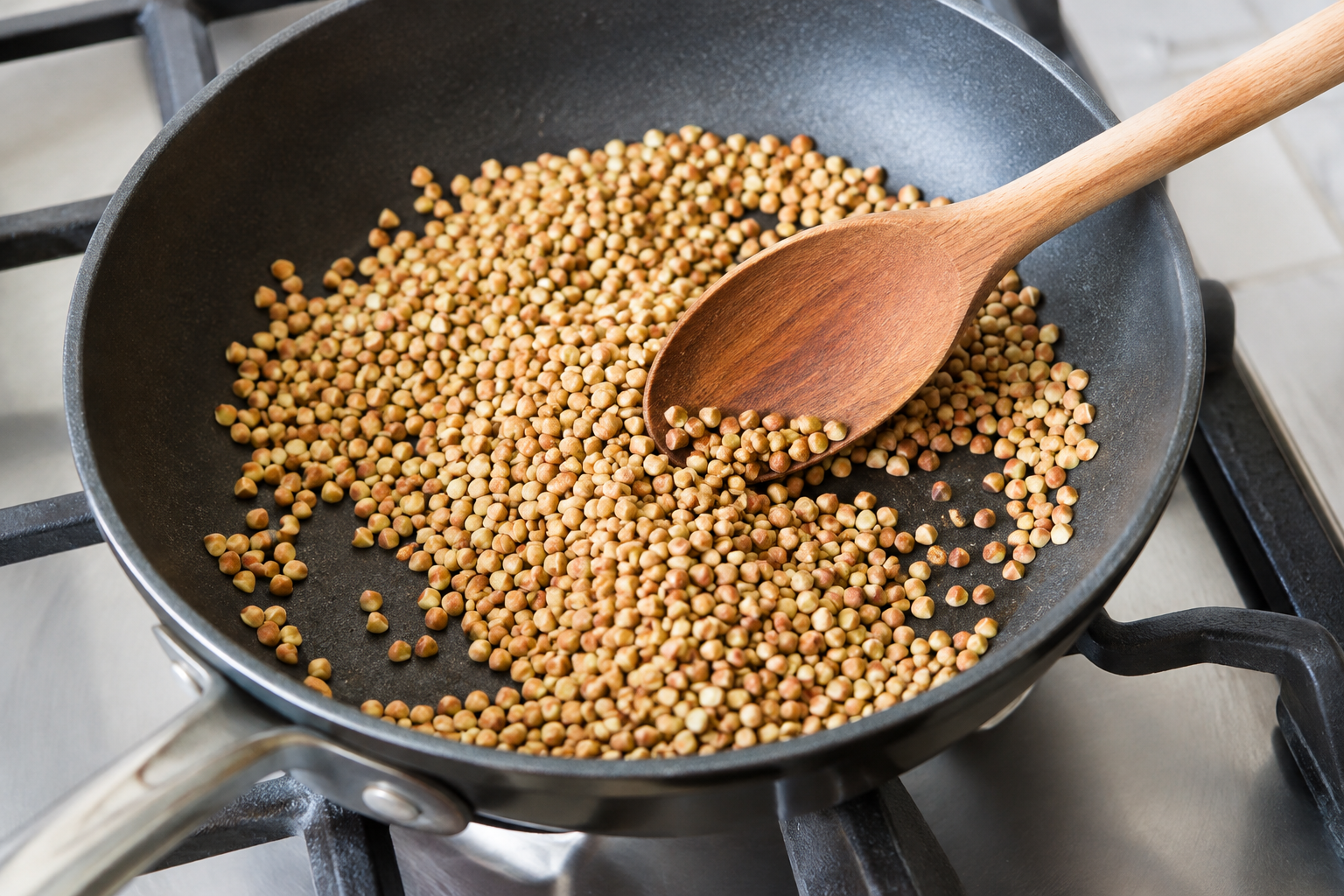
Toast the buckwheat groats in a dry frying pan until fragrant and crisp. Shake the pan regularly and keep an eye on them; small groats can go from toasted to burnt quickly. Let them cool before scattering them over the dip. Add them just before serving, otherwise moisture from the pea purée will seep into the buckwheat and the contrast will disappear. Use raw buckwheat groats, not cooked buckwheat or ready-to-eat toasted kasha.
Radishes and carrots add a fresh, juicy bite alongside the soft dip. Cut them into sticks that are easy to pick up. Thin slices of toasted bread are a heartier alternative: don’t cut the slices too thick, so they turn crisp without overpowering the dip. Serve everything on a platter, with the vegetables and bread arranged around it; a spoon is handy for serving the dip. If you don’t have mint, parsley works too, though the flavour will be less cool and pronounced.
You can make the pea dip ahead and keep it covered in the fridge; preferably use it within two days. Store the buckwheat separately at room temperature and add it just before serving. If the bread has softened, toast it briefly again just before eating. This keeps the different textures distinct, even when you place the platter in the middle of the table.
 Main course

