ABOUT THIS RECIPEPepper as a sauce, not a side dish
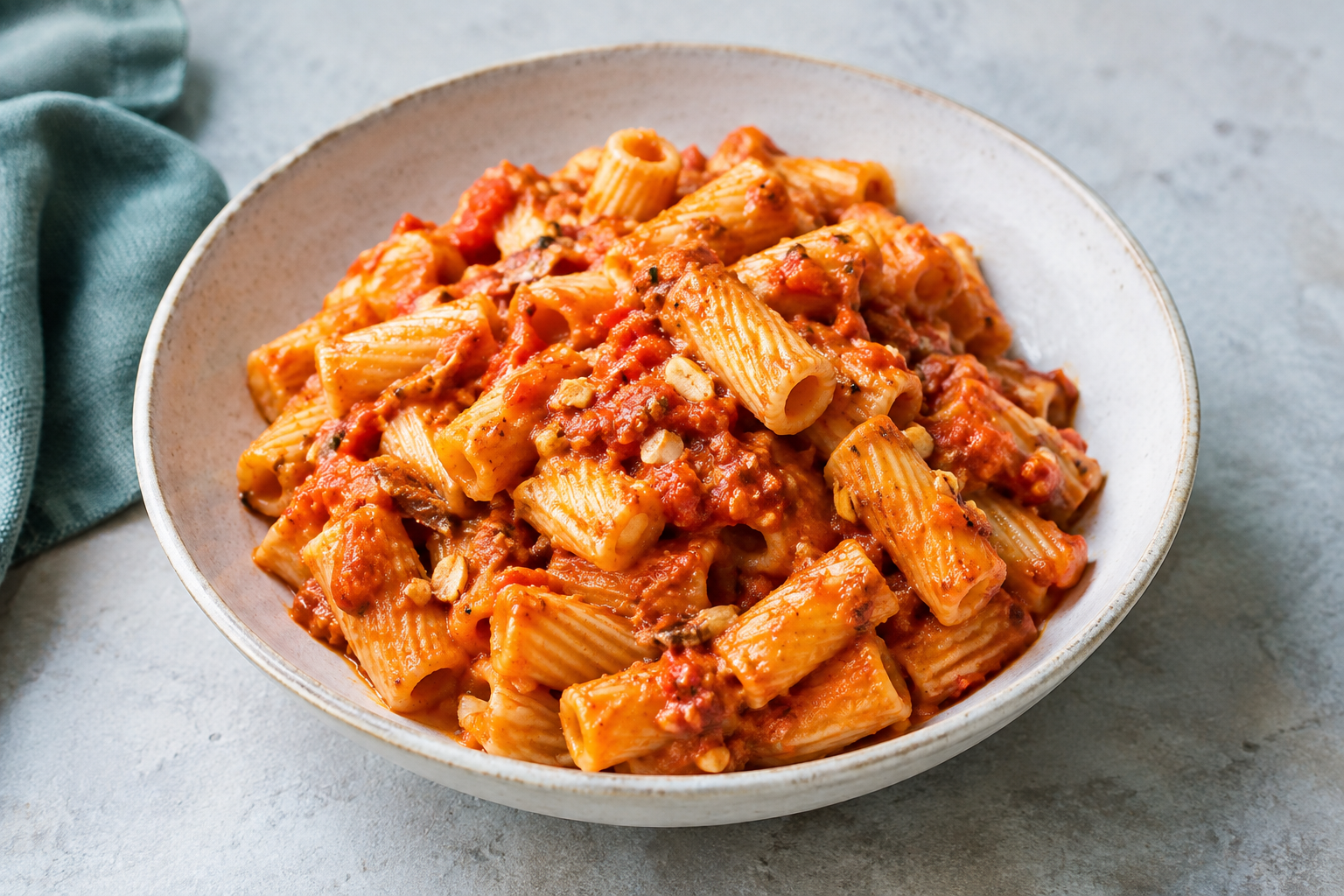
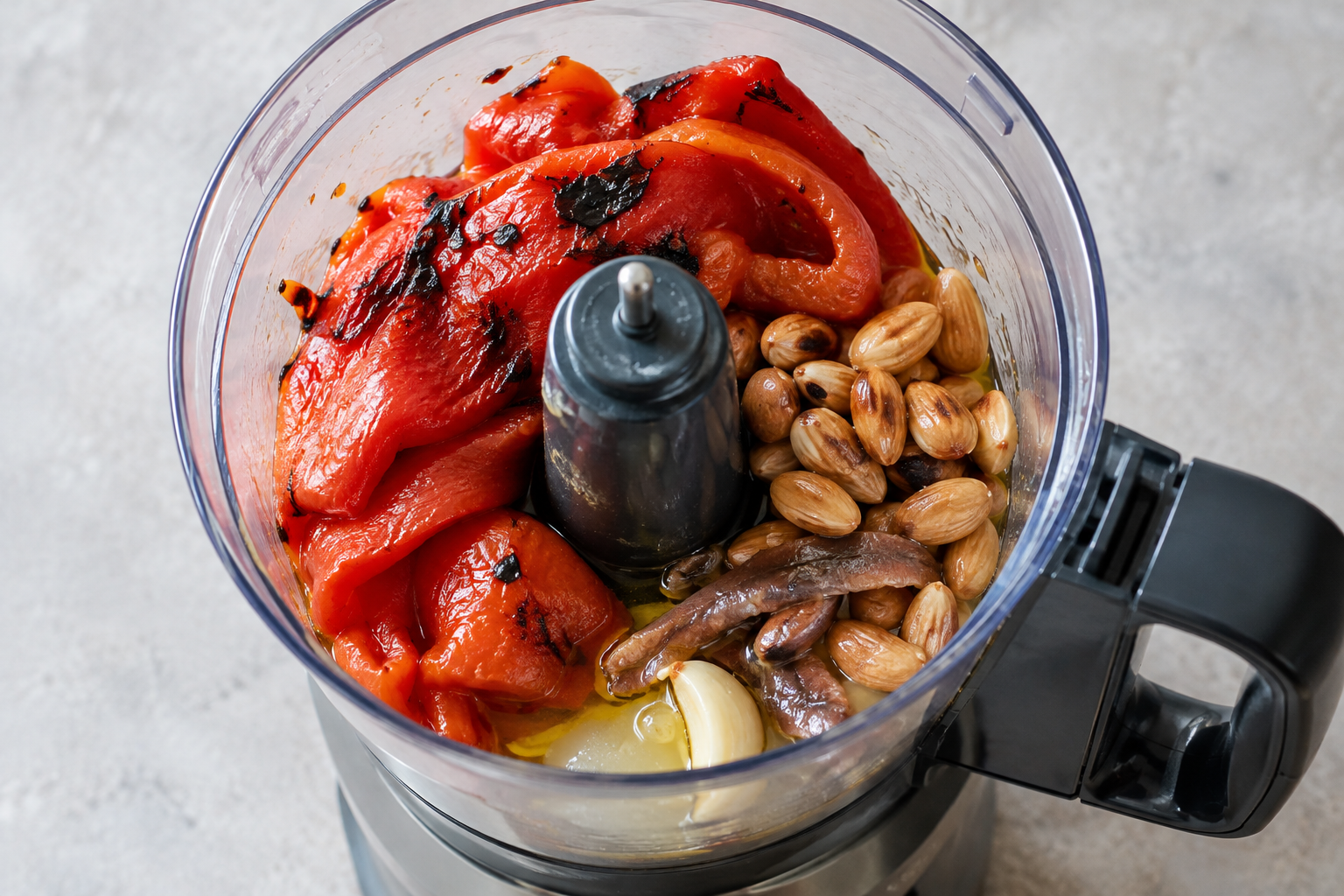
In this dish, roasted peppers do the work of a tomato sauce: they give the pasta colour, sweetness and a rich vegetable flavour. Roasting the peppers until completely soft also gives the flesh a lightly smoky note. The blackened patches on the skin are no problem; you remove the skin before using the peppers. The sauce is deliberately left chunky, so you can still make out the almonds and peppers.
Almonds give the sauce body and a soft, slightly grainy bite. Use blanched almonds for a milder flavour, or skin-on almonds for a more earthy result. Toasting them briefly makes them more fragrant and easier to grind into crumbs. A food processor is quick, but use short pulses: blending for too long can release the almond oil and make the sauce heavy.
The anchovy fillets mostly dissolve into the sauce as you mix it. They mainly add savouriness and salt, rather than a pronounced fish flavour. So taste at the end before adding extra salt; the anchovies and pasta water already bring salt of their own. Lemon juice brightens the sweet peppers. If your peppers are naturally very fresh-tasting, start with less lemon and add more to taste.
Red pointed peppers are handy because of their elongated shape, but regular red peppers work too. Peppers are often plentiful in summer and early autumn; outside that season, you can simply use supermarket peppers. For a milder version, leave out the anchovies and add a little extra salt, though this will change the savoury depth. Walnuts can replace the almonds, but they have a more pronounced, bitter flavour.
Short pasta with ridges or hollows, such as rigatoni or fusilli, holds the chunky sauce well. Save a cup of pasta water before draining the pasta: the starch helps bind the oil and pepper pulp into a glossy coating. Serve straight away, with a simple green salad on the side if you like. Leftover sauce can be kept covered in the fridge and used within three days; warm it gently and loosen it with a little water if needed.
 Main course

