Kitchen classics, vegetables, and bold flavors.
All recipes
DESSERT · NOORS KITCHEN

Paris-Brest with Hazelnut Praline Cream

A golden-brown ring of choux pastry, filled with airy mousseline cream and homemade hazelnut praline. The ring is baked until sturdy enough to hold the generous filling, while toasted hazelnuts bring a deep, slightly bitter caramel flavor.

105 minutes8 servings
Jump to recipe
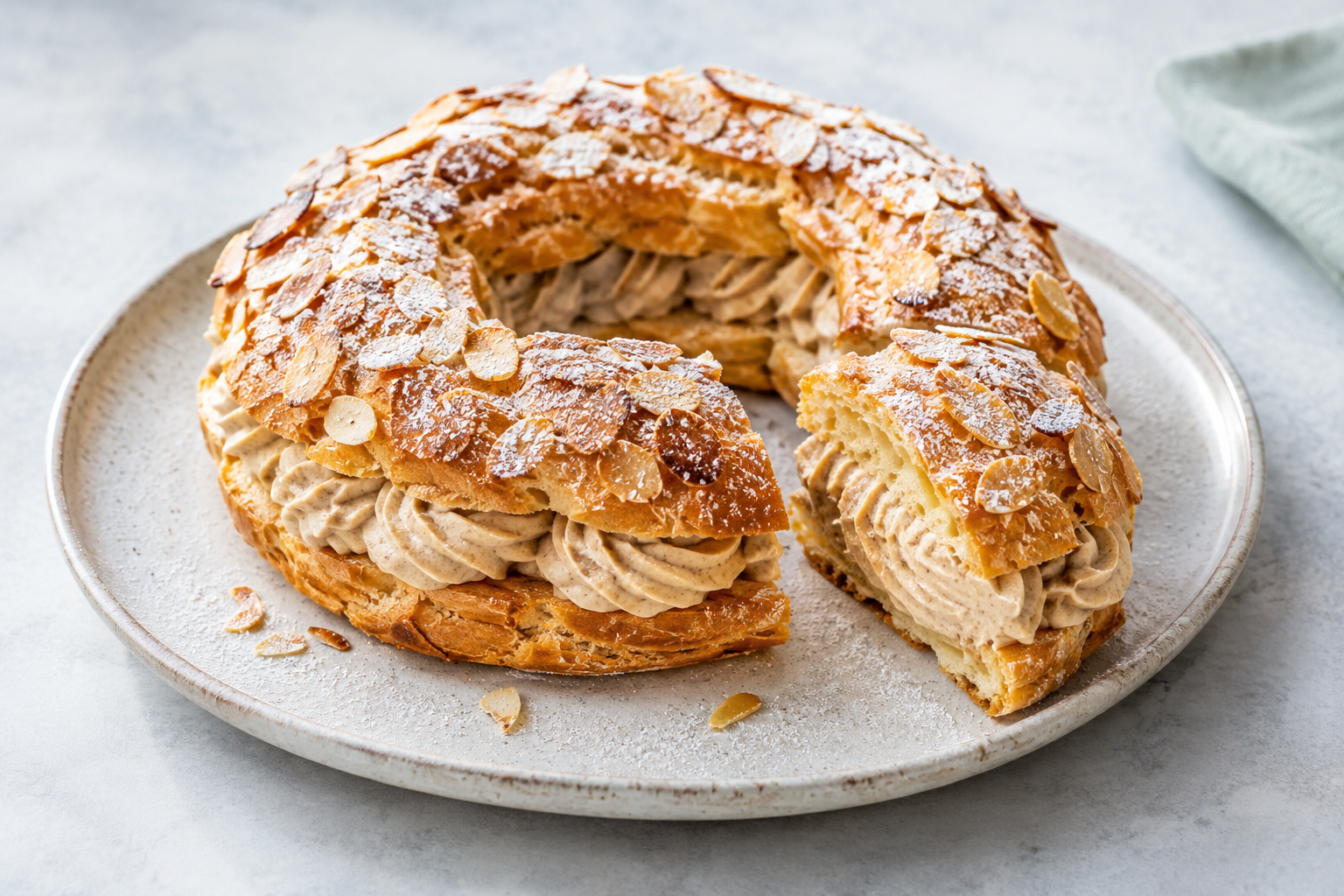
Paris-Brest made with golden-brown choux pastry, hazelnut praline cream, flaked almonds, and powdered sugar.
ABOUT THIS RECIPE

A ring with room for praline

Paris-Brest is a French pastry made from choux pastry, usually baked in a ring shape and filled with praline cream. The ring shape is often associated with a wheel, but the most important thing for home bakers is its practical form: after baking, you can slice the pastry horizontally and fill it. The classic combination of hazelnut, caramel, and buttery cream is rich, so small slices are enough for dessert after a meal.

To make the filling, first prepare hazelnut praline: toasted hazelnuts are finely ground with caramel to make a paste. Toasting the nuts deepens their flavor and makes it easier to rub off the skins. Let the caramel harden completely before grinding; in a food processor, it first turns into crumbs and then into a paste. This can take a few minutes. Pause as needed so the machine doesn’t overheat. A jar of pure hazelnut paste is not a direct substitute: it lacks the caramelized flavor. If using ready-made hazelnut praline, choose an unsweetened or not-too-sweet variety and taste the cream before adding extra sugar.

Choux pastry rises from steam. That’s why it’s important to cook the flour briefly over the heat after adding it: this evaporates some of the moisture, allowing the dough to absorb the eggs without becoming runny. Add the egg gradually and watch the texture; the dough should be glossy and fall from the spatula in a broad V shape. Egg sizes vary, so the texture is a more reliable guide than using every last drop from the bowl. Don’t open the oven early in the baking process. A ring that hasn’t set yet can collapse; after baking, let it release steam and cool completely before slicing it.

The cream is mousseline: pastry cream whipped with soft butter until airy and flavored with praline. Let the pastry cream and butter come to roughly the same temperature; cold pastry cream can make the butter seize and leave the cream grainy. If this happens, keep whisking gently or warm the bowl very briefly over lukewarm water. A vanilla pod adds a soft background note, but you can leave it out if you want the hazelnut to stand out more.

Ideally, fill the Paris-Brest on the day you plan to serve it, so the pastry keeps its crisp edge. Dust it with powdered sugar just before slicing and serve the slices with coffee or as the finish to a celebratory dinner. Cover any leftovers and store them in the refrigerator; eat them within two days, although the pastry will soften. Don’t leave the cake at room temperature for a long time, as the filling contains dairy and egg.
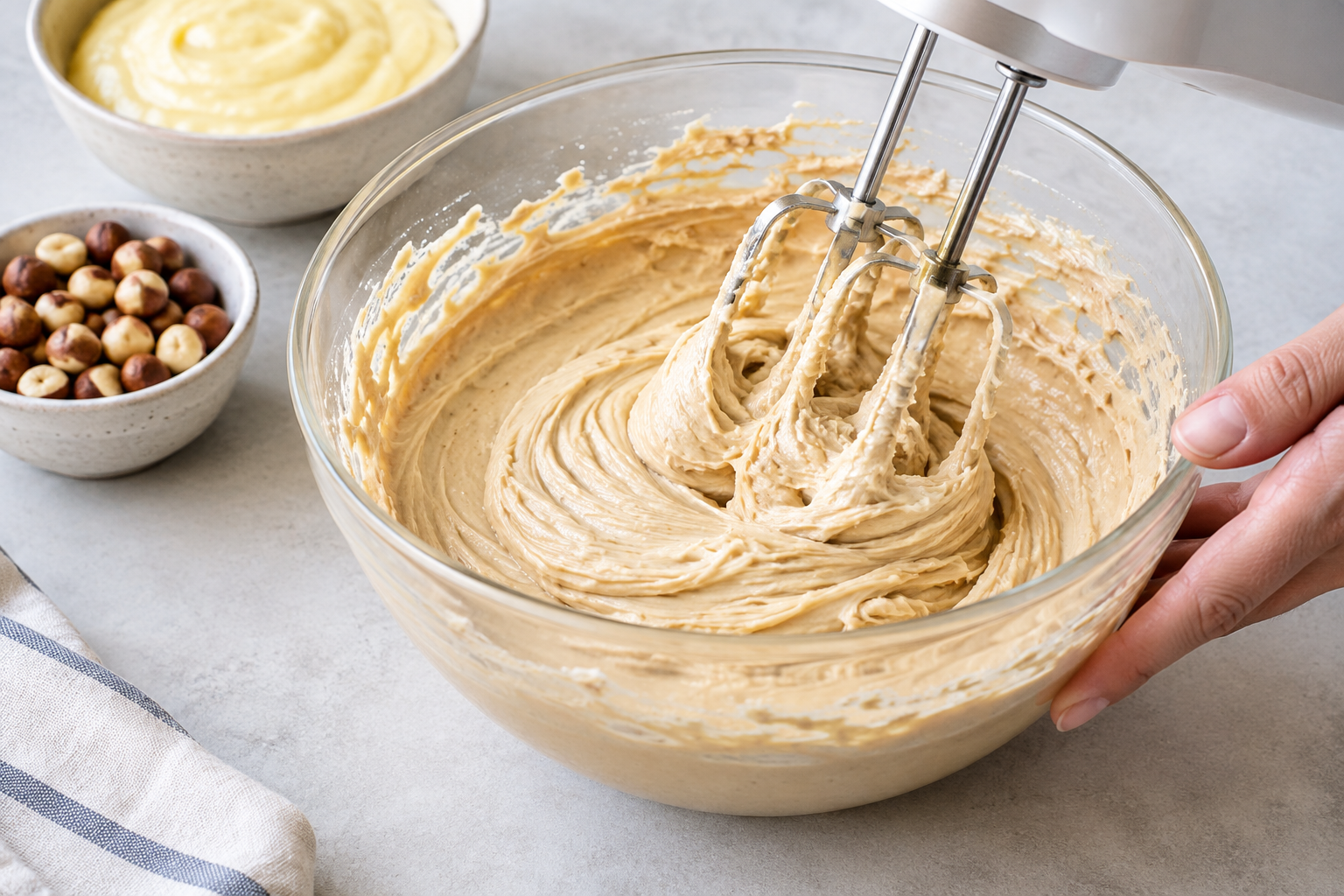
Hazelnut praline cream being whipped until airy in a mixing bowl.
GET STARTED

Paris-Brest with Hazelnut Praline Cream

Prep 55 minCooking 50 minTotal 105 min

Ingredients

8 servings
Quantities scale with servings; adjust cooking times as needed.

How to make it

  1. 1

    Preheat the oven to 160 °C. Toast the hazelnuts on a baking sheet for 10–12 minutes, until fragrant and lightly colored. Rub off as much of the skins as possible with a clean tea towel, then let the nuts cool.

  2. 2

    Put 80 g sugar and 2 tbsp water in a small saucepan. Heat without stirring until the sugar caramelizes to a deep golden brown. Stir in the hazelnuts and pour the mixture onto baking paper. Let it harden completely.

  3. 3

    Break the hazelnut caramel into pieces and grind in a food processor until smooth and paste-like. Scrape down the sides as you go, and pause the machine briefly if needed.

  4. 4

    Make the pastry cream. Heat 250 ml milk with the vanilla pod until it just begins to steam. Whisk the egg yolks with 50 g sugar and the cornstarch until smooth. While whisking, pour a splash of hot milk into the yolk mixture, then pour everything back into the pan and heat, stirring, until you have a thick cream. Simmer gently for 1 minute. Remove the vanilla pod, spoon the cream into a bowl, and press plastic wrap directly onto the surface. Let it cool to room temperature.

  5. 5

    Draw an 18 cm-diameter circle on baking paper and place the paper upside down on a baking sheet. Preheat the oven to 190 °C (conventional, top and bottom heat).

  6. 6

    Put 125 ml water, 125 ml milk, 100 g butter, 5 g sugar, and the salt in a saucepan. Bring to a boil. Remove the pan from the heat, add the flour all at once, and stir vigorously until a smooth ball forms. Return the pan to low heat and keep stirring for 1–2 minutes, until a thin film of dough remains on the bottom.

  7. 7

    Spoon the dough into a bowl and let it cool for 5 minutes. Beat in the four eggs a little at a time until the dough is glossy and falls from a spatula in a broad V shape. Spoon it into a piping bag fitted with a round nozzle.

  8. 8

    Pipe two lines of dough side by side along the drawn circle, then pipe a third line on top of the seam. Carefully brush with the extra beaten egg and scatter the flaked almonds over the top.

  9. 9

    Bake the ring for 15 minutes at 190 °C. Lower the temperature to 170 °C and bake for another 25–30 minutes, until the ring is deep golden brown and firm. Don’t open the oven door while it bakes. Turn off the oven, leave the door ajar, and let the ring dry out for 5 minutes. Then let it cool completely.

  10. 10

    Beat the softened butter for the mousseline in a bowl until light and creamy. Whisk the cooled pastry cream until smooth, then add it to the butter a spoonful at a time. Beat in the praline paste until the cream is airy and smooth.

  11. 11

    Slice the cooled pastry ring horizontally in half. Spoon the praline cream into a piping bag and pipe generous rosettes onto the bottom half. Place the top half on top and dust with powdered sugar just before serving.


