ABOUT THIS RECIPEFennel as a gentle base for crab
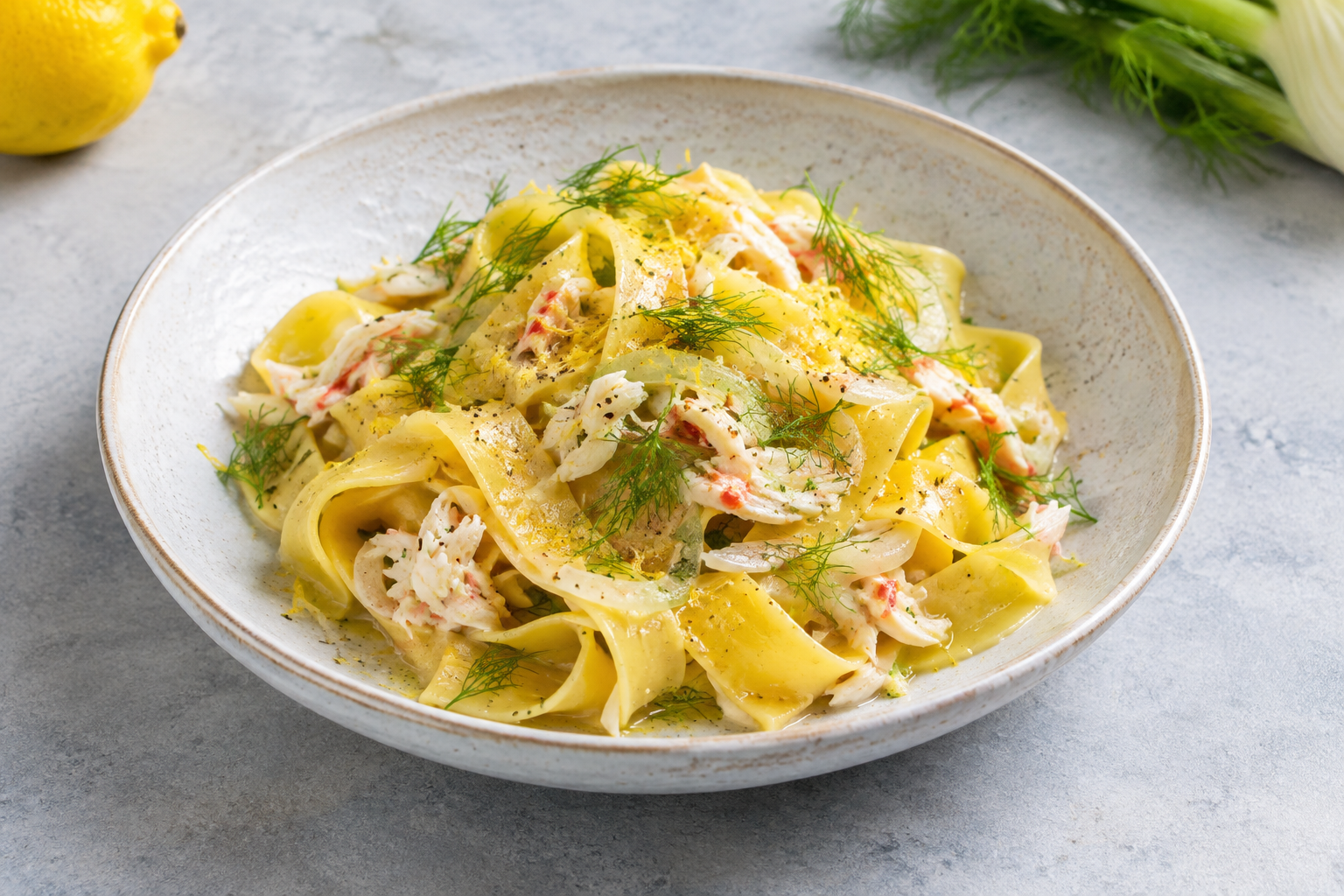
This dish is all about simple balance: fennel’s mild, slightly anise-like flavor gives the crab a savory base, while lemon keeps everything fresh. Pappardelle is wide enough to catch the loose pieces of crab and thin strips of fennel. The chili should stay in the background; start with a small amount and add more only if you want extra heat.
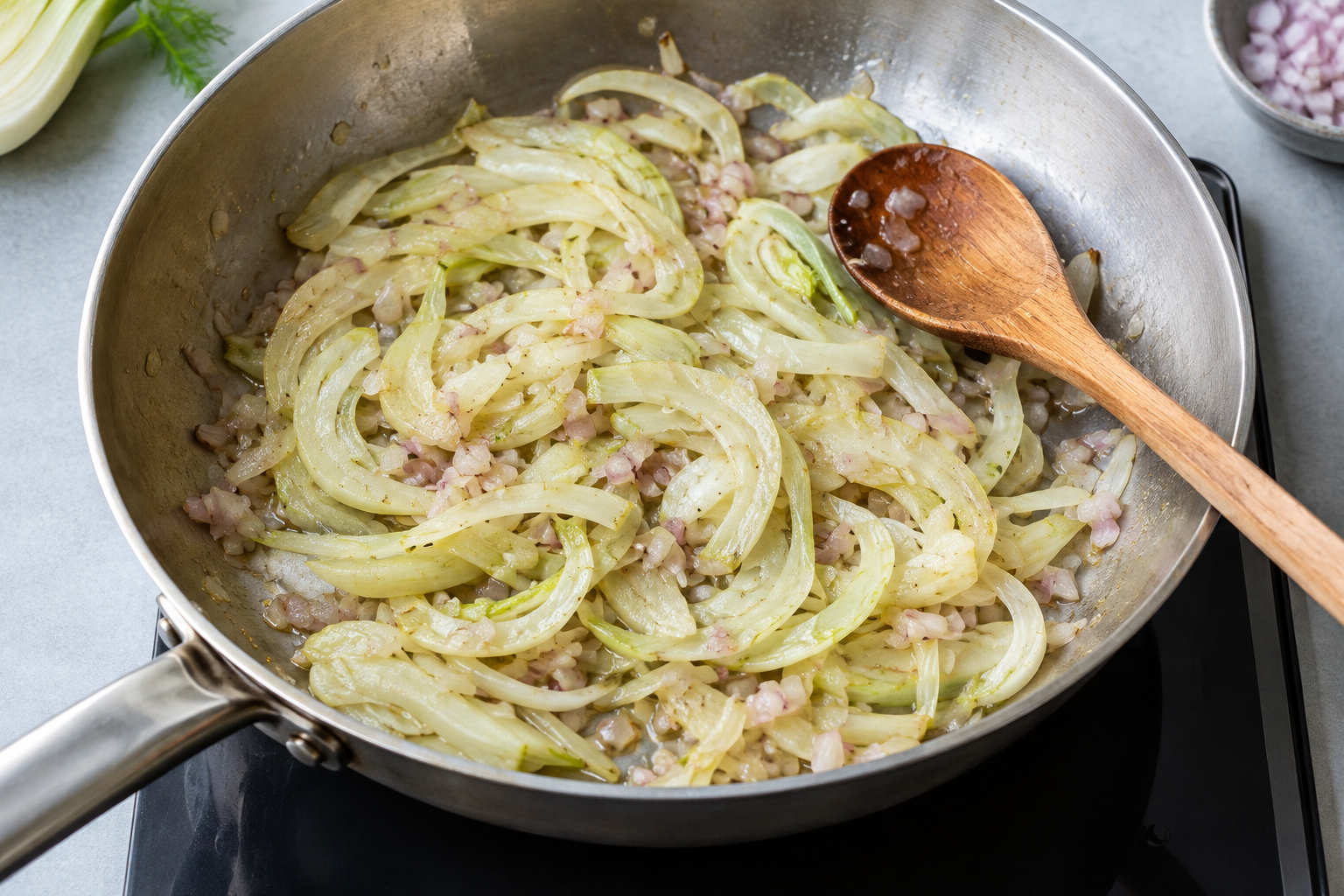
Slice the fennel as thinly as possible, using a sharp knife or mandoline. Gently cooking the slices in olive oil softens and sweetens them without letting them brown or turn bitter. Save the feathery fennel fronds for serving: they add a fresh, aromatic touch and bring out the anise flavor. A firm, compact fennel bulb is easier to slice; use the fronds only if they look fresh.
The sauce is made not with cream, but with olive oil, a little butter, lemon and starchy pasta water. The water makes the sauce smooth and glossy and helps it cling to the ribbons. Add it a splash at a time: pappardelle absorbs liquid quickly, but the sauce should stay light and not pool on the plate. So cook the pasta just until al dente and finish it in the pan.
Crab is already cooked, so it only needs a brief warming at the end. Frying it for too long quickly dries out the meat and lets its delicate flavor fade into the background. Freshly picked crab meat works well, but chilled, pasteurized crab meat is fine too; check it for any bits of shell before using. If crab isn’t available, you can use cooked shrimp. That will change the flavor, but the same brief, gentle warming works well.
Serve the pasta right away, preferably in preheated deep plates, with the fennel fronds and extra black pepper. A simple green salad goes well alongside; bread is handy for soaking up the last of the sauce. Quickly cover and refrigerate any leftovers, and use them within one to two days. Reheat them gently in a frying pan with a splash of water, until everything is piping hot; the pasta will become a little softer.
 Main course

