ABOUT THIS RECIPEFragrant cream with a crunchy accent
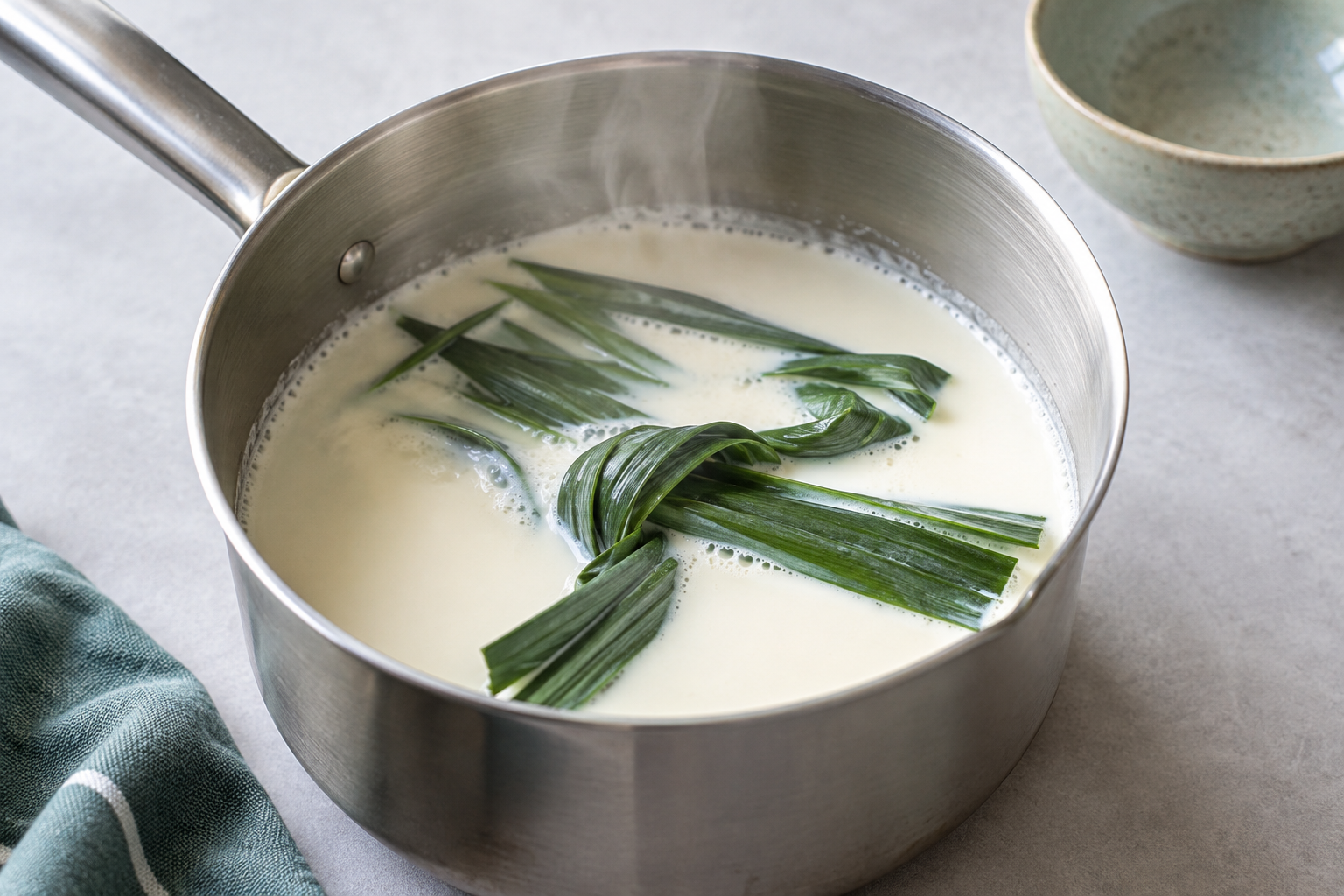
Pandan gives this panna cotta a gentle, distinctive aroma reminiscent of freshly cut grass and vanilla, without making the flavour heavy. The leaves steep directly in the cream and milk, spreading their aroma evenly through the base. Use fresh or frozen leaves, tied loosely so they’re easy to remove from the pan. Pandan extract works too: add a small amount to the warm cream and taste before adding more, as the strength varies by brand. The colour may turn out greener than when infusing the leaves.
The ratio of cream, milk and gelatine determines the texture of the panna cotta. Using only cream makes the dessert richer; milk keeps it lighter. With the stated amount of gelatine, you can unmould the panna cotta while the centre still has a soft wobble. Don’t let the dairy mixture boil: heat it gently until steaming, then remove the pandan after it has steeped. Gelatine sets well if you first soak it in cold water and then dissolve it completely in the warm liquid. Don’t boil the gelatine afterwards, as this can weaken its setting power.
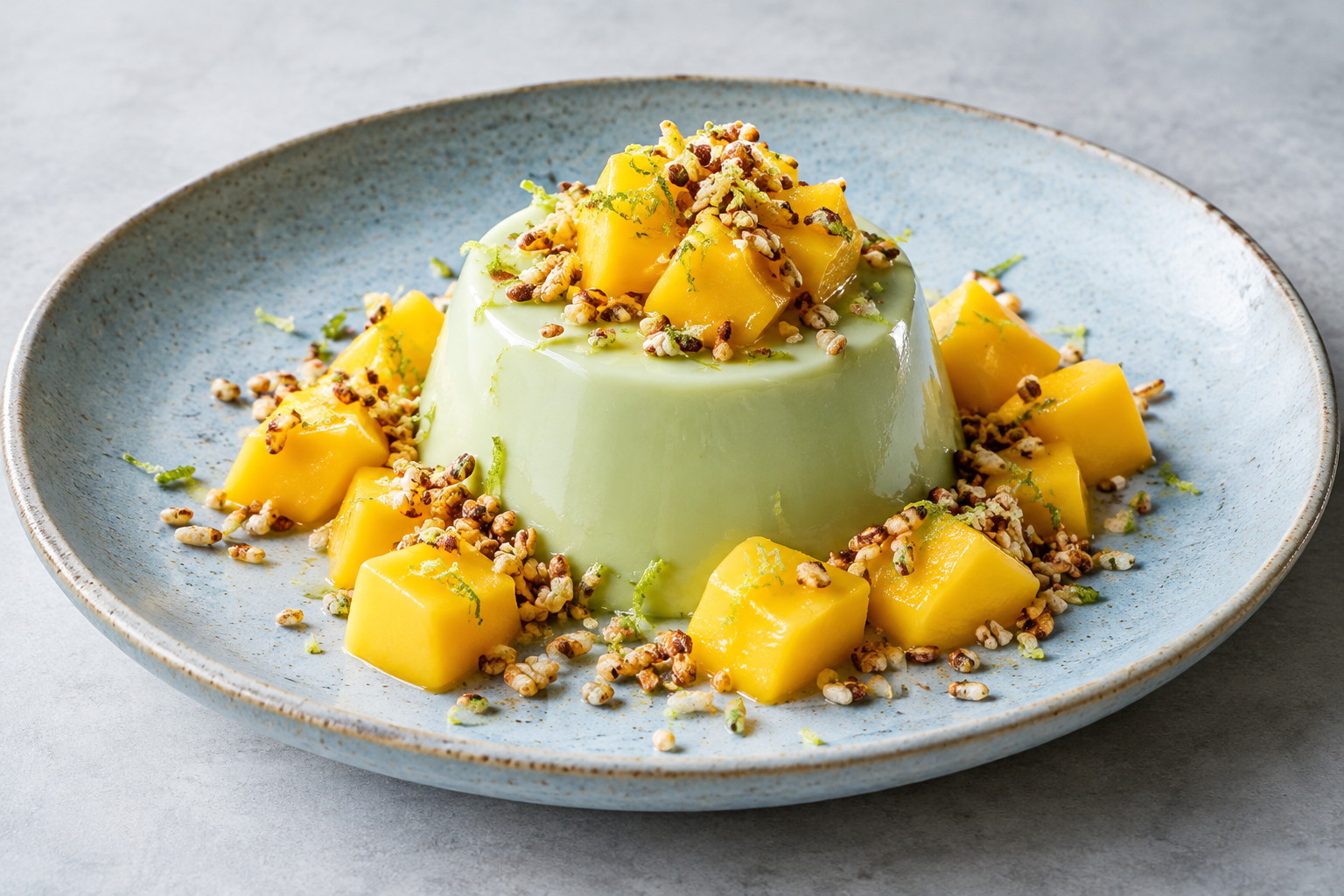
Mango adds juiciness and sweetness, while lime zest and a little juice bring the fruit to life. Choose a mango that gives slightly when pressed gently; a hard, unripe fruit can taste rather flat alongside the creamy panna cotta. Outside mango season, ripe peach or nectarine works as an alternative, though it changes the flavour profile. Cut the fruit just before serving so the pieces keep their fresh texture. Add the lime zest to the fruit, not to all the cream, where the citrus could overpower the pandan.
Toast the rice in a dry pan until the grains smell golden-brown, then crush them coarsely. This gives a nutty aroma and a crunchy contrast to the smooth panna cotta and soft mango. Use a mortar or the bottom of a sturdy glass; don’t grind the grains into powder. Jasmine rice works well, but regular long-grain rice does too. Sprinkle the rice over the dessert just before eating; otherwise, moisture from the fruit and panna cotta will seep into the crunchy topping.
Feel free to make the panna cotta a day ahead and keep the moulds covered in the fridge. Keep the mango and toasted rice separate until serving. To unmould the panna cotta, dip the bottom of each mould in warm water for a few seconds, then turn it out onto a cold plate. Serve straight away, perhaps as part of a dessert plate with extra mango. The flavours loosely reference ingredients used in Southeast Asian cuisines; this is a modern panna cotta, not an attempt to recreate a traditional dessert.
 Main course

