ABOUT THIS RECIPEBitter with a Bright Counterpoint
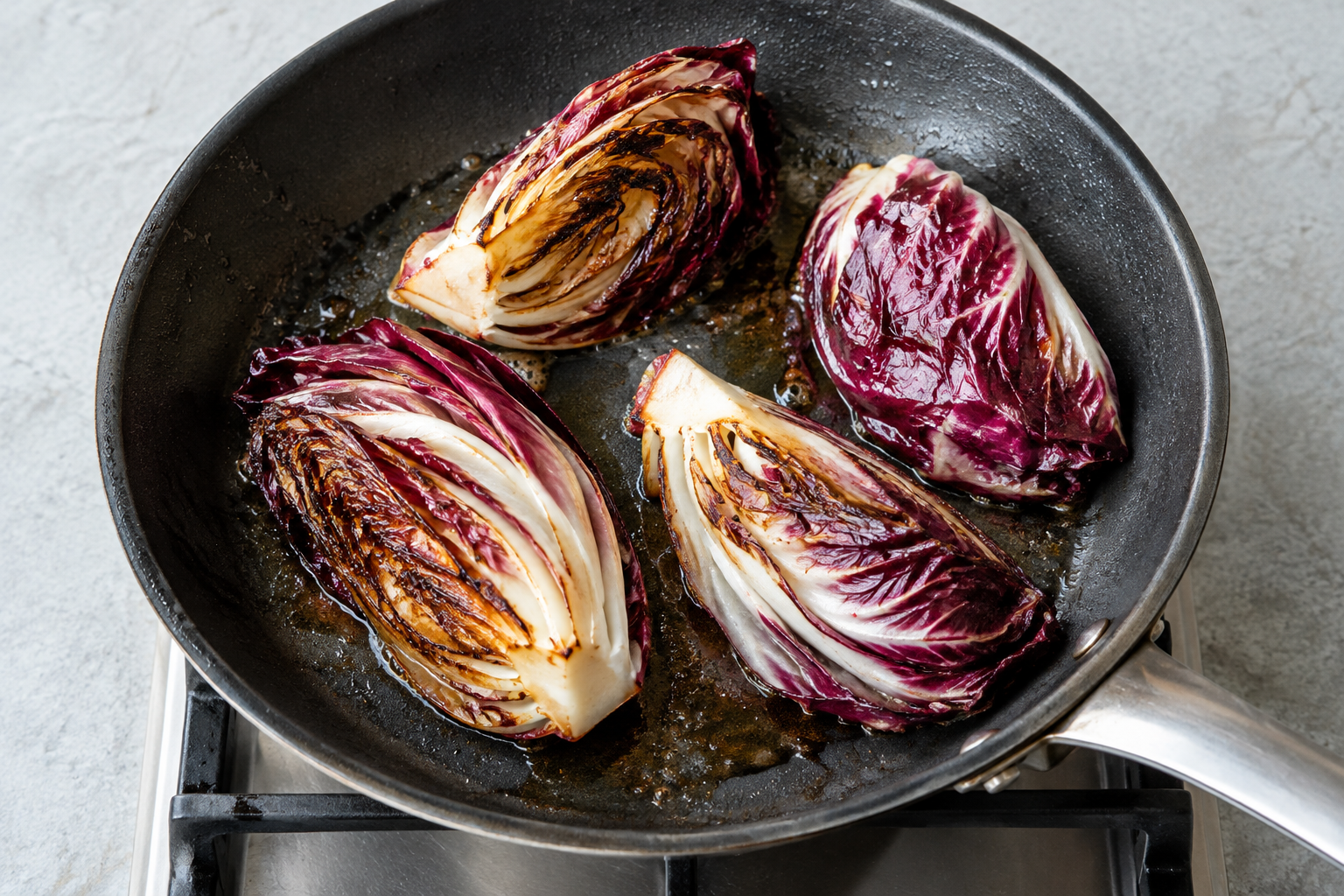
Radicchio is a firm, red-purple leafy vegetable with a pronounced bitterness. Briefly pan-frying the wedges on their cut sides gives the outside dark, slightly sweet edges while the center retains its structure. That contrast is exactly what you want: don’t cook the vegetable so long that it turns limp. A heavy skillet works well; cast iron holds the heat evenly, but a large stainless-steel pan works too.
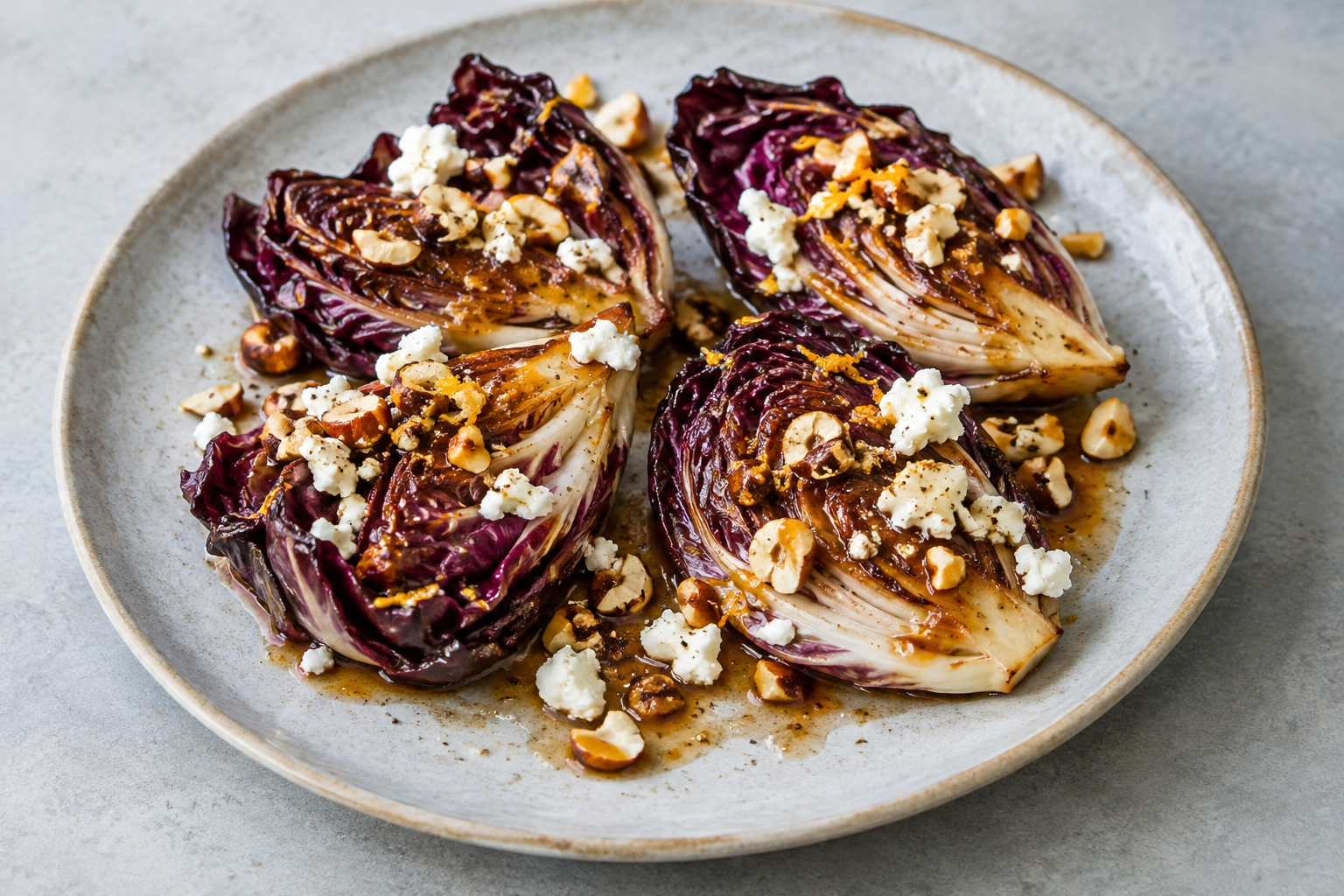
Orange brings fruity freshness and makes the bitterness more approachable, while balsamic adds a dark, slightly sweet tang. Ideally, use a balsamic vinegar that tastes smooth and tangy, not an overly syrupy variety that overpowers the radicchio. Fresh juice gives a brighter result than juice from a carton. A little grated zest boosts the orange aroma without adding extra moisture. Taste the dressing before serving: the balance of tartness and bitterness can vary from one head to another.
Hazelnuts are more than a garnish here: their toasted flavor adds depth, and their crunch contrasts with the soft goat cheese. Toast them in a dry pan and let them cool before roughly chopping them; this helps them stay crisp. Soft goat cheese is easy to break into small pieces. If you’d prefer a milder, creamier flavor, you can replace it with crumbled feta, though that will make the dish saltier.
Radicchio is generally easy to find in the colder months, but exact availability varies by store and origin. Choose heads that feel firm and have fresh, unwilted leaves. If the heads are small, shorten the cooking time and check the cut sides regularly. Leave the stem attached as you cut: it holds the wedges together so they don’t fall apart in the pan.
Serve the radicchio straight away as a warm starter, for example with crusty bread to soak up the orange-balsamic juices. As part of a meal, it goes well with sautéed mushrooms, white beans or a simple risotto. Add the nuts and goat cheese at the very end so the nuts stay crunchy and the cheese doesn’t melt completely. This dish is meant to be eaten warm; any cooled leftovers can be stored covered in the refrigerator and used cold in a salad.
 Main course

