ABOUT THIS RECIPEFrom Spiced Stew to Dark Rendang
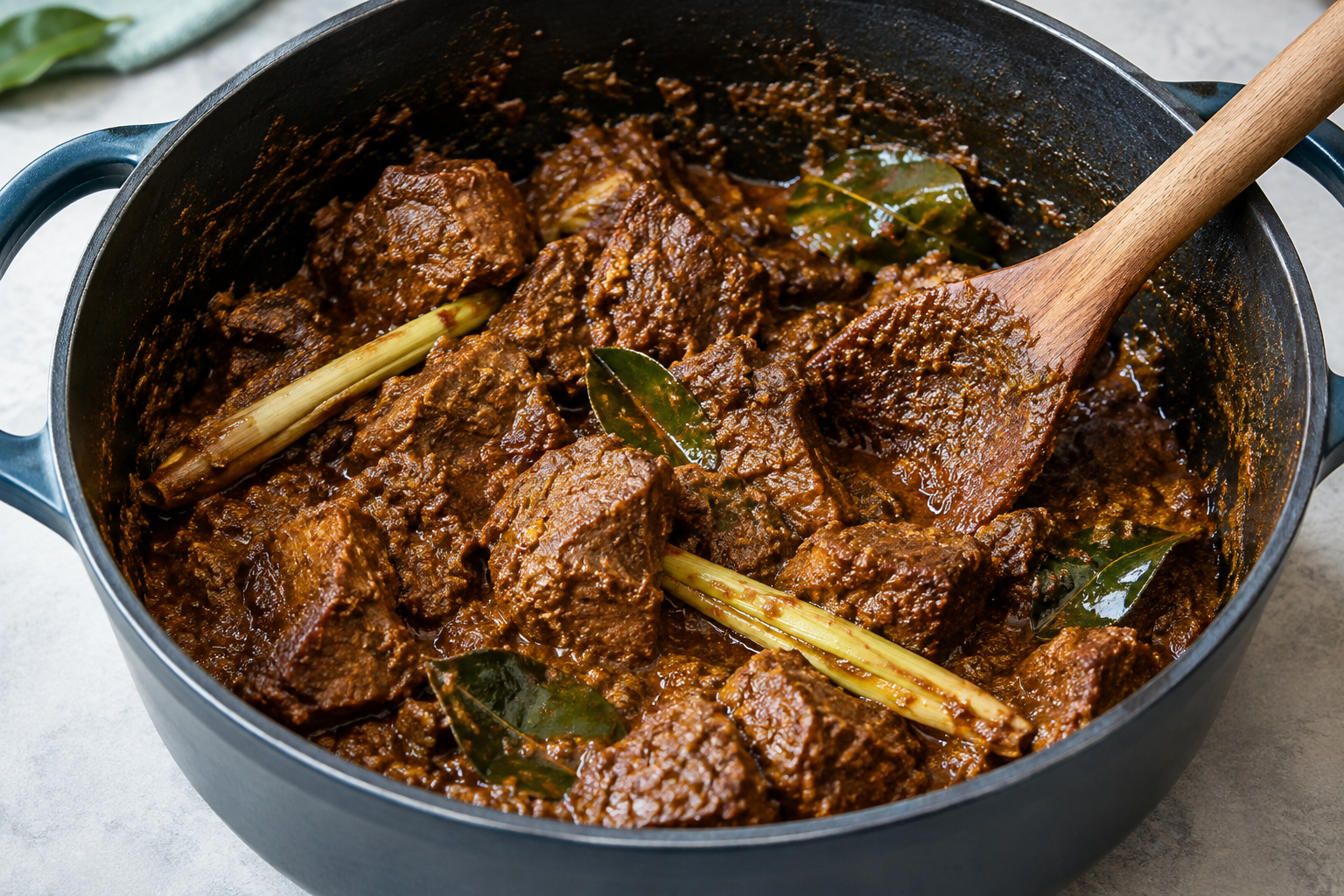
Padang rendang belongs to the Minangkabau cuisine of West Sumatra. The name does not refer to one fixed blend of spices: households and regions make different versions. What makes this style distinctive is the long cooking process, in which the meat first tenderizes in coconut milk and spices, then most of the liquid evaporates. A rendang still sitting in plenty of sauce is closer to a wet stew stage; in the dry final stage, the flavors are more concentrated and the spiced coconut coating clings to the meat.
Beef shoulder or chuck is suitable because the meat needs time to become tender. Cut the pieces evenly, about four centimeters, so they don’t fall apart at the same time and still hold their shape as chunky pieces. Full-fat coconut milk provides enough flavor and fat for the long cooking process. Lemongrass, galangal, ginger and turmeric give the spice paste its earthy, citrusy aroma; red chili adds heat. Adjust the amount of chili if you want a milder rendang, but keep the aromatic base.
A heavy pan with a wide base helps the liquid evaporate and distributes the heat more evenly. At first, the contents are quite liquid, so you don’t need to stir constantly. As the coconut milk thickens, the risk of scorching becomes real. Stir more often then, scraping along the bottom as well. Keep the heat low; a vigorous boil makes it harder to reduce the sauce gradually and can dry out the meat before it becomes tender. Total cooking time varies depending on the cut of meat and the pan, so pay close attention to the texture and the amount of liquid.
Fresh galangal and turmeric have a pronounced flavor, but they’re not available everywhere. For galangal, you can use frozen galangal; ground galangal also works, though its aroma is less fresh. Replace fresh turmeric with about two teaspoons of ground turmeric. Candlenuts make the spice paste richer; use them roasted, or replace them with macadamia nuts if needed. Canned coconut milk works well. Choose an unsweetened, full-fat variety and shake the can well before use.
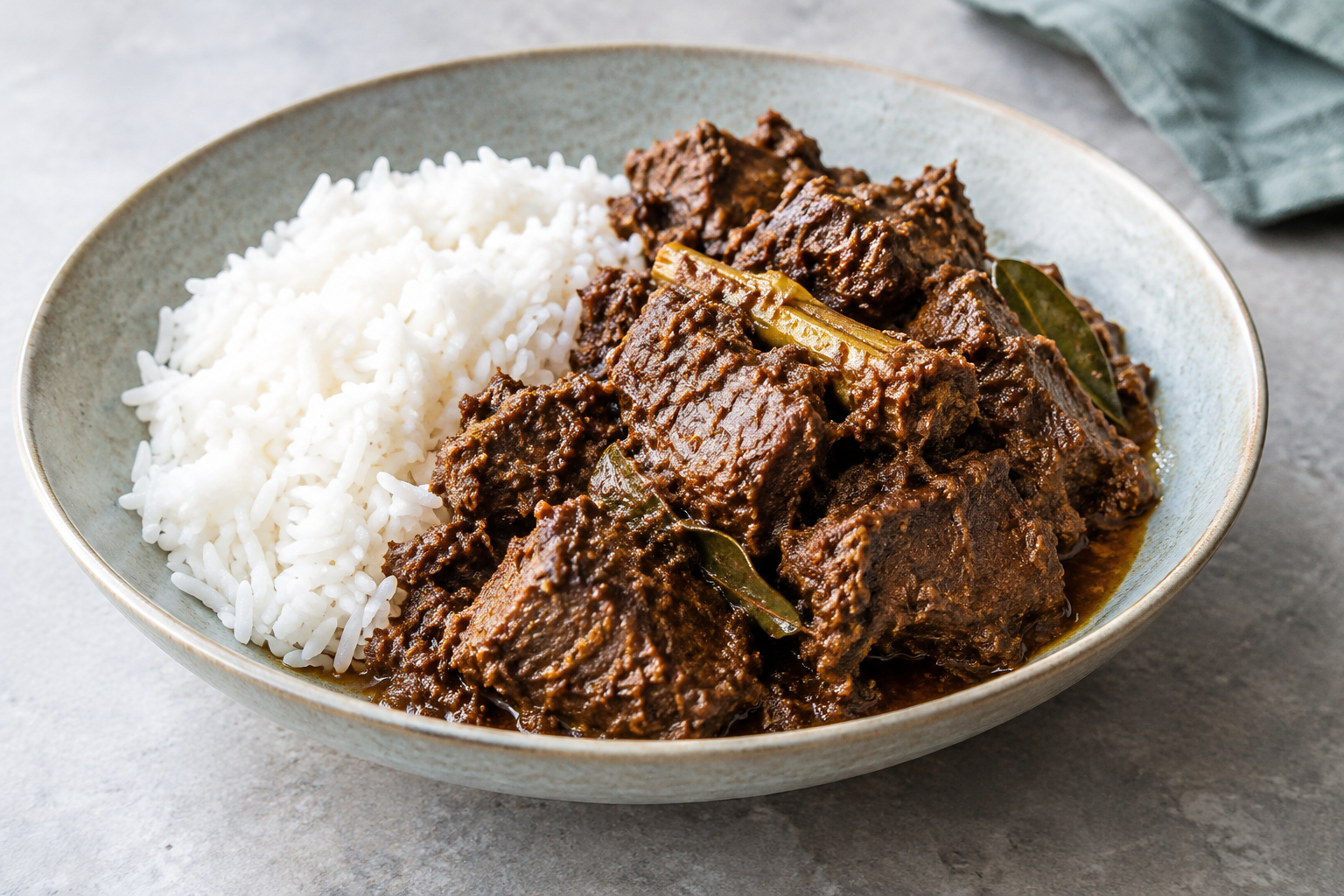
Serve the rendang with white rice to soak up the concentrated sauce. A fresh vegetable on the side, such as cucumber, adds contrast without overpowering the spiced flavors. Cool leftovers within two hours, store them covered in the refrigerator and use within three to four days. Reheat them in a pan over low heat, stirring regularly; add a small splash of water if the sauce is too thick. Rendang can also be frozen; thaw it covered in the refrigerator, then heat it thoroughly.
 Main course

