ABOUT THIS RECIPEQuince Softens in the Pan Juices
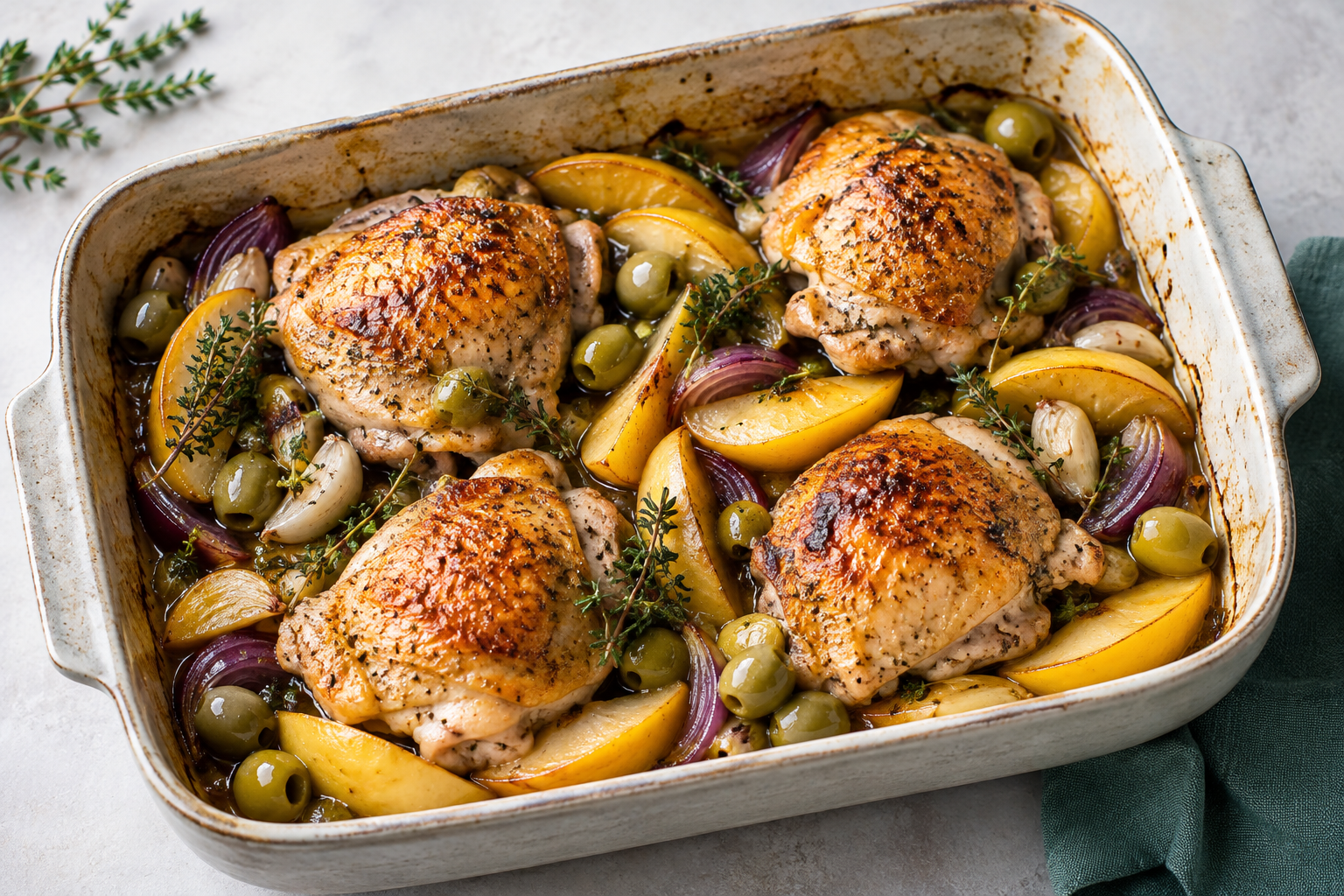
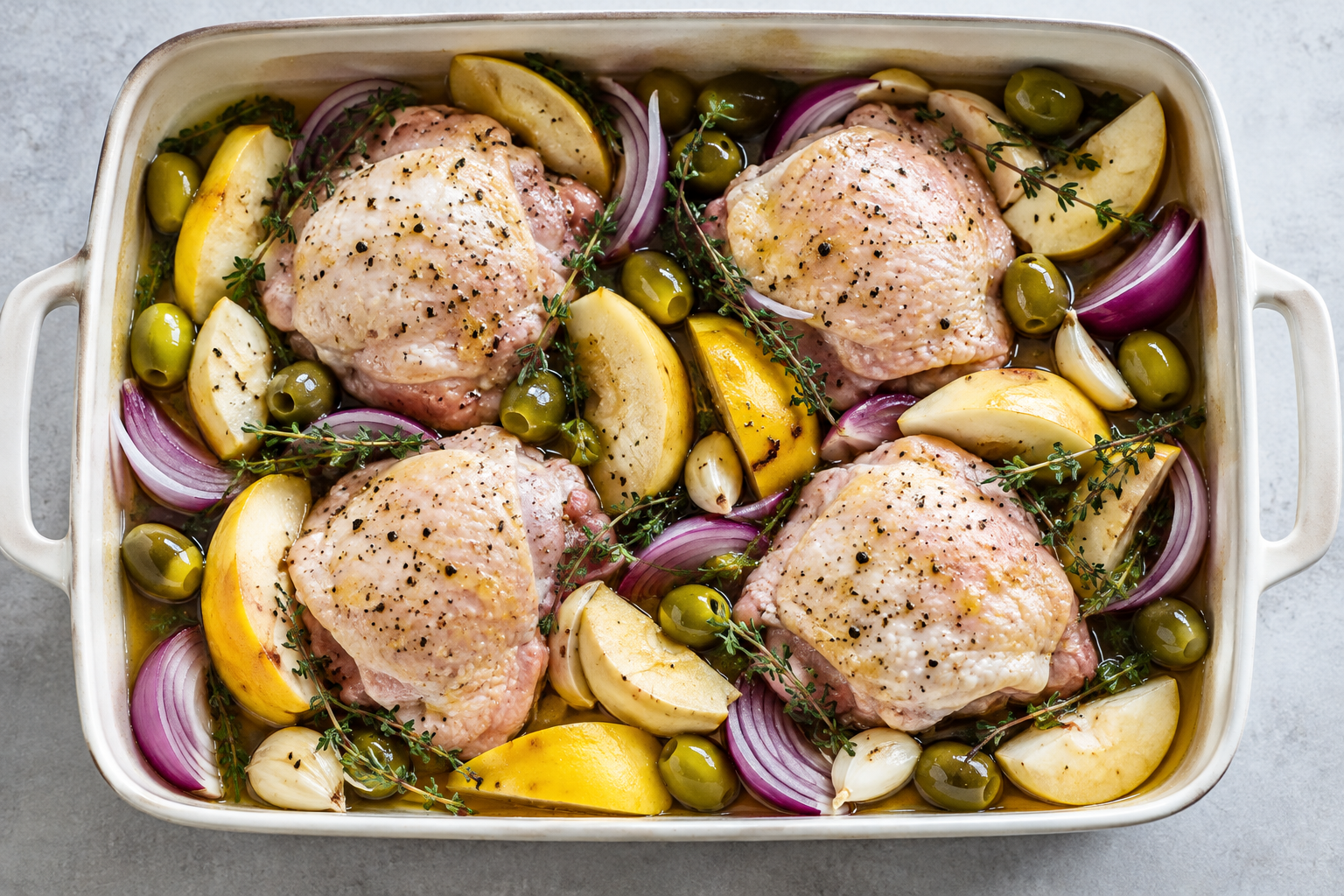
Quince is firm and quite tart when raw; in the oven, its flesh turns tender and mild, with a slightly sticky exterior. The fruit is usually available in autumn and pairs well with the rich flavor of chicken thighs. Choose firm fruits without large soft spots. Peeling is helpful because the skin can stay tough, and carefully cutting away the core prevents hard pieces. Don’t cut the wedges too thick, so they cook in about the same time as the chicken.
Green olives bring saltiness and a slightly bitter note, while onion, garlic and thyme make the pan juices savory and fragrant. Use pitted olives and taste them beforehand: the amount of salt needed varies by type. Chicken stock adds enough liquid to the dish to form a sauce without letting the ingredients boil. A squeeze of lemon juice at the end brightens the sauce and balances the sweeter quince.
Bone-in, skin-on chicken thighs stay juicy as they roast; the skin also browns when it isn’t sitting in the liquid. So place the chicken skin-side up and keep the stock low in the dish. The quince may seem done before the chicken, depending on how ripe the fruit is. Cut especially firm fruit a little thinner, and check toward the end with a knife to see if it’s tender. Cook the chicken to at least 74 °C in the thickest part, without touching the bone.
Can’t find quince? Firm pears work too, but they soften more quickly and have a milder flavor; add them halfway through the cooking time instead. Black or purple olives work as well, but have a stronger, often less fresh flavor than green olives. Use fresh thyme if available, or use a smaller amount of dried thyme. The result is a modern one-pan dish, not a traditional regional classic: the combination is all about fruit, savory olives and a fragrant sauce.
Serve the chicken straight from the dish with crusty bread to soak up the pan juices, or with rice to make it a meal. A simple green salad with a tangy dressing adds freshness on the side. Cover leftovers and refrigerate them within two hours, then use within three days. Reheat the chicken and sauce thoroughly in a covered baking dish or pan; add a splash of water or stock if the sauce has thickened.
 Main course

