ABOUT THIS RECIPEA little lift in a small ramekin
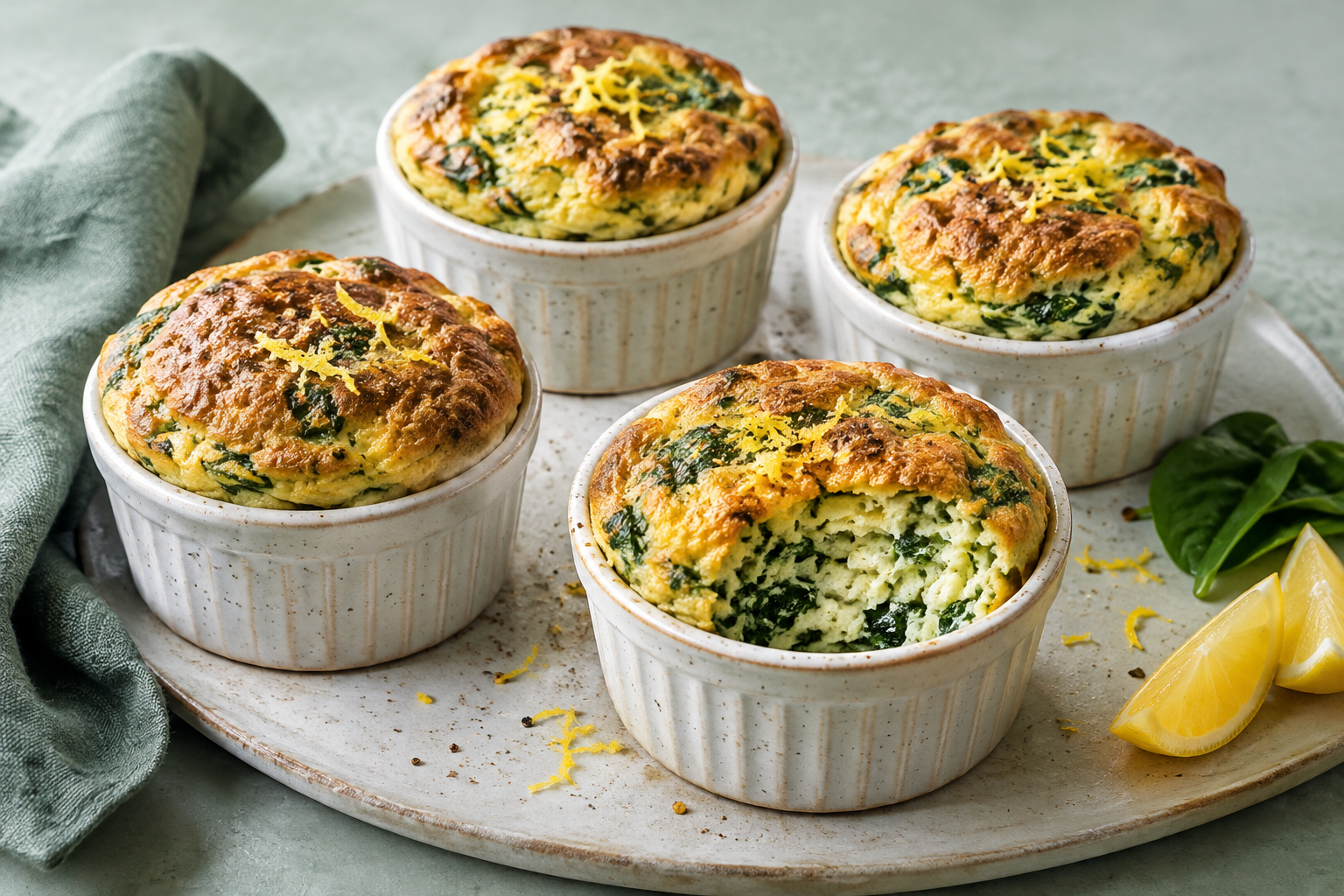
These spinach and ricotta soufflés are made for a savoury breakfast or brunch: soft and creamy inside, with a lightly puffed, golden-brown top. Ricotta gives the base a mild milky flavour and makes it richer than an omelette; Parmesan adds saltiness and savoury depth. Spinach brings green, earthy notes, while lemon zest brightens everything at the end. Serve the ramekins straight from the oven, perhaps with bread and a simple salad if you’re making a more substantial brunch.
The key to a light texture is making sure the spinach isn’t too wet. Fresh spinach wilts quickly in a pan, but retains a lot of moisture after cooking. So let it cool and squeeze it firmly before chopping it finely. Otherwise, the ricotta mixture will be thin and the egg whites will collapse more easily. Fresh spinach is available all year round; baby leaves are often plentiful in spring and autumn. Frozen leaf spinach works too: thaw it completely and squeeze it just as thoroughly. Don’t use creamed spinach, as it contains extra moisture and other seasonings.
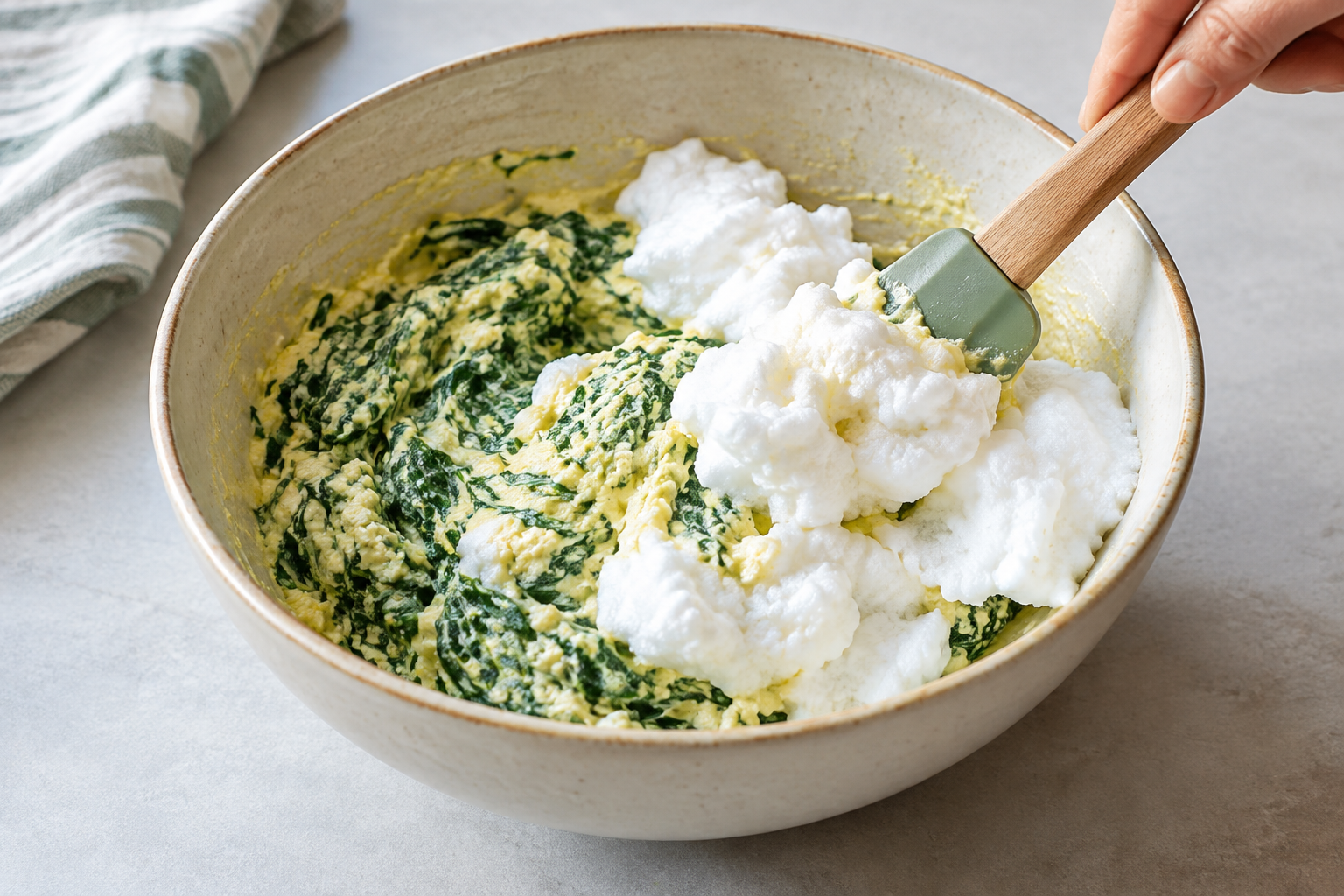
The soufflés get their lift from egg whites that are beaten separately until stiff. Make sure the bowl and beaters are clean and free of grease; even a little egg yolk can make the whites harder to whip. Fold one-third of the egg whites into the ricotta base first to lighten it, then gently fold in the rest. This helps you keep more air in the mixture. Don’t mix until the batter is completely smooth: a few pale streaks of egg white are better than a heavy, overmixed mixture. Don’t fill the ramekins right to the top, so the soufflés have room to rise.
Ricotta is mild and moist; drain any excess liquid from a watery tub. You can replace some of the Parmesan with another hard, salty cheese, but taste the mixture before adding extra salt. A small pinch of nutmeg complements the spinach without overpowering the lemon. If possible, use small ramekins of about 180 millilitres so the portions cook at roughly the same time. Larger or deeper ramekins will need more time and may stay soft in the middle for longer.
A soufflé is at its lightest straight from the oven; it will naturally sink a little as it cools. So have the lemon zest and black pepper ready before you start baking. Leftovers can be covered and refrigerated within two hours, then reheated thoroughly, although the texture will be denser. For a more substantial breakfast, serve with crusty bread and cucumber or tomato; keep them on the side so the warm soufflés retain their light texture.
 Main course

