ABOUT THIS RECIPEFreshness in every spoonful
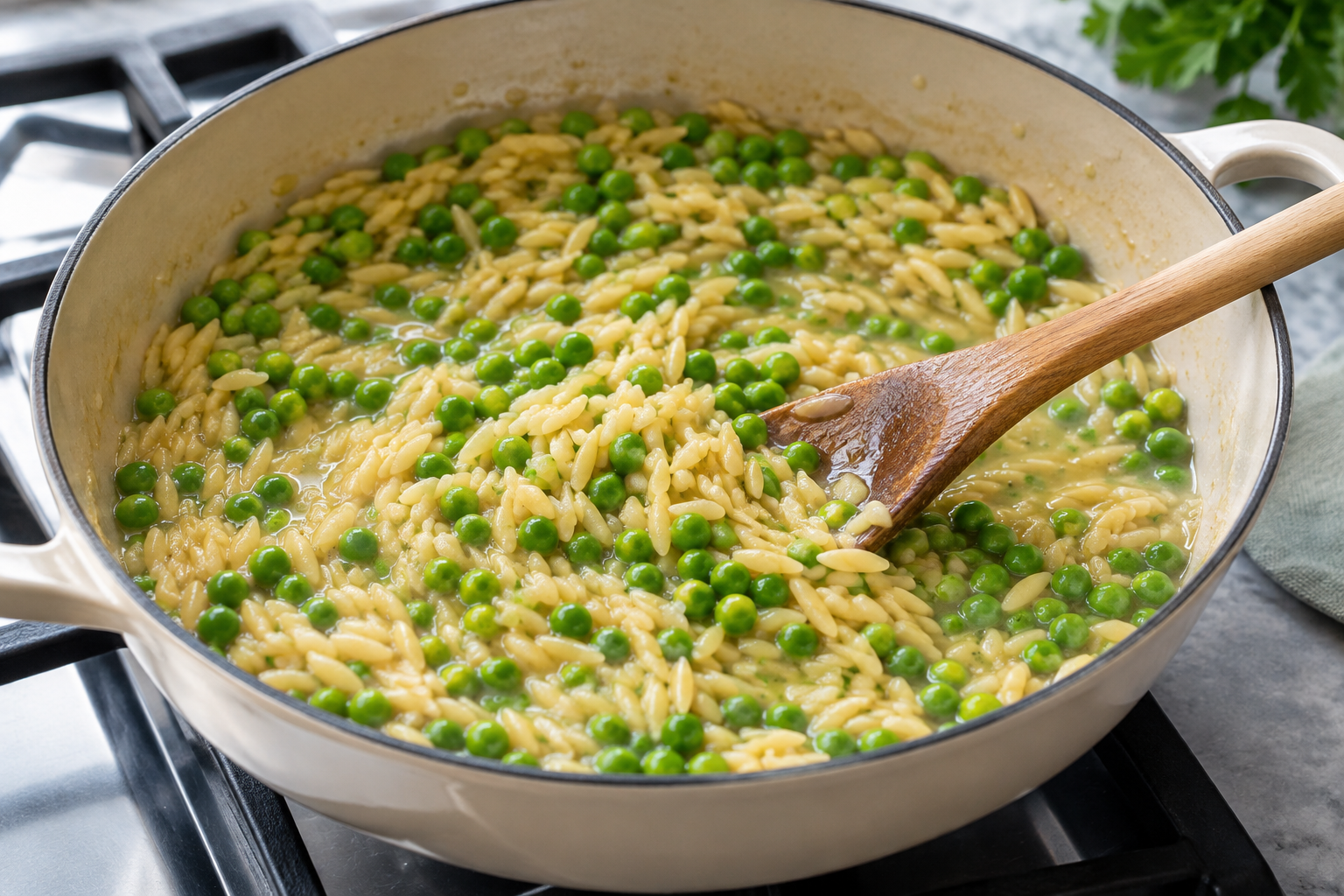
Orzo looks like rice, but it’s pasta. Its small shape makes it ideal for a compact one-pan meal: as it cooks, the pasta absorbs broth and releases a little starch. This lightly thickens the sauce without the need for cream. Stir regularly and add the broth gradually; the orzo should be tender but still have a slight bite. The amount of liquid can vary a little by brand, so keep some extra broth on hand.
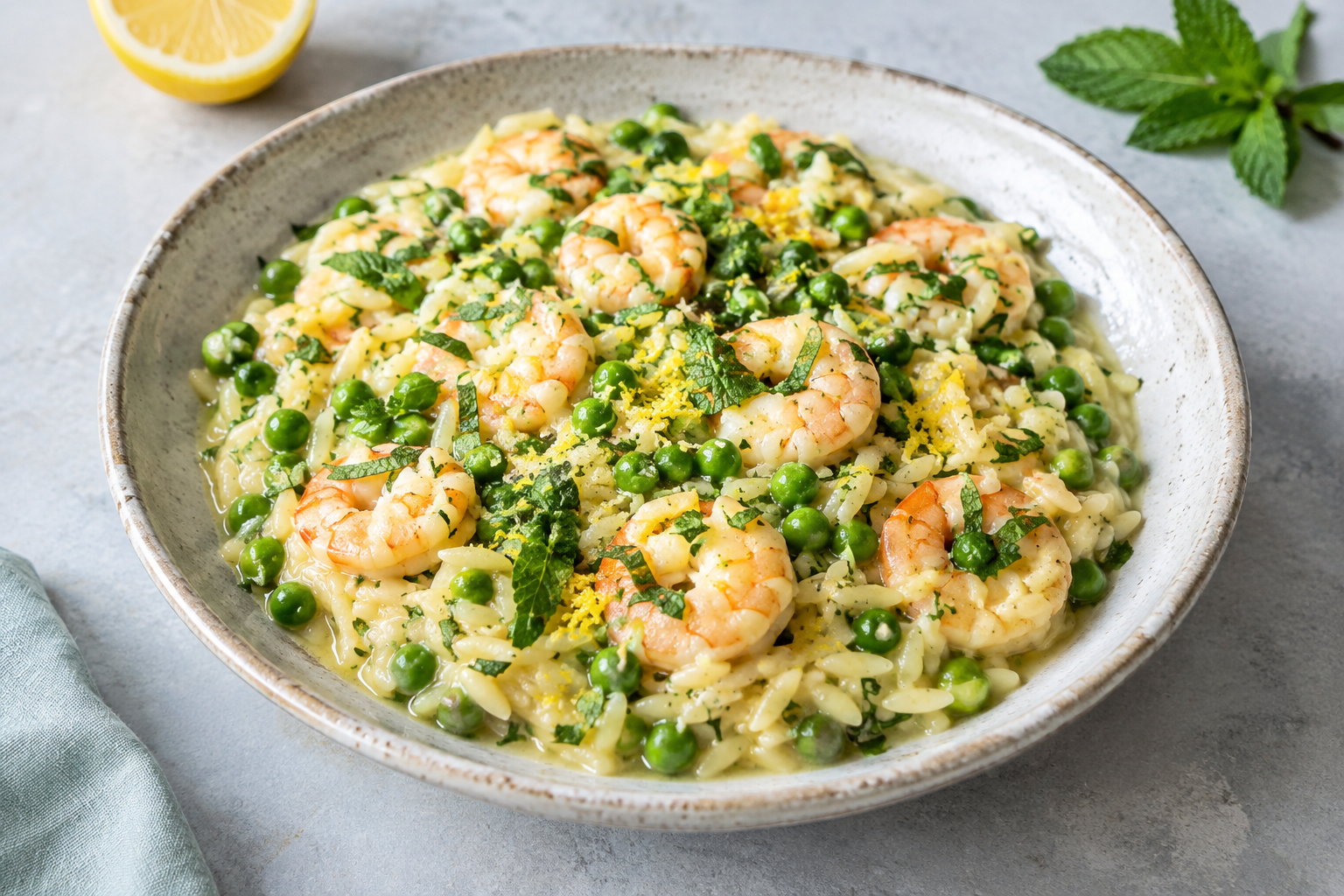
Peas bring sweetness and a tender bite to balance the savory shrimp. Fresh peas are mainly available in late spring and summer, but frozen peas are practical year-round and work beautifully here. There’s no need to thaw them first. Raw, peeled shrimp cook quickly; adding them toward the end keeps them from turning tough. They’re done when opaque and tightly curled. Large shrimp may need a minute longer than small ones.
Lemon does more than add acidity: the zest lends fragrant oils to the orzo, while the juice brightens the creamy impression of the starch. Add the juice at the end and taste before adding more; lemons vary in sharpness. Mint brings a cool, green note that pairs well with peas. No mint on hand? Use finely chopped flat-leaf parsley for a milder, earthy herb flavor. Parsley changes the character of the dish a little, but still goes well with lemon and shrimp.
This dish makes a satisfying main course on its own. Serve it straight from the pan, perhaps with a simple green salad or thinly sliced fennel for extra crunch. Orzo thickens further after cooking as the pasta continues to absorb liquid. When reheating leftovers, stir in a splash of water or broth until the sauce is smooth again. Cool leftovers quickly, store them covered in the refrigerator, and reheat them thoroughly; the shrimp may become a little firmer when reheated.
 Main course

