ABOUT THIS RECIPELeeks with two sides
Orzo is small pasta shaped like grains of rice. As it cooks, it releases starch, allowing the broth and pasta to come together in a soft, almost creamy sauce. This makes the dish more substantial than an ordinary pasta salad, without needing any cream. Stir regularly across the bottom of the pan; orzo can stick there more quickly than larger pasta shapes. Keep a little extra hot broth or water on hand, as the amount of liquid can vary slightly depending on the brand and pan.
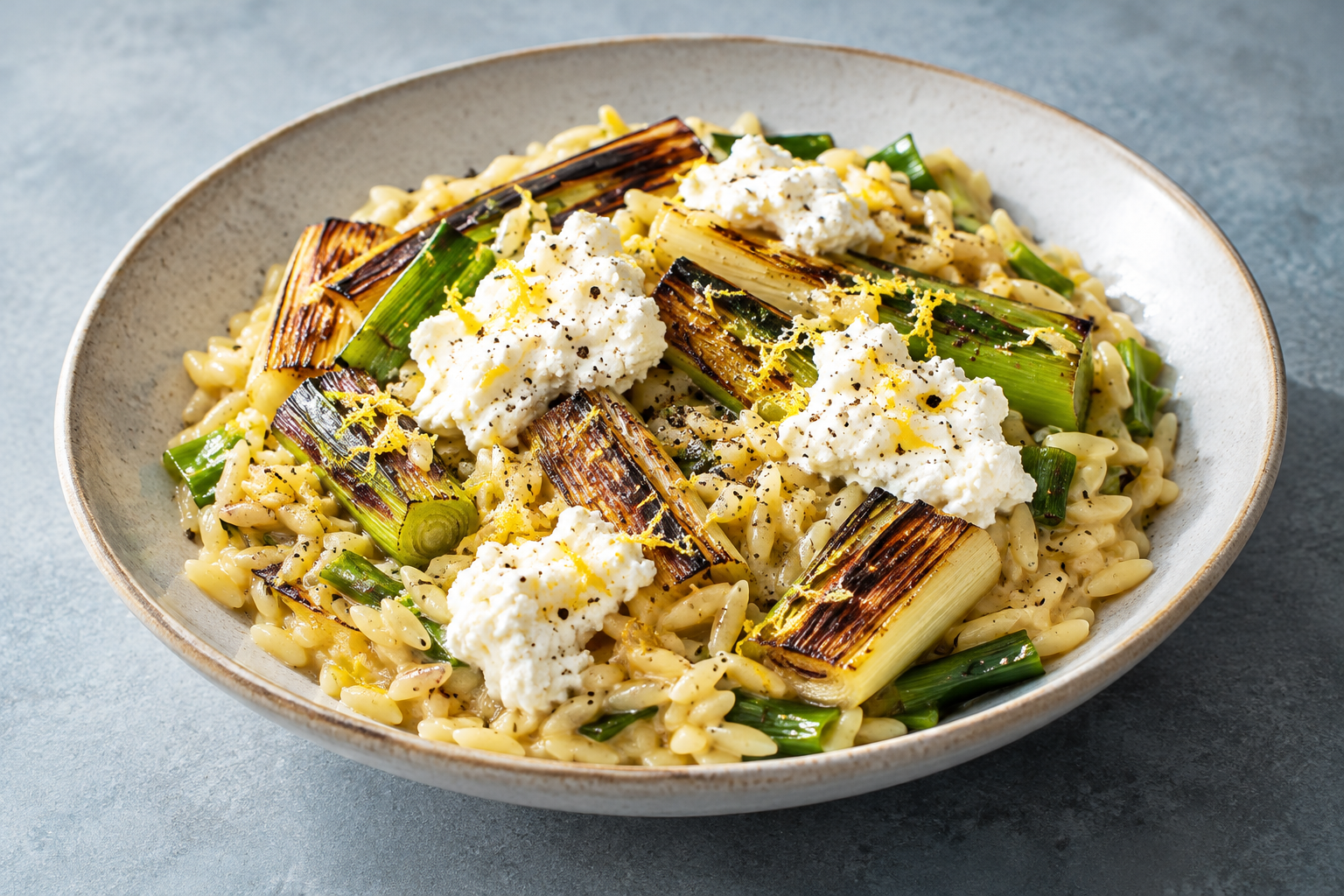
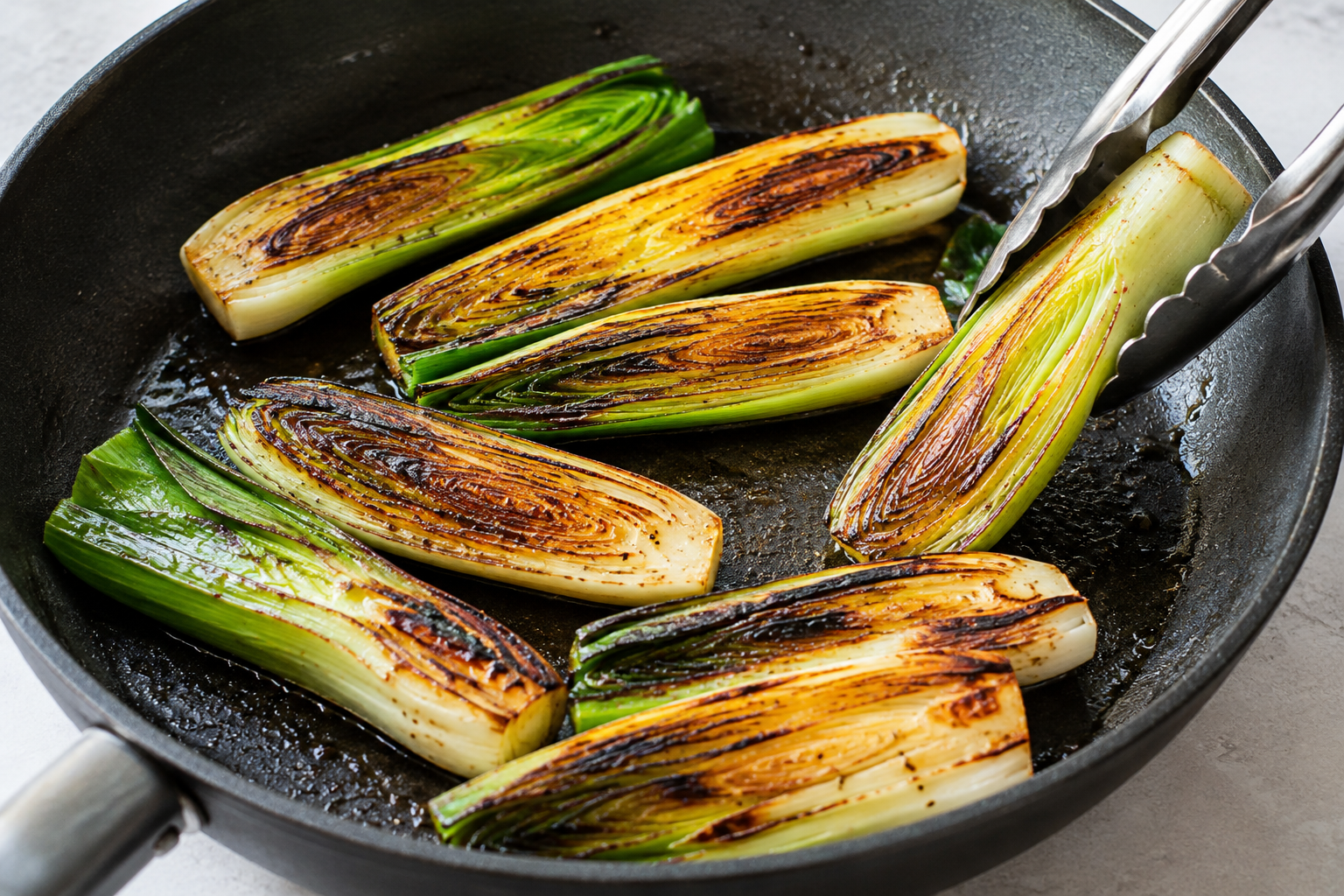
The leeks bring contrast. Searing them firmly on the cut side gives them dark, slightly bitter edges that pair well with the sweeter, tender insides. A short spell with the lid on helps the halves cook through without burning on the outside. Leeks are especially plentiful in the Netherlands during the cooler months, but are available all year round. Choose firm stalks with fresh green leaves; for this dish, use mainly the white and light green parts, which cook evenly.
Lemon brings the ricotta pairing to life. Zest the lemon directly over the orzo for its floral citrus aroma, and add the juice a little at a time: the amount needed depends on the size and juiciness of the lemon. Ricotta is mild and light, so the roasted leeks remain the star. Add the cheese to the plates rather than stirring it all into the pan. That way, every serving has soft bites of ricotta alongside the pasta.
Orzo is best, and you should follow the cooking time on the package; another small pasta shape will also work, but may absorb a different amount of liquid. So add the broth gradually if the pan becomes dry before the pasta is cooked. No ricotta on hand? Fresh goat cheese has a more pronounced, tangier flavor; mascarpone is milder and richer, so use a little less of it. Taste for salt at the end, too, as broths can vary quite a bit.
Serve the orzo straight away, while it is still loose and creamy. A simple green salad goes well with it, but the dish can also be served on its own as a complete meal. Store leftovers covered in the refrigerator and eat them within two days. Reheat them in a pan with a splash of water or broth, stirring until the pasta is hot all the way through and loosened up again; the ricotta will be less airy than when freshly served.
 Main course

