ABOUT THIS RECIPEA soft-cooked egg needs attention
Œufs cocotte are cooked in small ovenproof dishes, usually with egg and a little cream. The name refers to the cocotte, the small ovenproof pot the dish cooks in and can also be served in. The ingredients are simple, so their proportions matter: enough cream to keep the eggs soft and creamy, but not so much that the flavor becomes bland. Tarragon adds a subtle anise-like note that goes well with egg and cream. Use fresh leaves and chop them just before cooking; dried tarragon works too, but use it sparingly because its flavor is more concentrated.
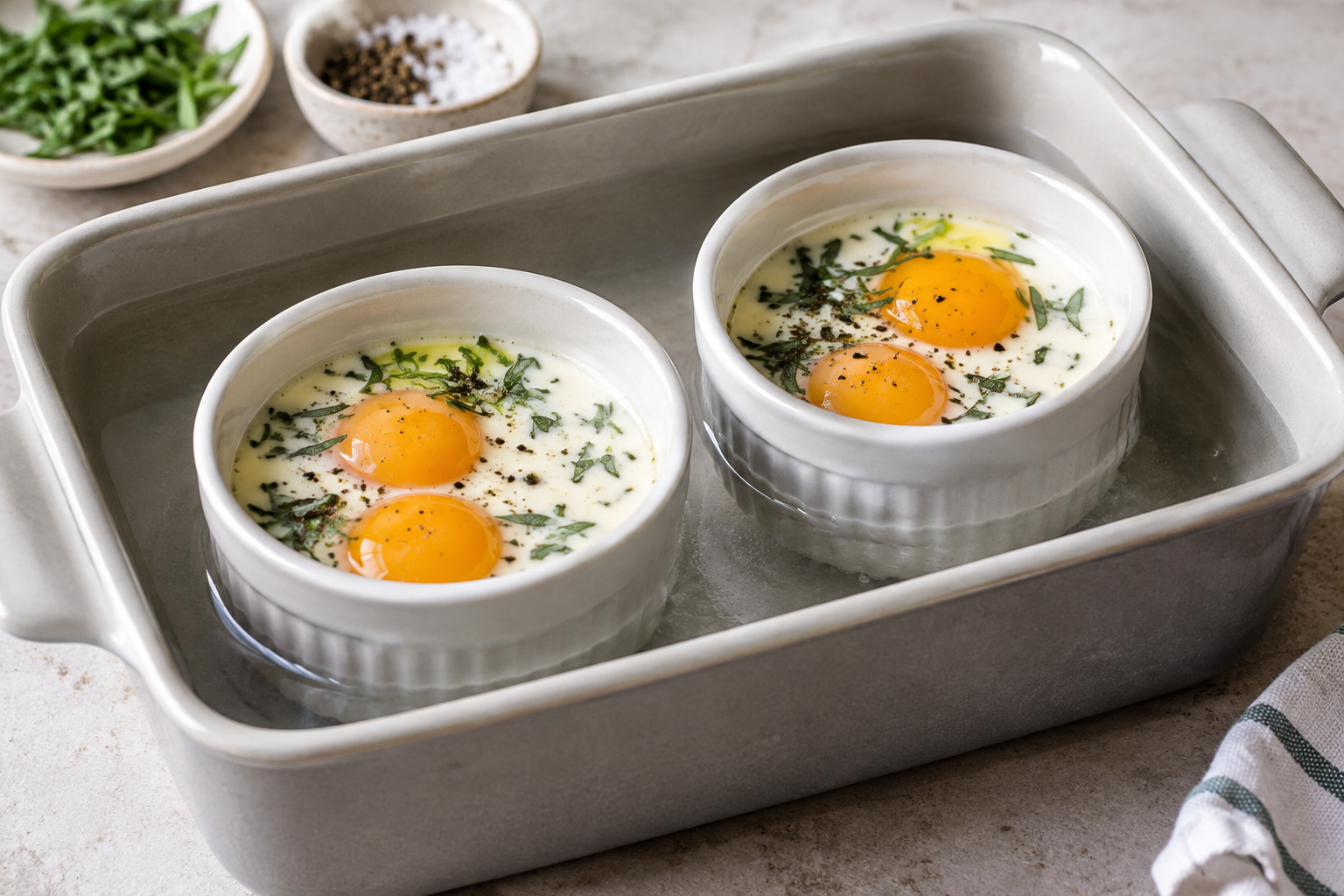
A water bath helps the eggs cook more evenly. The oven dishes sit in a larger dish filled with hot water, which moderates the heat around the eggs. Without the water bath, the edges can turn tough before the center is cooked. The exact timing depends on the size and material of the dishes and on your oven. So don’t just watch the clock: the whites should be just set, and the yolks may still wobble softly when you gently move a dish. Don’t leave the eggs in the hot oven while you finish the rest of the meal; take them out as soon as they’re ready.
Small ramekins of about 150 to 200 milliliters are handy. If you only have larger oven dishes, keep the eggs closer together and check for doneness earlier or later than indicated. Crème fraîche can replace the regular cream for a slightly tangier, thicker base; thin it with a tablespoon of milk if needed. Tarragon is characteristic of this version, but chives give a milder, less anise-like flavor. That changes the flavor profile without making the preparation any more complicated.
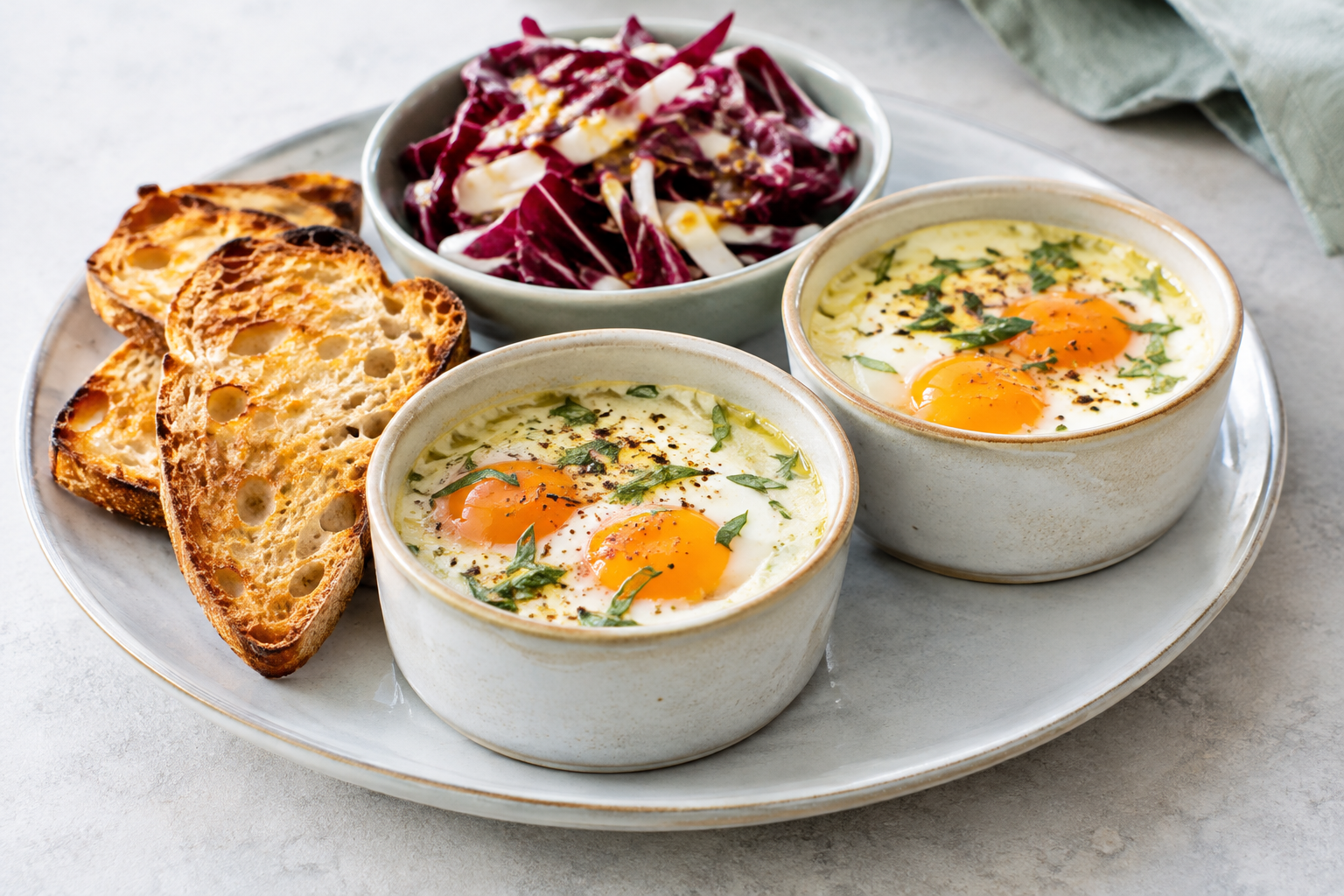
The creamy eggs need something to contrast with them. Thin slices of toasted bread are perfect for dipping into the soft yolks. A salad with Belgian endive or radicchio brings a pleasant bitterness; a simple dressing with mustard and vinegar keeps it fresh and cuts through the cream. Belgian endive is generally easy to find in the colder months, while radicchio is an option outside that season too. Serve the cocotte straight from the oven, with the salad and bread alongside. That way, the yolks stay soft and the bread stays crisp.
 Main course

