ABOUT THIS RECIPEA dip with tomato and roasted chili
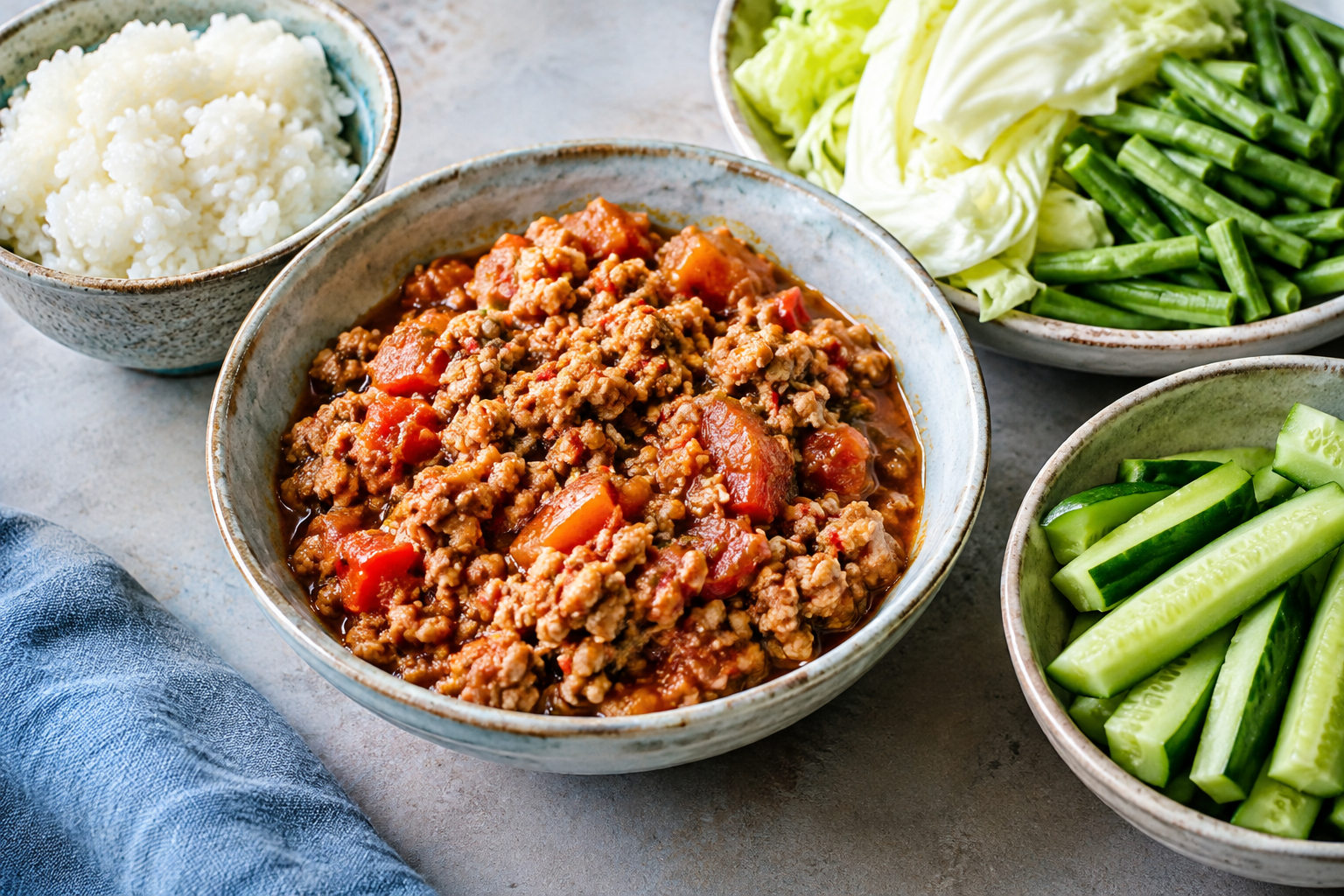
Nam prik ong is a Northern Thai chili dip where pork and tomato come together in a hearty, spoonable sauce. The tomato is no garnish here: it adds juiciness and a gentle tartness that balances the savory flavor of the meat and shrimp paste. The dip belongs alongside other dishes in a shared meal, with vegetables for dipping and sticky rice to scoop up the sauce.
Dried chili, garlic and shallot are first heated in a dry pan. This makes them aromatic and gives them a few charred spots, without the need for oil. The chili determines how much heat the dip has; remove some of the seeds for a milder version. Pounding the roasted ingredients to a paste in a mortar brings them together. A food processor also works, but pulse briefly so the mixture doesn’t become watery.
Shrimp paste adds deep, salty umami flavor. Roast it briefly, preferably wrapped in foil, so it releases its aroma without sticking to the pan. Use Thai shrimp paste if you can find it. Another shrimp paste can be used as a substitute, but it is sometimes saltier; taste before adding extra fish sauce. Fish sauce adds further seasoning to the dip. Use it sparingly, since the shrimp paste is salty too.
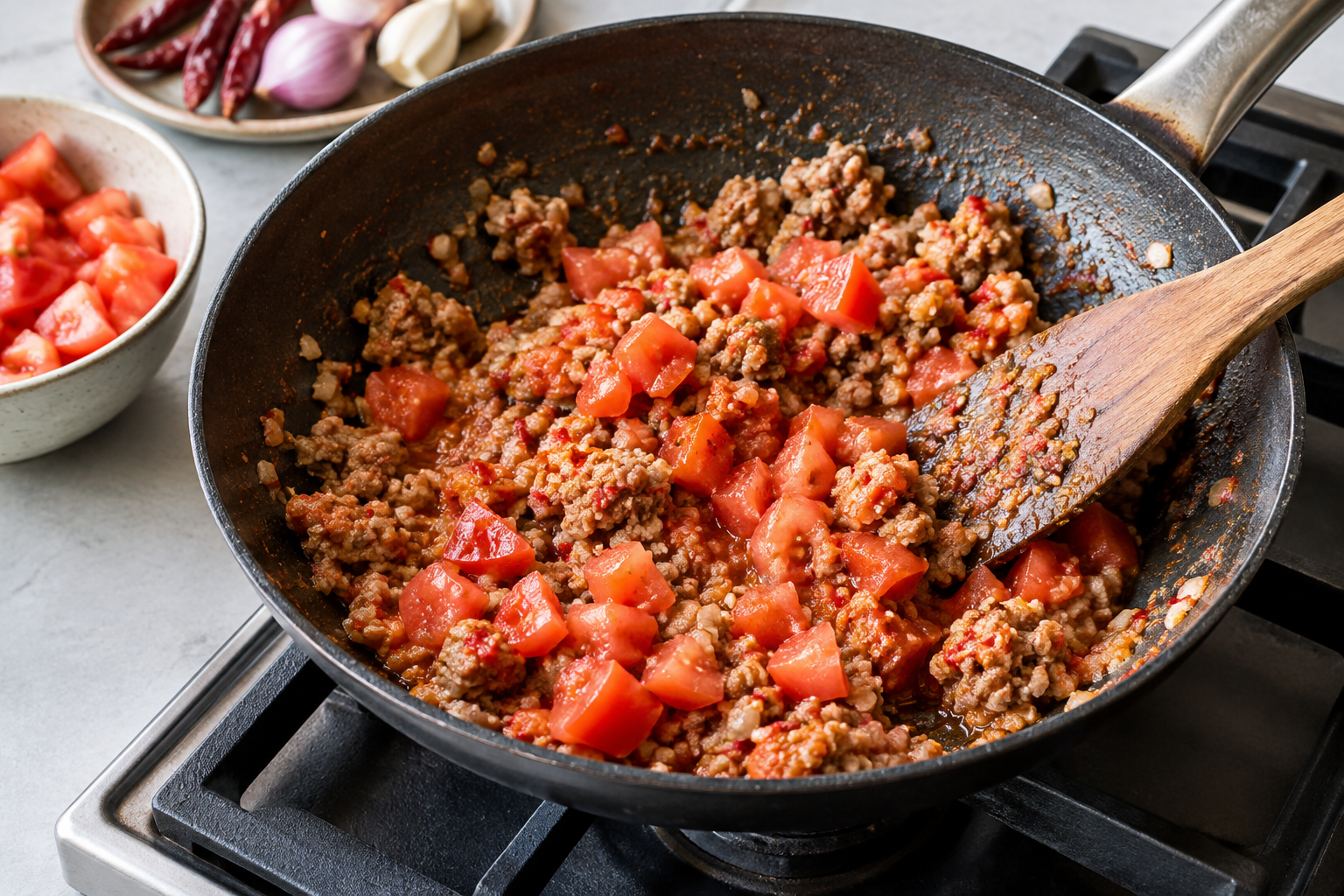
Ripe, firm tomatoes are a good choice because they soften as they cook but still retain their flavor. In summer, good fresh tomatoes are often easy to find; out of season, ripe vine tomatoes work too. If the tomatoes are very juicy, give the dip a little more time to cook down. The goal is a thick, chunky sauce, not a smooth tomato sauce. The ground pork takes on the flavor of the roasted paste and makes the dip substantial enough to eat with vegetables.
Serve the dip warm or at room temperature with sticky rice, cucumber, raw cabbage and briefly blanched green beans. These fresh, crunchy vegetables balance the rich, soft dip. Sticky rice needs to soak for several hours before steaming, so plan ahead; regular rice is not an equal substitute in texture, but you can serve it alongside if that’s more practical. Put everything in separate bowls on the table and let the nam prik ong be the savory centerpiece of the meal, not a sauce for pasta.
 Main course

