ABOUT THIS RECIPEThe depth of walnuts and pomegranate
Fesenjan, also spelled fesenjoon, is a well-known Persian stew. Ground walnuts and pomegranate molasses are at its heart; chicken is a common addition, though versions with other poultry or no meat also exist. The dish is often associated with northern Iran, where walnuts and pomegranates have an important place in the cuisine. Recipes vary by region and household, including in how sour or sweet the sauce is. This version keeps the balance on the fresh, tart side and lets the walnuts speak clearly.
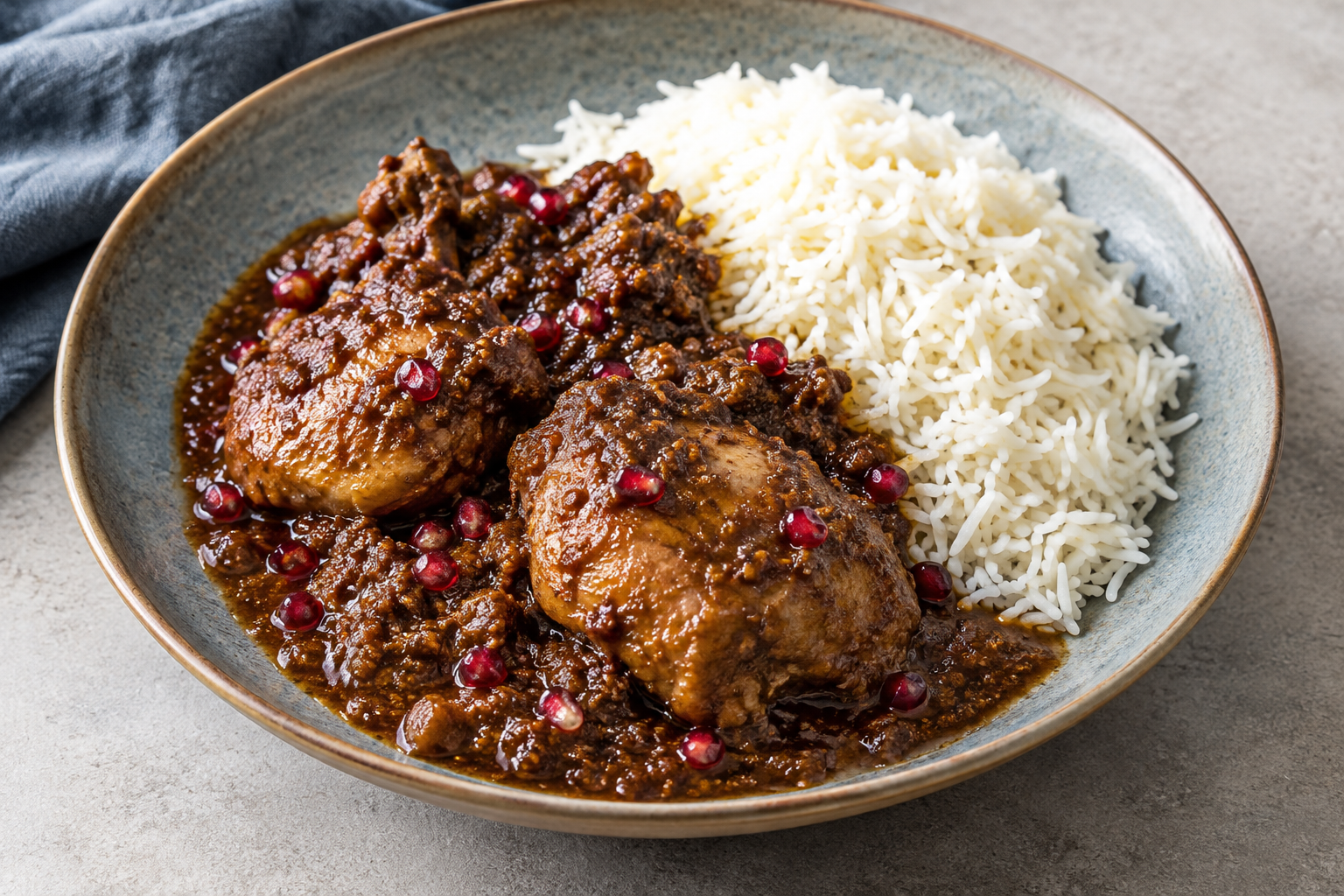
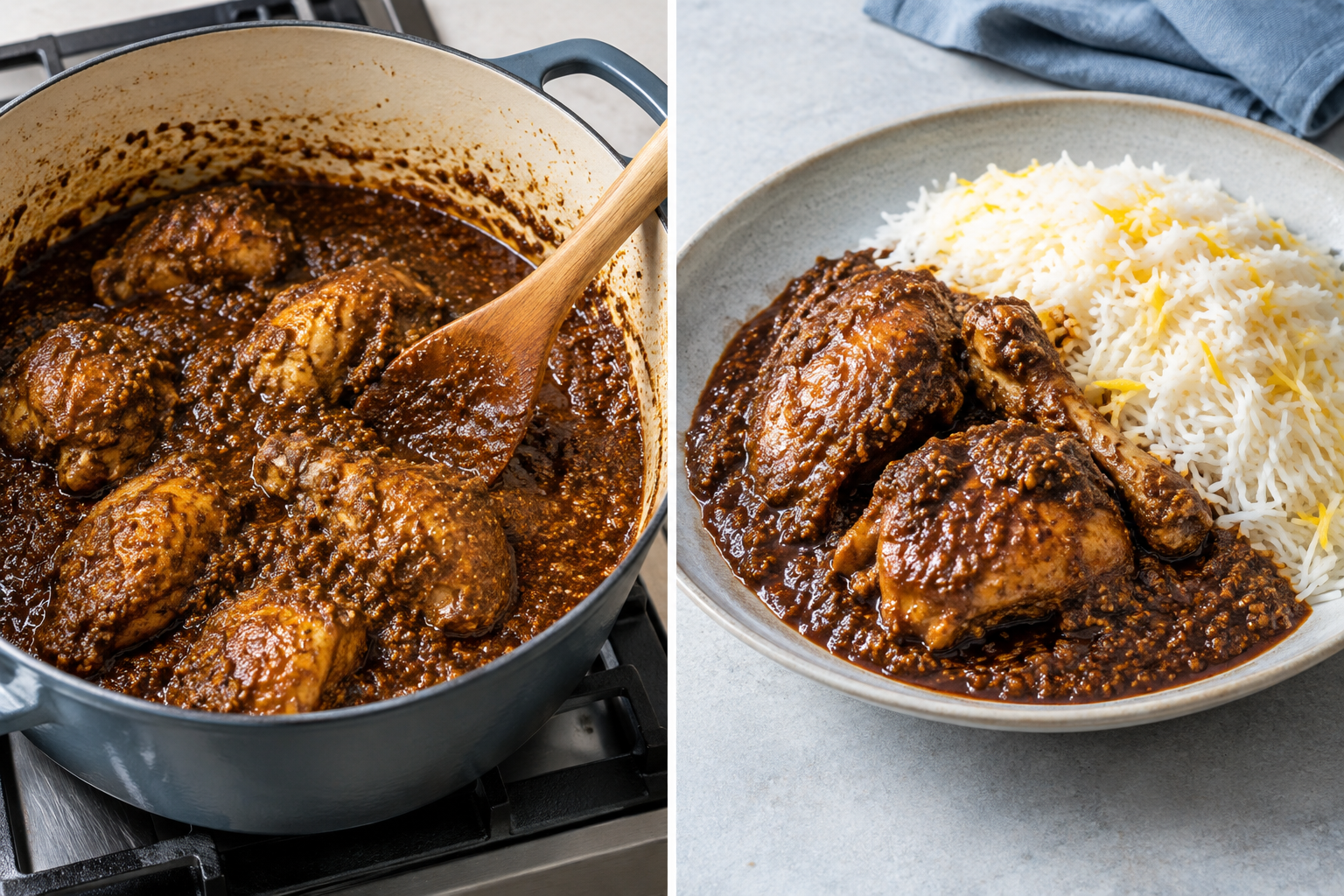
Walnuts contribute not only their earthy flavor, but also fat that becomes part of the sauce as it simmers. Grinding them finely helps distribute them evenly; coarsely chopped nuts make for a grainier result. So grind them into small crumbs, not a smooth paste. Let the sauce simmer gently and stir regularly along the bottom of the pan. This allows the walnuts to release their oil gradually without the thick sauce scorching. Don’t expect a bright red sauce: the walnuts and pomegranate molasses make it a deep brown as it reduces.
Pomegranate molasses is reduced pomegranate juice and is much more concentrated than regular juice. Its tartness varies by brand, so taste the sauce before adding sugar. A tablespoon of sugar can soften sharp acidity, but it isn’t essential. Don’t start by substituting pomegranate juice: it thins the sauce and lacks the concentrated flavor. Walnuts are available year-round, but buy them as fresh as possible and store opened nuts in a cool place in a tightly sealed container; older nuts can taste stale.
Chicken thighs stay juicy during the longer cooking time and add extra flavor to the sauce. Preferably use boneless thighs if you want the dish to be easier to serve; they usually cook sooner, so check them after about 35 minutes in the sauce. Chicken breast works too, but dries out more quickly and needs a shorter cooking time. Serve fesenjan with plain basmati rice, so the rice soaks up the rich sauce without competing with it. A fresh cucumber and herb salad goes well on the side, but keep it separate from the stew.
Let leftovers cool within two hours, cover and refrigerate them, and eat them within three days. Reheat the stew gently in a pan, stirring regularly, and add a splash of water if the sauce is very thick. Heat until piping hot throughout. The sauce may thicken further as it cools; this is normal for a walnut stew and no reason to add extra liquid right away before you’ve reheated it.
 Main course

