ABOUT THIS RECIPEPotatoes That Hold Their Shape
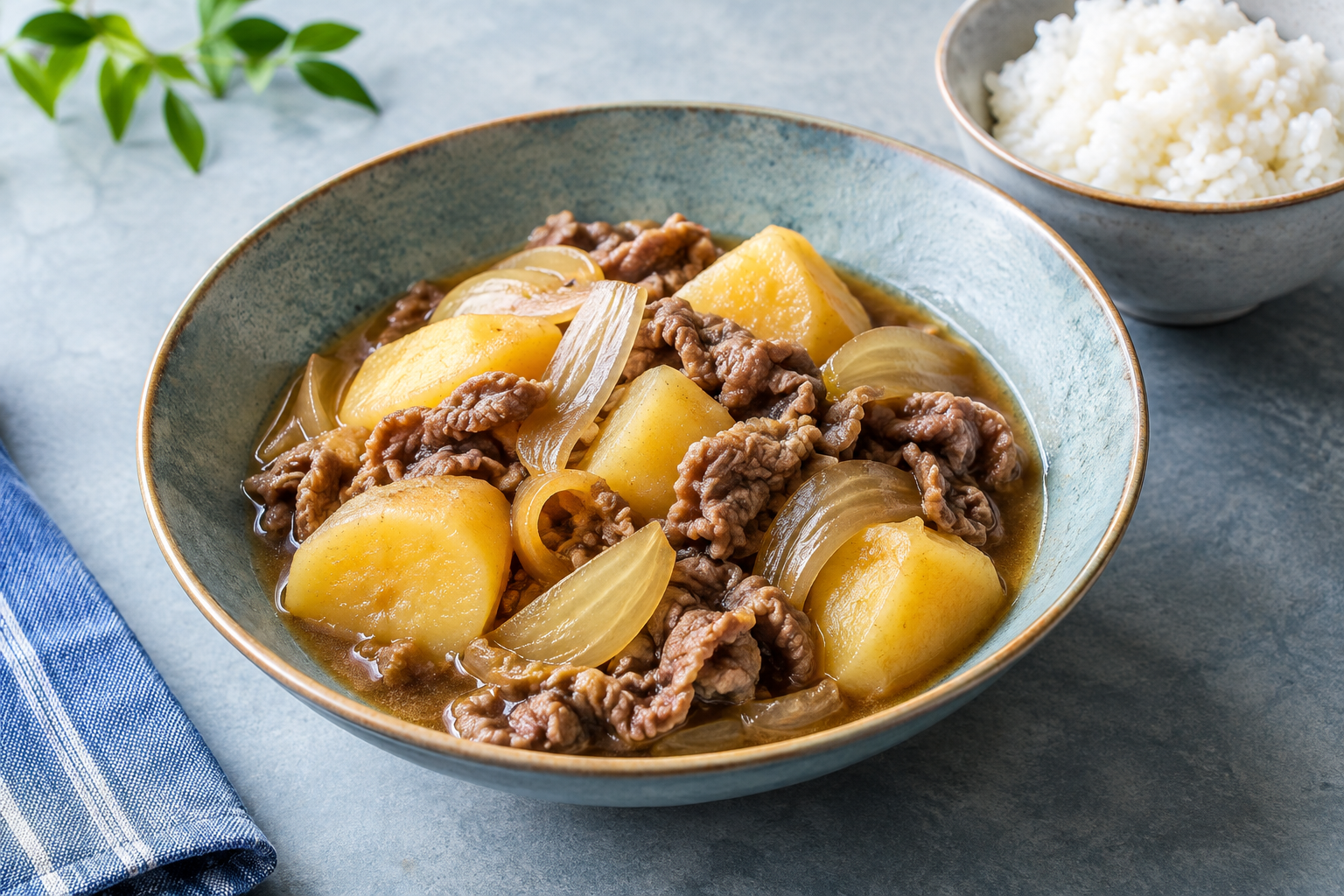
Nikujaga is all about a short list of ingredients and a broth that doesn’t become heavy or thick. Dashi provides a savory base, soy sauce adds salt and depth, and mirin with a little sugar rounds it out with gentle sweetness. The flavors should be balanced: savory first, with a hint of sweetness. This isn’t curry, and it doesn’t need a spiced sauce; the clear, thin stew broth is part of the dish.
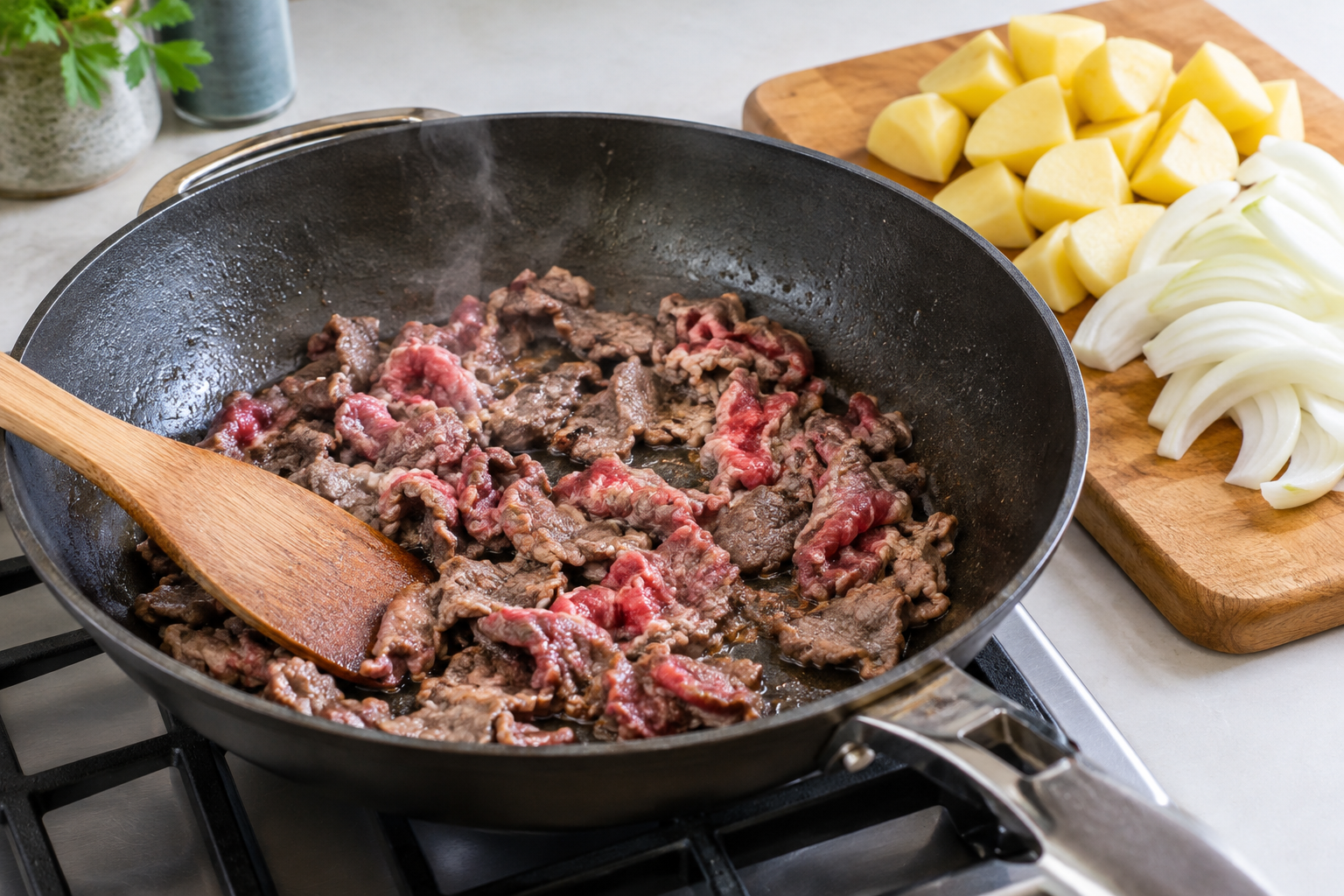
Thinly sliced beef cooks quickly and takes on the flavor of the broth. Japanese or Asian supermarkets often sell beef that’s specially sliced thin for stews or hot pot. Otherwise, use a tender cut of beef and slice it as thinly as you can yourself; put it in the freezer briefly to make it firmer and easier to slice. Sear the beef only briefly. If you brown it for too long, it will toughen more quickly and give the broth a roasted flavor that isn’t needed here.
The potatoes need a little attention: cut them into roughly equal-sized pieces and let them simmer gently, without boiling hard or stirring often. This helps them cook evenly and hold their shape. Waxy potatoes are the most forgiving; floury potatoes also work, but are more likely to fall apart. The onion softens and sweetens as it simmers, adding to the broth without the need for extra ingredients. Add the potatoes only after briefly searing the beef, as in this recipe, so they can cook gently in the liquid.
Dashi is easy to make with instant dashi according to the package instructions. If you don’t have any, you can use a light broth as a practical substitute, though the dish will taste less distinctly of dashi. Avoid strongly seasoned or salty broth if possible: the soy sauce already adds salt. Mirin is a sweet rice wine for cooking; to substitute, use the same amount of sake with an extra teaspoon of sugar, but the result will be less sweet and have a slightly different flavor.
Serve the stew with steamed Japanese rice to soak up the broth. Spoon the potatoes, onion and beef into bowls with some of the liquid, and serve the rice alongside. Leftovers can be cooled within two hours and stored, covered, in the refrigerator for up to three days. Reheat them gently in a pan until everything is piping hot; add a splash of water if the potatoes have absorbed the broth.
 Main course

