ABOUT THIS RECIPEA breakfast with three distinct flavours
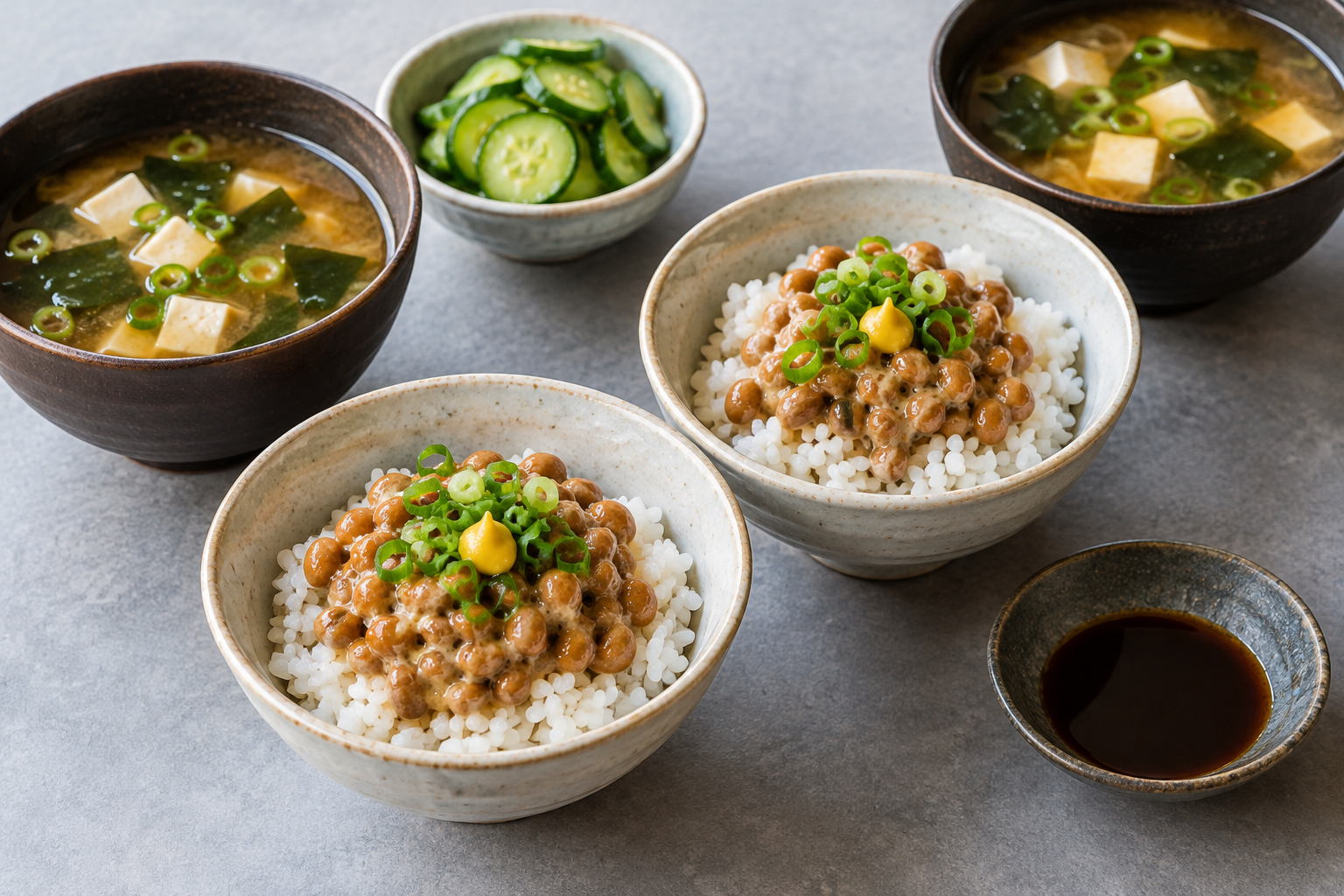
Asa-gohan means a Japanese morning meal; the exact dishes vary from household to household and from region to region. This simple set centres on natto gohan: warm rice with natto, fermented soybeans known for their distinctive smell and sticky, stringy texture. The rice is deliberately unseasoned. That keeps its flavour mild alongside the natto, while a little soy sauce can season the whole bowl without overpowering the beans.
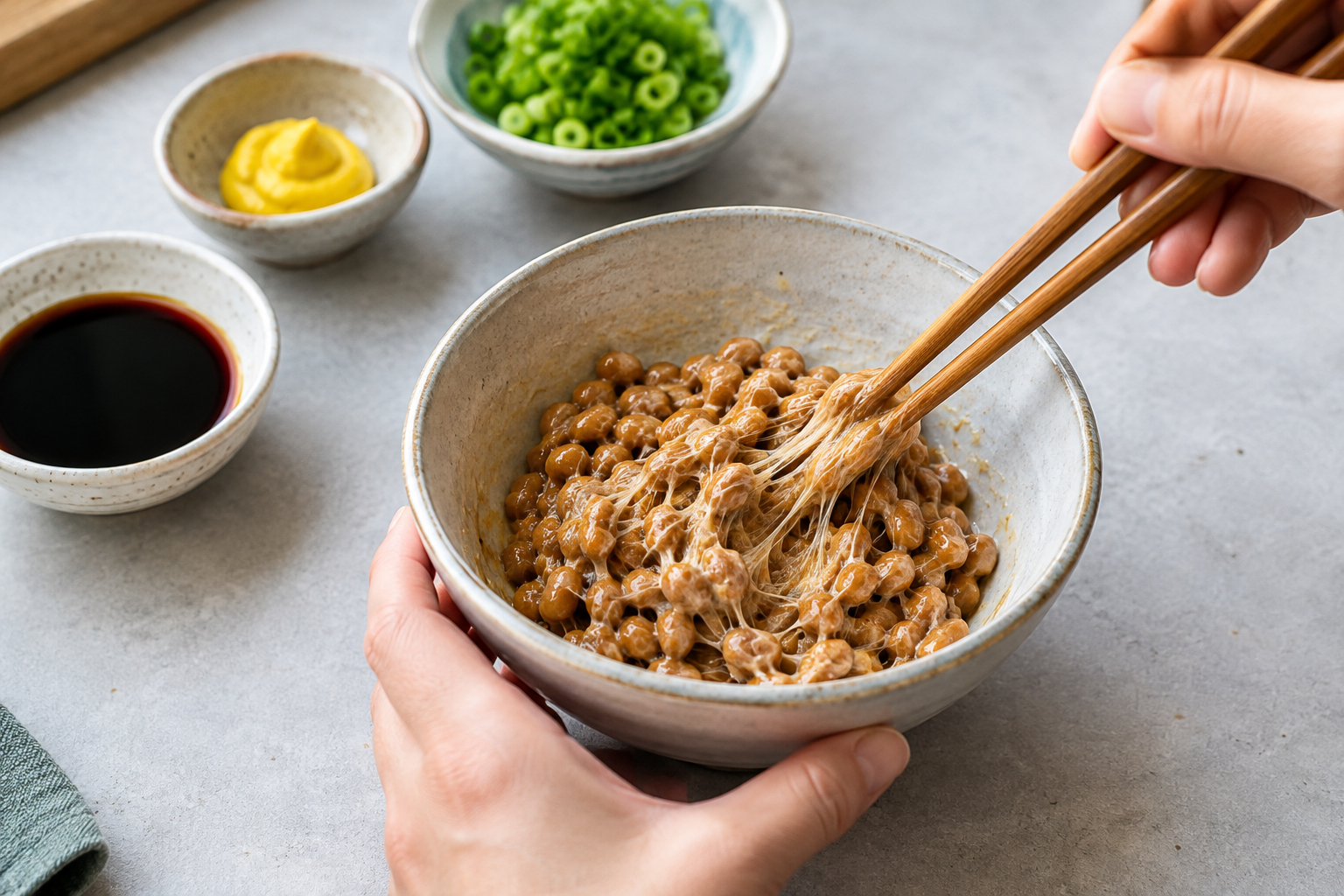
Stir the natto vigorously before spooning it over the rice. Stirring makes the texture lighter and creates the characteristic strings; this does not mean the beans have gone bad. Natto is usually sold in small portions, often with a sachet of sauce and mustard. This recipe uses plain soy sauce and Japanese karashi, a hot mustard. Karashi can be hard to find; a small amount of regular hot mustard makes a practical substitute. Start with a little, since both the mustard and natto have pronounced flavours.
Japanese short-grain rice is best; it becomes soft and slightly sticky when cooked. Rinse the rice until the water runs less cloudy, then leave it to soak for a while; this helps the grains cook evenly. A rice cooker is handy, but a pot with a tight-fitting lid works too. Keep the lid on while the rice cooks, then leave it to stand for another ten minutes. Long-grain rice works too, but makes for a drier, less cohesive bowl.
The miso soup adds salty umami and warm broth alongside the rice. Dissolve the miso after taking the pot off the heat: boiling it vigorously can flatten its aroma. Dashi powder makes an accessible base; use the amount stated on the package. Dried wakame quickly swells in the broth, while tofu adds soft, hearty cubes. If you don’t have wakame, leave it out or replace it with thinly sliced spring onion.
Thin slices of cucumber with rice vinegar, a little sugar and salt make a fresh, lightly tart contrast. Leave them to stand while the rice cooks; they’ll develop more flavour while staying crisp. Serve all three parts together and put extra soy sauce or mustard on the side so everyone can adjust the natto to taste. Eat the rice and natto while they’re still warm. Quickly refrigerate any leftover rice in a sealed container and heat it thoroughly later; keep the natto refrigerated according to the package instructions.
 Main course

