ABOUT THIS RECIPEWhy Eggplant and Miso Go So Well Together
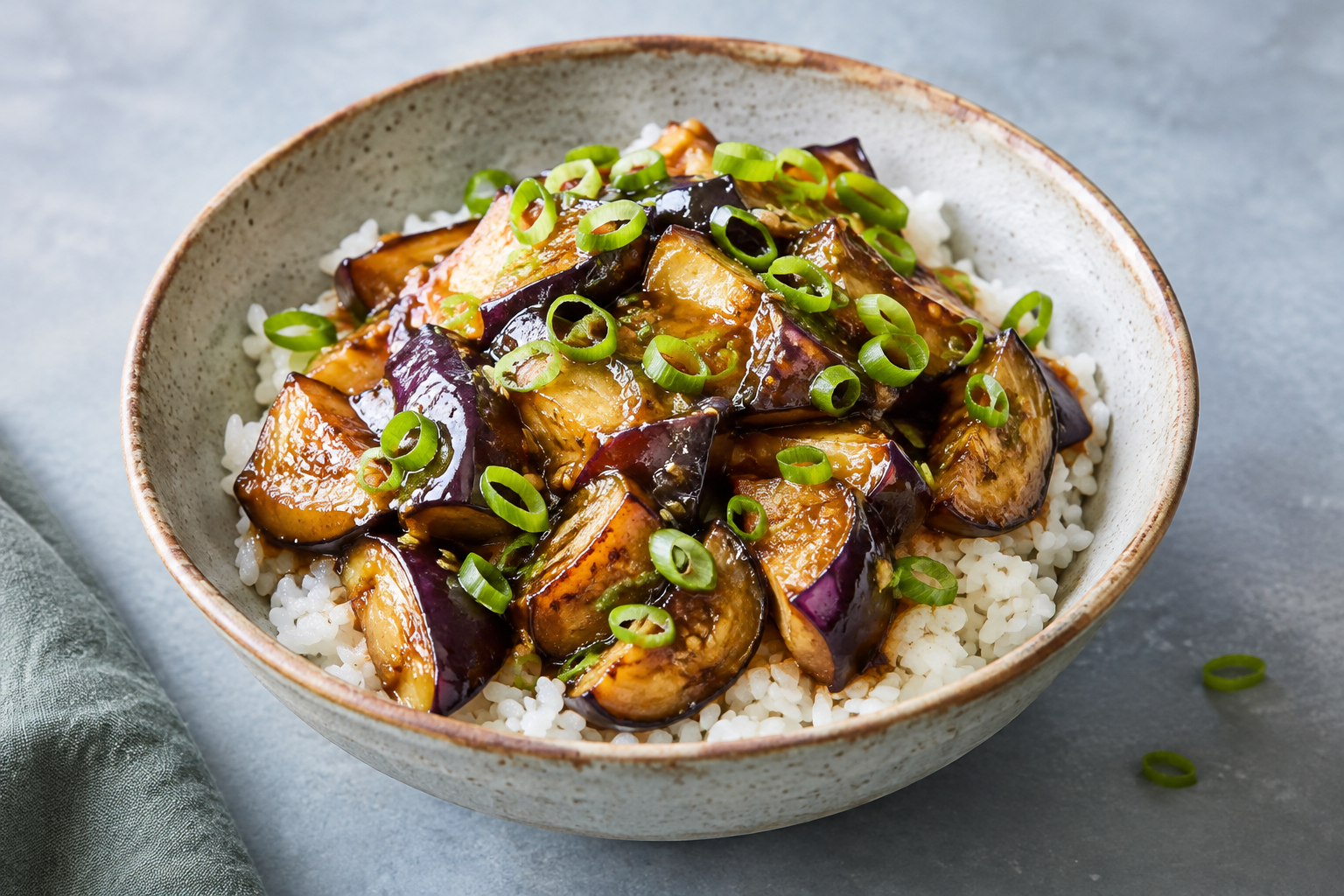
Nasu miso itame brings together two ingredients that work well with each other: eggplant becomes tender and almost creamy when cooked, while miso adds a salty, full-bodied flavor. Mirin brings mild sweetness, and sake loosens the sauce and rounds out the flavor. The spring onion adds a fresh, slightly sharp contrast at the end. The rice is deliberately simple; it soaks up the sauce without overpowering the eggplant.
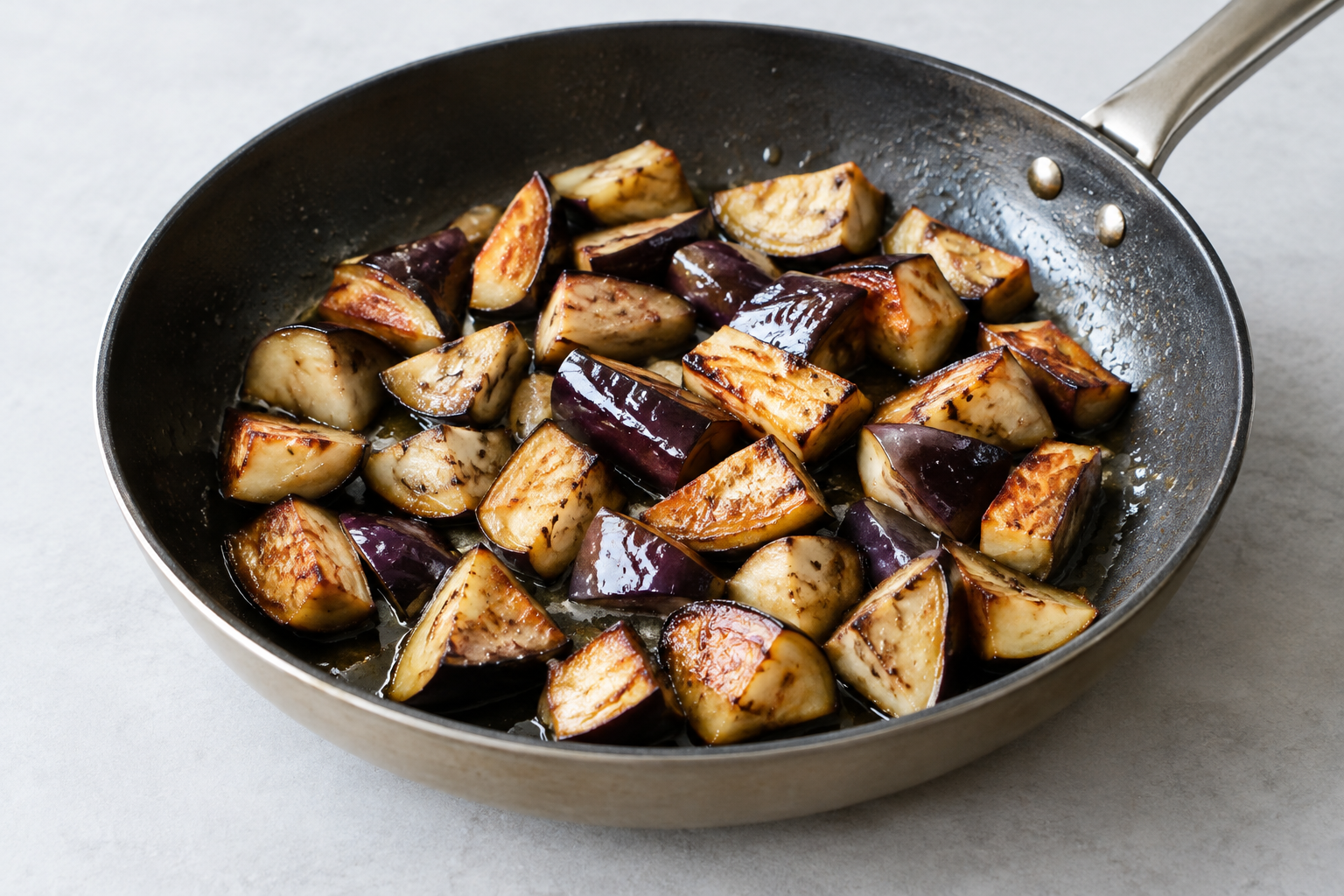
Eggplant is mostly water, but it also absorbs oil easily while cooking. So cut it into generous pieces and cook them in a large, hot pan, where they can make contact with the surface and develop browned spots. An overcrowded pan cools down quickly: the eggplant will then cook in its own moisture rather than brown. Cook it in two batches if needed. The browned edges add flavor and contrast with the soft interior.
Miso varies in color, saltiness and intensity depending on the type. White miso is generally softer and milder; red miso has a stronger flavor and can make the sauce saltier. A mixed miso is also suitable. Taste the sauce before adding it to the eggplant, and keep in mind that you may need a little less if using a darker miso. Mirin and sake are available at Japanese grocery stores and many larger supermarkets. If you don't have sake, leave it out and use an extra tablespoon of water; the flavor will be a little less deep. Don't use sweet cooking wine as a substitute without adjusting the amount of mirin.
The name describes the main ingredients and the cooking method: nasu means eggplant, miso is fermented bean paste, and itame refers to stir-frying. The exact ingredients in dishes like this can vary from household to household and recipe to recipe, so this version keeps the sauce simple and familiar. The eggplant should be cooked through but still hold its shape, so stir gently once you add the miso. Serve right away with warm rice and thinly sliced spring onion. Cover leftovers and refrigerate within two hours; use them within two days. Reheat thoroughly in a pan with a small splash of water.
 Main course

