Kitchen classics, vegetables, and bold flavors.
All recipes
MAIN COURSE · NOORS KITCHEN

Nasi lemak with sambal ikan bilis

Creamy pandan rice, spicy sambal and crispy anchovies: with nasi lemak, the components are served side by side, so every bite tastes different. Add cucumber, peanuts and egg, and you have a complete meal.

60 minutes4 servings
Jump to recipe
Nasi lemak with pandan coconut rice, sambal ikan bilis, crispy anchovies, peanuts, cucumber and egg.
ABOUT THIS RECIPE

Rice, sambal and fresh contrasts

Nasi lemak loosely translates as ‘rich’ or ‘fatty’ rice: the rice is cooked with coconut milk, which makes it richer than plain steamed rice. Pandan adds a gentle, grassy aroma without making the rice sweet. The dish is closely associated with Malaysia, but the exact accompaniments and cooking methods vary from cook to cook and from region to region. That’s why the components belong together, but there is no single set way to assemble each plate.

Good nasi lemak is all about contrast. The rice is soft and mild; sambal ikan bilis brings heat, salt and the deep flavor of fried anchovies. Cucumber adds freshness, while egg and peanuts round out the plate with soft and crunchy bites. Serve the components side by side rather than mixing everything into the rice: that way, everyone can choose how much sambal and anchovy to have with each bite. Use a ripe, firm cucumber; it will stay crunchy even after slicing.

Rinse the rice until the water runs mostly clear. This removes loose starch and keeps the grains from becoming unnecessarily sticky. Pandan leaves are available at Asian supermarkets, often in the freezer section. Tie the leaf loosely so its aroma can escape easily. No pandan on hand? Leave it out; the coconut rice will still taste good, though it will miss that distinctive aroma. Use canned coconut milk and shake or stir it well first so the fat is evenly distributed.

Dried anchovies are essential for sambal ikan bilis: they give both the sauce and the garnish a distinctly salty, savory flavor. Fry some until crisp and set them aside; stir the rest into the sambal so they soften and release their flavor. Tamarind adds acidity to the sauce and tempers the rich mouthfeel of the coconut rice. If you don’t have tamarind paste, you can use a small splash of lime juice, but add it to taste: it has a fresher, less complex flavor.

Nasi lemak can be eaten for breakfast or lunch, but it also works as an evening meal. Put the bowls of sambal, peanuts, egg and cucumber on the table and serve the rice warm. If cooking ahead, cool cooked rice quickly and put it in the refrigerator within an hour. Keep it for no more than 24 hours and reheat it only once, until it is steaming hot throughout.
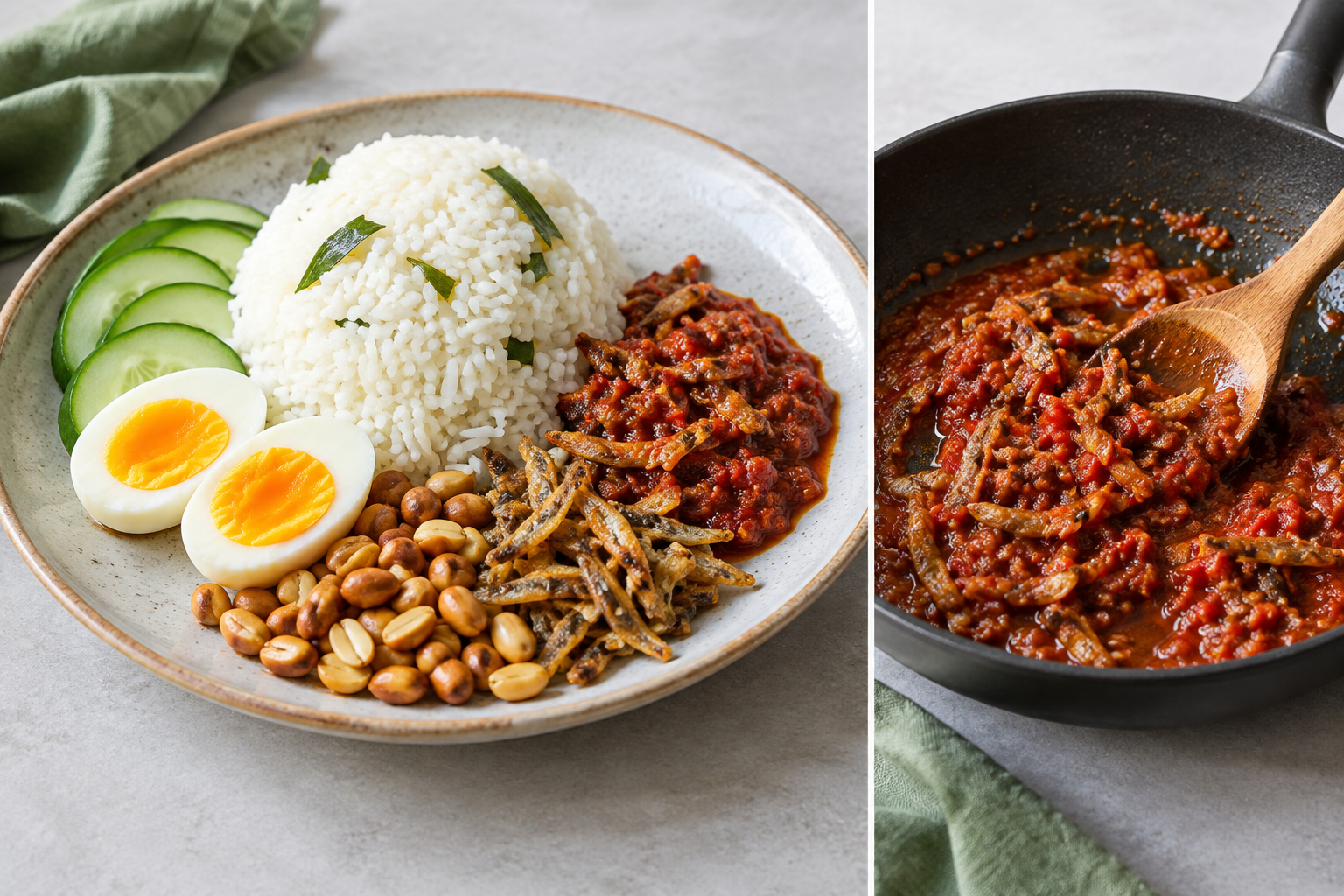
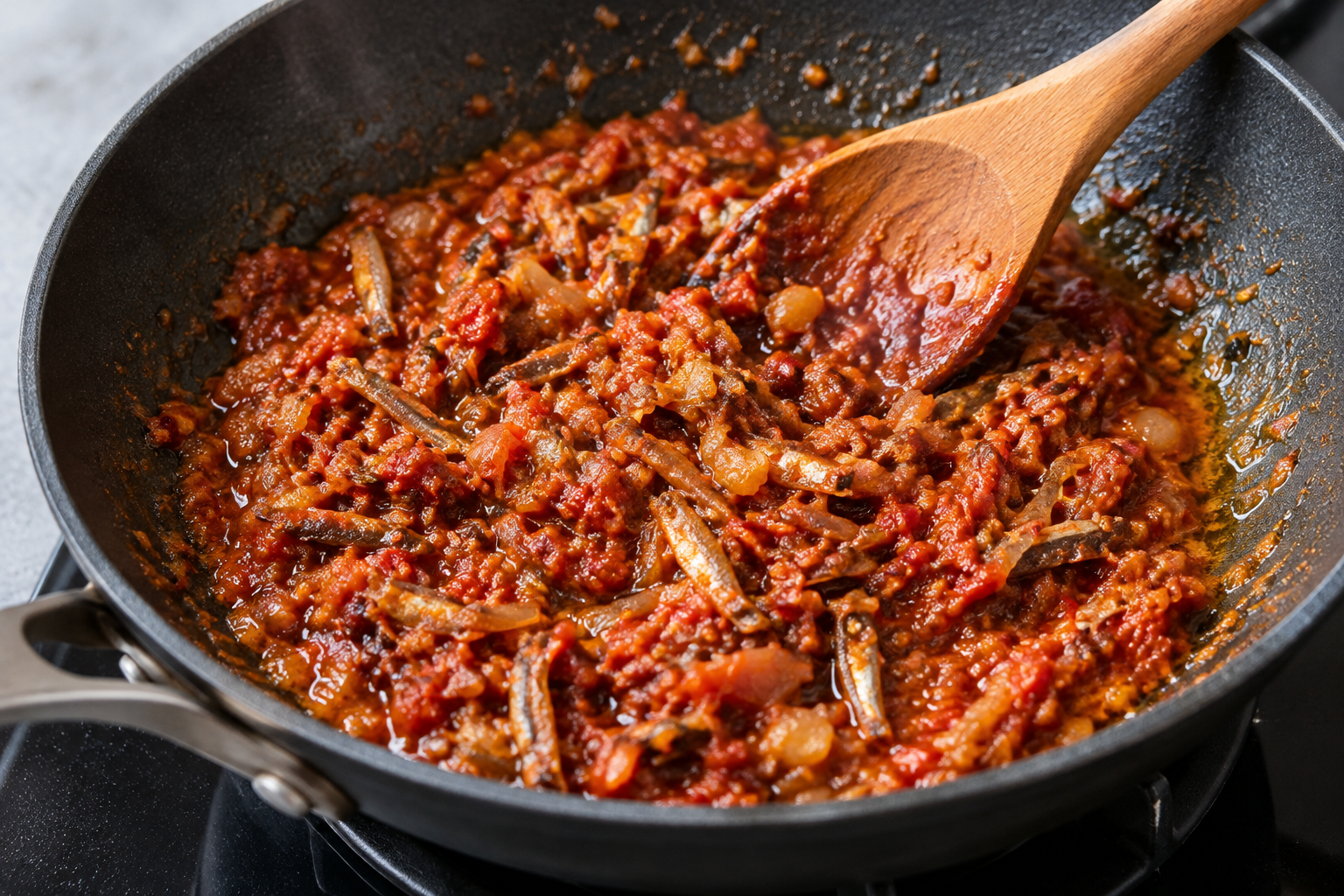
Sambal ikan bilis with anchovies and red chili peppers cooking in a frying pan.
GET STARTED

Nasi lemak with sambal ikan bilis

Prep 25 minCooking 35 minTotal 60 min

Ingredients

4 servings
Quantities scale with servings; adjust cooking times as needed.

How to make it

  1. 1

    Rinse the rice in a sieve until the water runs mostly clear. Drain well. Put the rice, coconut milk, water and a pinch of salt in a heavy-bottomed pan. Tie the pandan leaf loosely and add it to the pan.

  2. 2

    Bring the rice to a boil with the lid on. Turn the heat to low and simmer gently for 12 minutes. Remove the pan from the heat and leave the rice to stand, still covered, for another 10 minutes. Remove the pandan leaf and fluff the rice with a fork.

  3. 3

    Meanwhile, boil the eggs for 9 minutes, cool them in cold water and peel them. Soak the dried chili peppers in hot water for 10 minutes, then drain. Grind them with the shallots, garlic and belacan to make a coarse paste.

  4. 4

    Slice the cucumber thinly. Heat a dry frying pan and toast the peanuts for 3–4 minutes, tossing regularly. Transfer them out of the pan.

  5. 5

    Heat the oil in the same pan. Fry 20 g of the anchovies over medium heat for 2–3 minutes, until crisp; transfer them out of the pan and set aside. Briefly fry the remaining anchovies in the oil. Add the ground paste and fry over medium-low heat for 5–7 minutes, stirring regularly, until fragrant and the oil is visible around the edges.

  6. 6

    Stir the tamarind paste and sugar into the sambal and fry gently for 2 minutes. Taste and add a little salt if needed; the anchovies are already salty. Halve the eggs.

  7. 7

    Divide the coconut rice among four plates. Serve with the sambal, crispy anchovies, peanuts, cucumber and egg, each alongside the rice.


