ABOUT THIS RECIPEThe Onions Make All the Difference
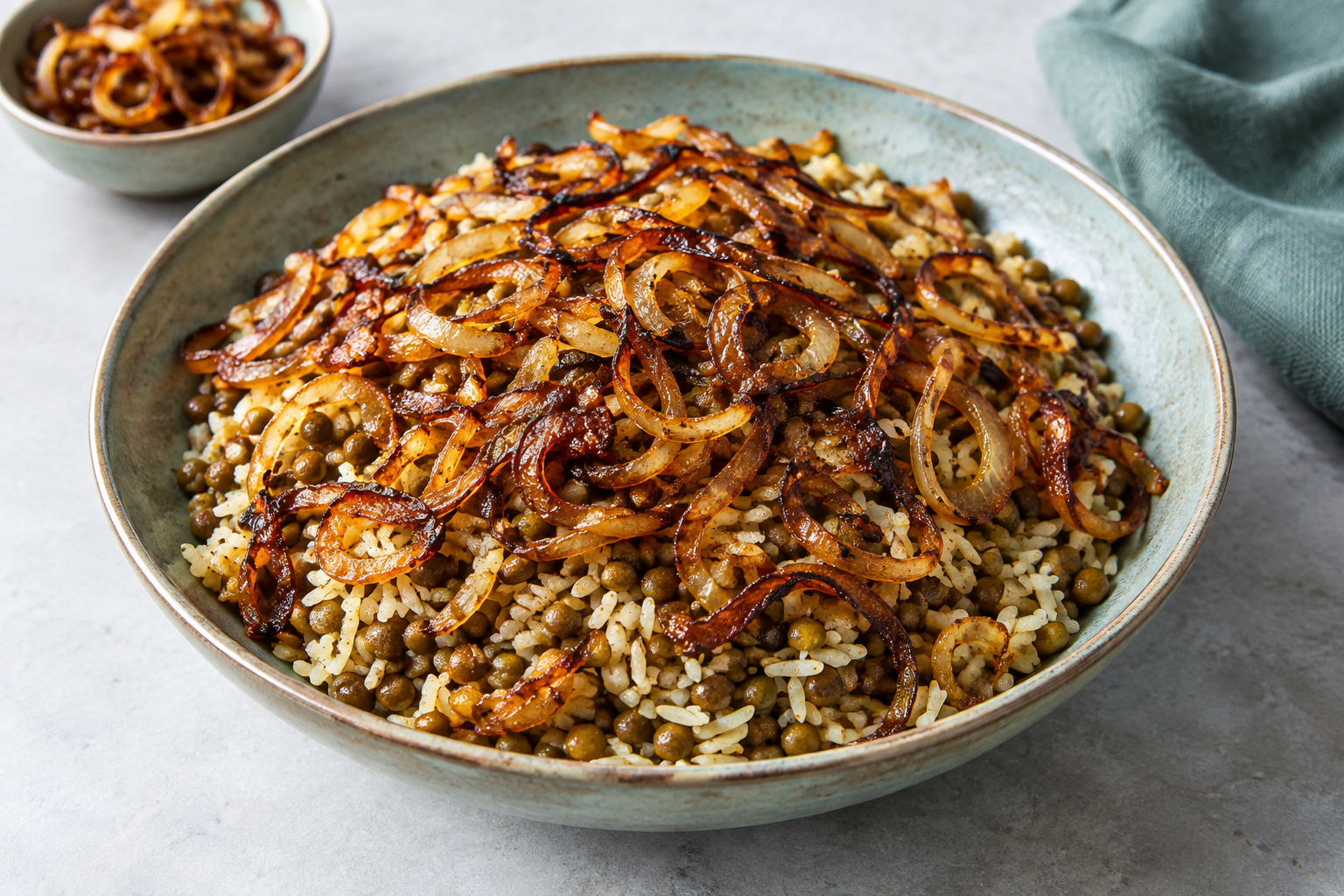
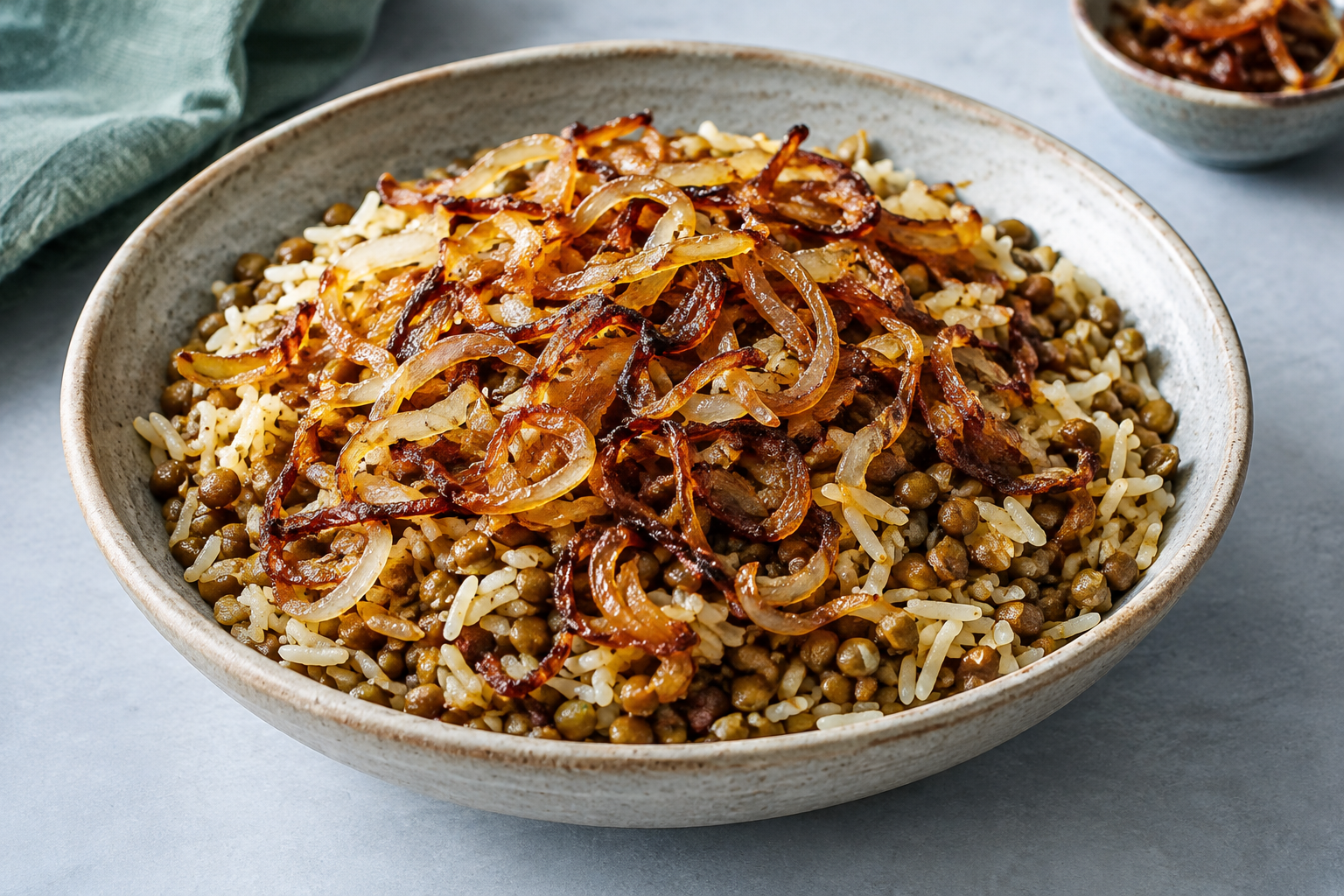
Mujaddara is a well-known dish from the Levant, a region with a wide range of culinary traditions. The basics are simple: legumes, a grain, and fried onions. The type of lentils and grain used varies by family and region. Some versions pair lentils with rice, others with bulgur; the proportions vary too. This recipe uses green or brown lentils and long-grain rice, so the grains stay distinct alongside the tender lentils.
The flavor comes from more than just the spices. Onions cooked slowly in oil lose moisture and become sweeter and darker. Slice them into thin, even half-rings and give them plenty of room in a wide frying pan. Stir regularly, especially toward the end, when the color can deepen quickly. Aim for golden brown to deep chestnut brown; blackened edges taste bitter. Some of the onions are stirred into the dish, while the rest make a crispier, more concentrated topping.
Lentils take longer to cook than rice, so they are cooked separately until almost tender first. That way, the rice can cook gently afterward without the lentils falling apart. Keep the rice covered while it cooks and don’t stir it in between; this helps keep the grains intact. Letting the pan rest briefly after cooking helps the rice cook evenly. Cumin adds a warm, earthy note; ground coriander brings a light citrusy aroma without overpowering the lentils.
Green and brown lentils work well because they hold their shape fairly well. Red lentils are not a direct substitute: they break down more quickly and change the texture. For a different regional style, you can replace the rice with medium-grain bulgur. Follow the package instructions for the required liquid and cooking time, as bulgur may already be partially cooked. Don’t use quick-cooking rice for this recipe; it has a different liquid ratio and cooking time.
Serve the mujaddara warm or at room temperature, with plenty of fried onions on top. A fresh cucumber salad with lemon goes well with it, as does unsweetened yogurt if you want a cool, creamy contrast. These are accompaniments, not essential parts of the dish. It’s hearty enough to serve as a main course and can also be served as part of a meal with several dishes on the table.
 Main course

