ABOUT THIS RECIPEWhy the rice is fried first
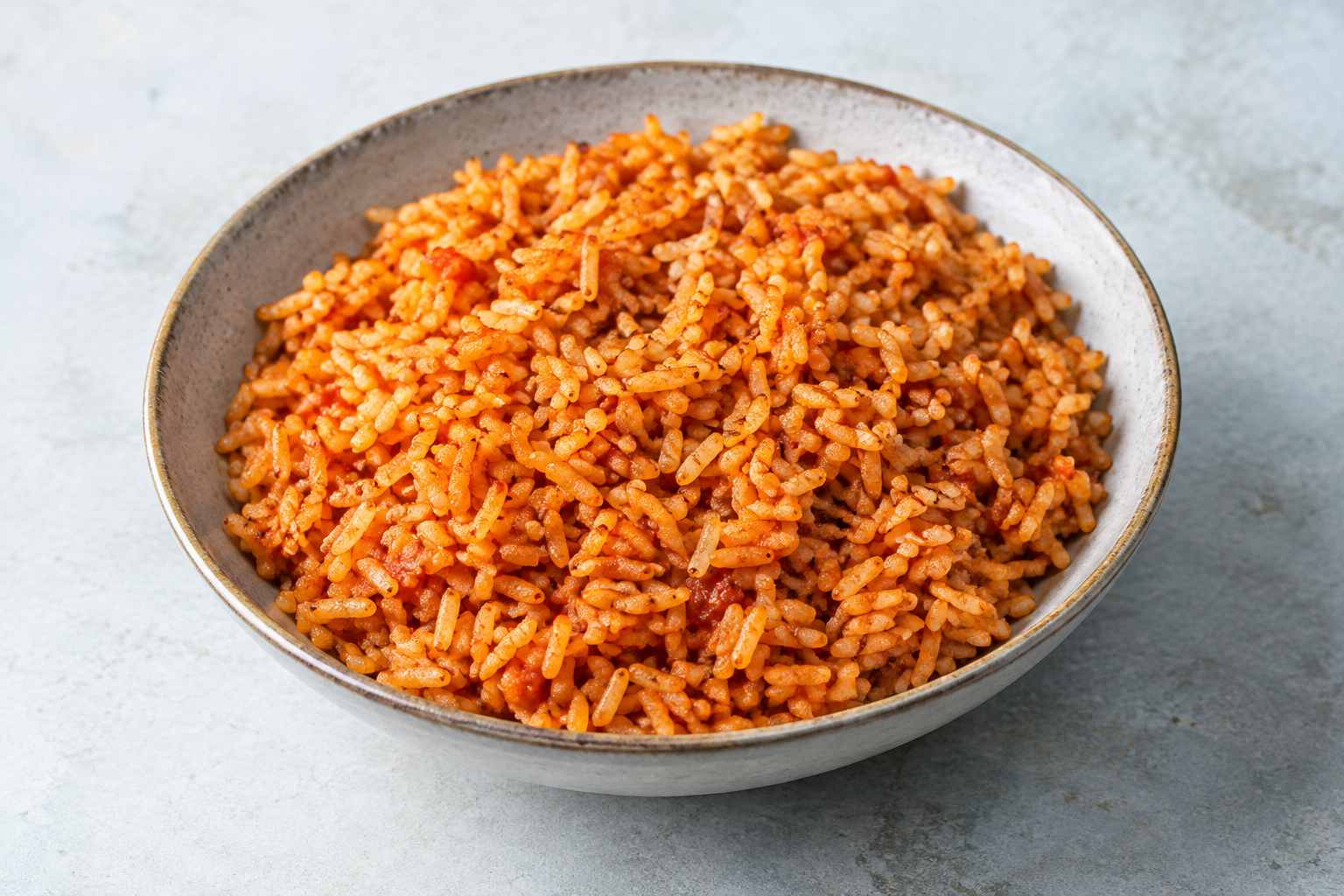
Arroz rojo literally means red rice. It’s a well-known Mexican rice dish, but the exact ingredients vary from household to household and from region to region. The basics are simple: rice is fried in oil, then simmered until tender with tomato, onion, garlic and stock. Sometimes vegetables such as peas or carrots are added too; here, the rice stays the star, letting the tomato flavor and separate grains shine.
The color comes from ripe tomatoes blended with onion and garlic into a smooth sauce. Tomatoes are at their best in summer, but this dish can be made year-round. Out of season, choose ripe plum tomatoes or use canned tomatoes: use about 200 grams of peeled tomatoes, and drain off some of the liquid if they’re very watery. A ripe tomato brings gentle sweetness and a touch of freshness; stock provides the savory base.
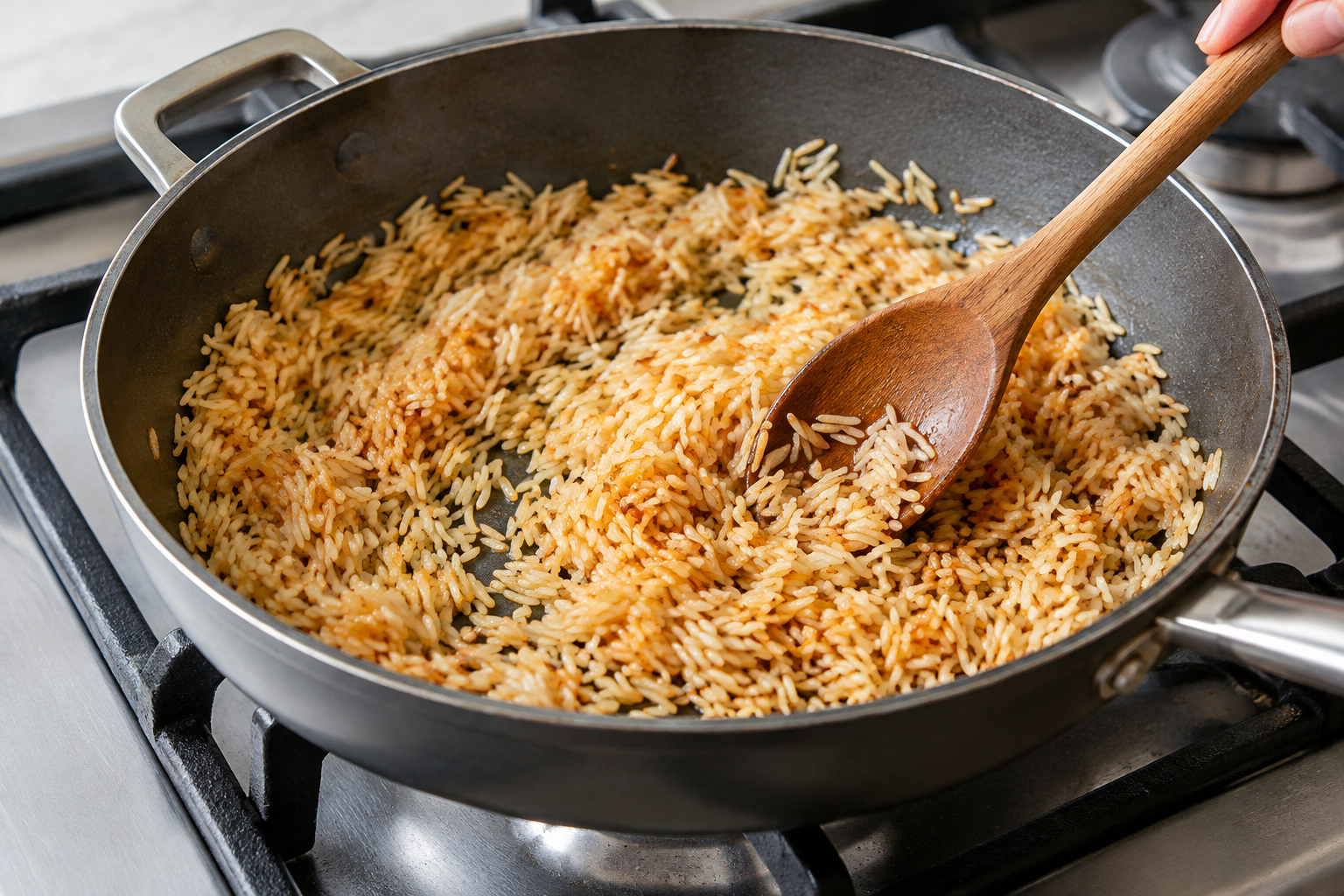
Frying the rice does more than add flavor. Letting the grains turn lightly golden in oil dries and firms up their outsides before the liquid is added. This helps them hold their shape as they cook. Stir regularly and fry over medium heat; golden is good, while dark brown can quickly taste bitter. Rinse the rice beforehand to remove excess starch, but then drain and dry it well so it fries in the pan instead of steaming.
Use long-grain white rice for the most reliable results. Brown rice needs more liquid and a longer cooking time, so it isn’t a direct one-for-one substitute. The tomato purée and stock together make up the cooking liquid: keep the pan covered while the rice cooks, and don’t lift the lid to check. After resting, you can gently fluff the rice with a fork. If there’s still visible liquid, leave the pan over low heat for a few more minutes.
Serve the rice with beans, fried or braised chicken, or enchiladas; it soaks up sauces well without being heavy itself. Quickly cool any leftovers and refrigerate them covered within two hours. Keep for up to two days and reheat thoroughly once, with a small splash of water and a lid to stop the rice from drying out.
 Main course

