ABOUT THIS RECIPECrisp Edges, Green Sambal
Sambal hijau literally means green sambal, but its ingredients aren’t set in stone in every kitchen. Green chilies and shallots form the base here; a little belacan adds depth, while lime keeps the flavour lively. Belacan is fermented shrimp paste with a strong aroma and salty umami. Toasting a small amount briefly first mellows it and makes it easier to mix into the sambal. Use a mortar and pestle for a coarse texture with visible pieces, or a small food processor for a more even paste.
The choice of chili determines how much heat the dish brings to the table. Long green chilies add plenty of flavour and are generally less hot than rawit or bird’s-eye chilies. For a spicier sambal, add some of those; for a milder version, remove the seeds and ribs from the chilies. Belacan is characteristic, but if you can’t find it, you can leave it out and season the sambal with a small splash of fish sauce. This adds salt and umami, but isn’t an exact substitute.
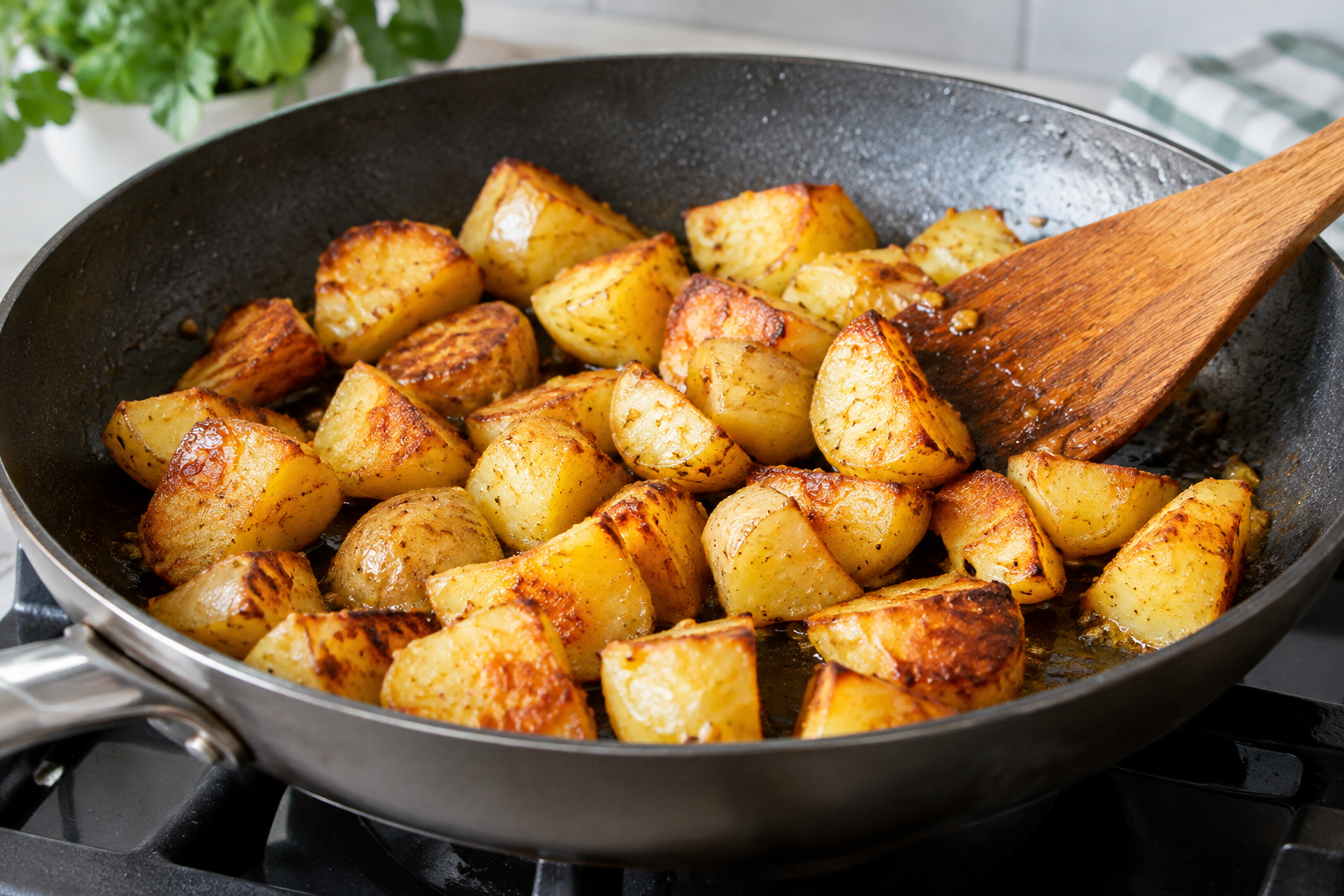
Waxy potatoes work well because they hold their shape after cooking. Boil them until just tender, then let them steam-dry thoroughly: wet potatoes fry less evenly and can start steaming in the pan instead of browning. Then fry them in a generous layer of oil until golden brown, leaving enough room to turn the pieces. Stir the sambal through only at the end. This flavours the soft centre without leaving the fried outsides sitting in a wet sauce for long.
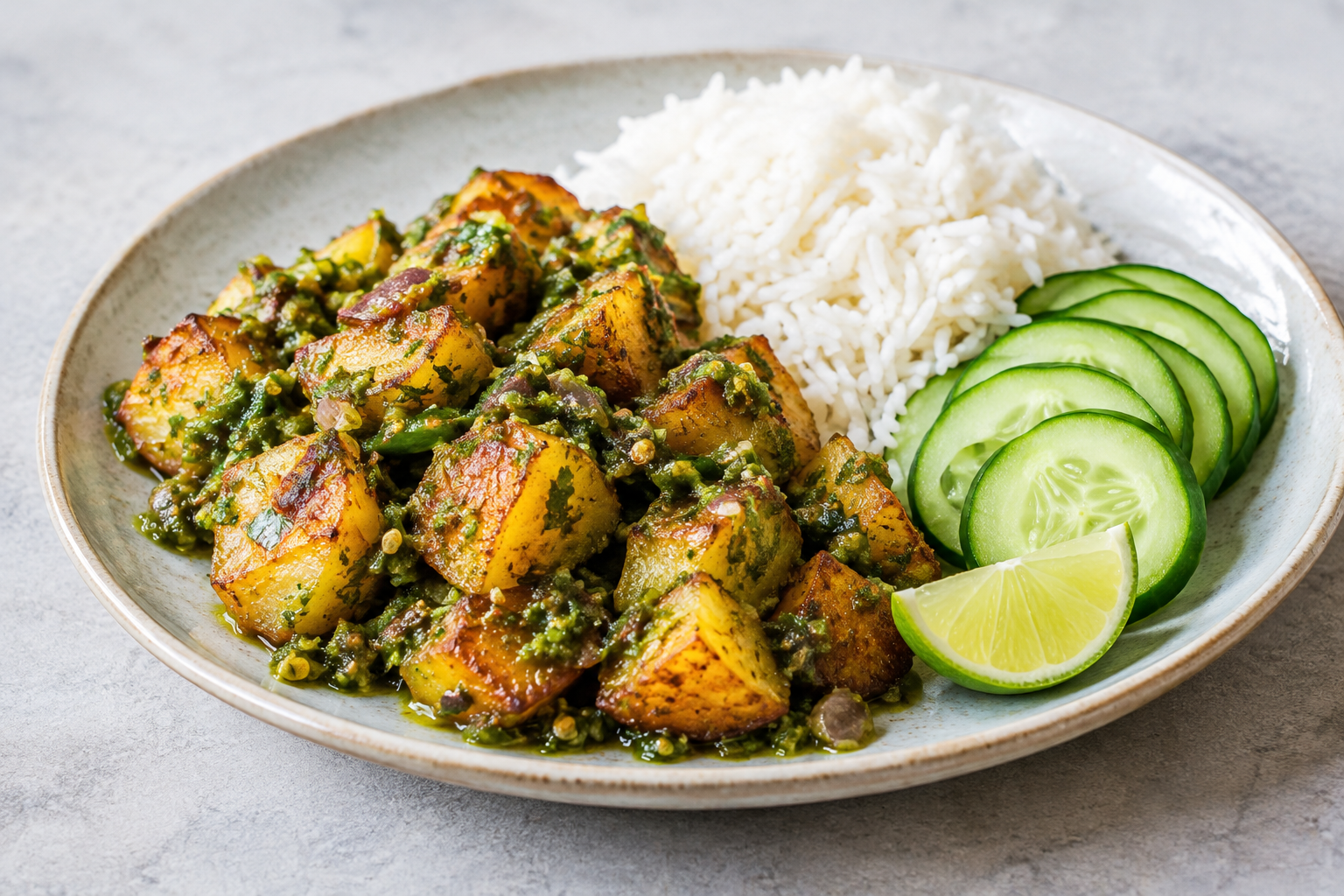
Serve the potatoes with white rice and cool cucumber. The plain rice tempers the chili and soaks up any leftover sambal; cucumber offers a fresh, juicy contrast. You can serve green beans on the side, but keep the portion modest so the potatoes remain the focus. Cover leftovers and refrigerate within two hours, then eat within three days. Reheat them gently in a frying pan; the potatoes will warm through, although the edges won’t be as crisp as they are straight after frying.
 Main course

