ABOUT THIS RECIPETangy, spiced and slow-cooked
Sambar is a South Indian lentil dish that is also part of Indian food culture in Malaysia. The exact vegetables and proportions vary from household to household and region to region; here, toor dal, tamarind and sambar powder give the dish its distinctive character. It is different from Malaysian dalca: that has a different flavour profile, while the tangy tamarind and spice blend stand out clearly in this sambar.
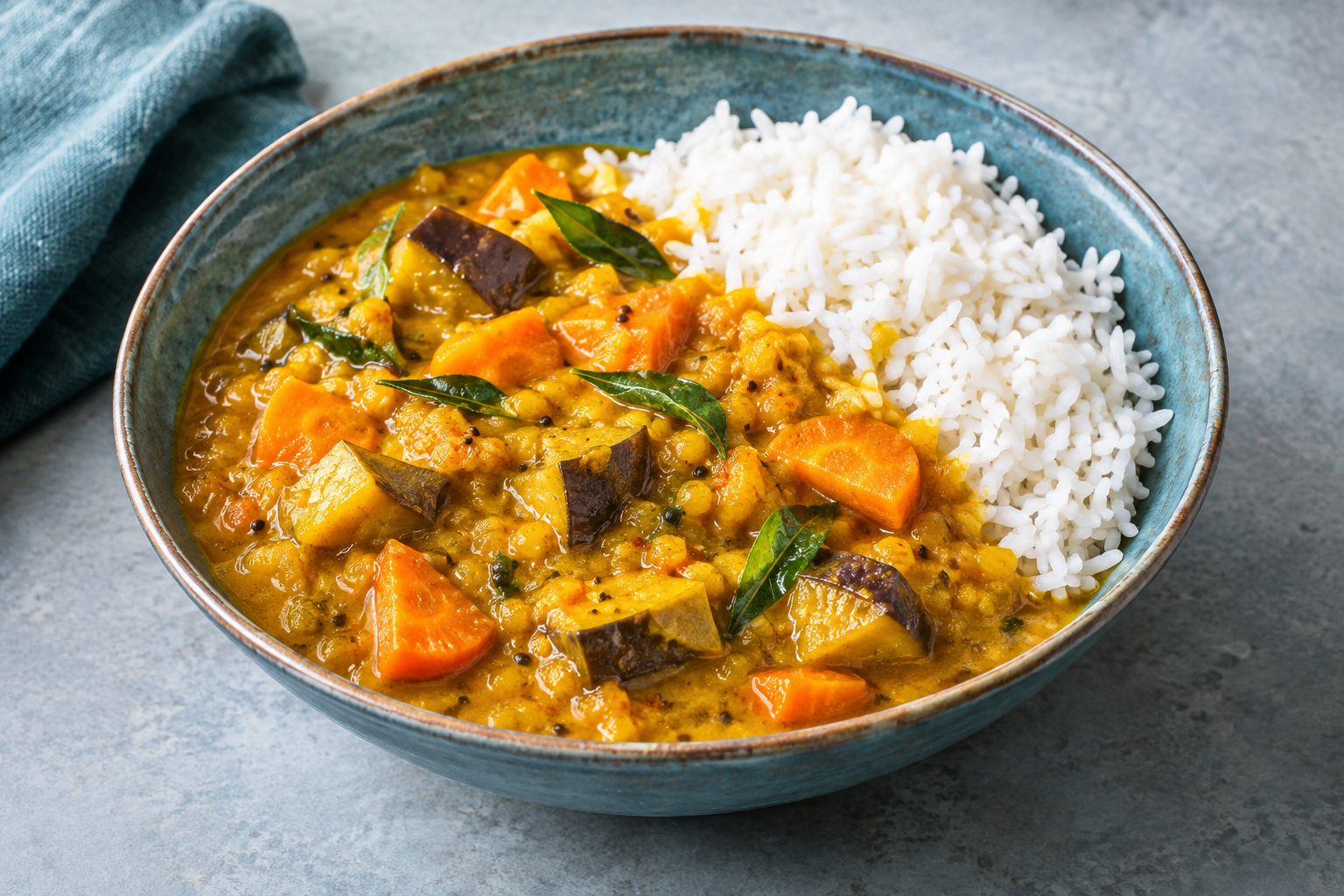
Toor dal, also known as pigeon peas or yellow split peas, cooks into a soft, hearty base. The lentils don’t need to be soaked beforehand, but rinse them until the water is less cloudy. Carrot retains a little bite after cooking, while eggplant softens and soaks up the spiced broth. Carrots and eggplants are generally available year-round; choose firm eggplants, and adjust the cooking time if the pieces are small or large.
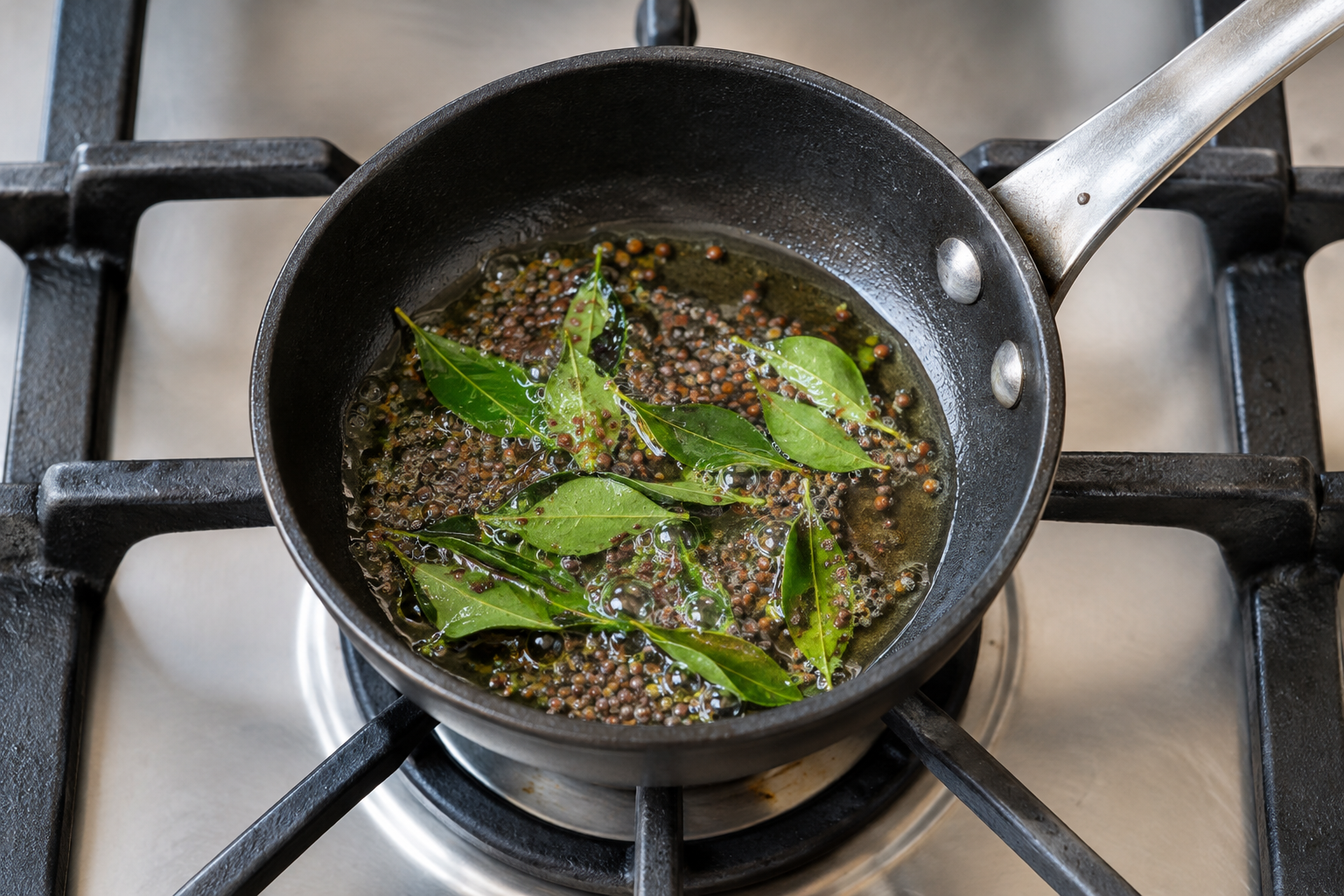
Sambar powder is a spice blend that includes roasted spices and chilli. Its ingredients and heat vary by brand, so taste before adding extra pepper. Mustard seeds and curry leaves are briefly heated in oil, adding a fragrant, savoury note to the dish. Don’t let the mustard seeds burn; once they start to pop and the leaves sizzle, the oil is ready to stir into the sambar.
Tamarind adds a rounded, fruity tang that balances the soft lentils and sweet carrot. Tamarind pulp is best; strain the soaking liquid so no fibres or seeds end up in the pan. If you only have tamarind concentrate, start with a small amount and add more to taste; concentrates vary greatly in intensity. No eggplant on hand? Zucchini works too, but add it later so it doesn’t cook apart.
Serve the sambar with white rice so the rice soaks up the spiced sauce. It should be thick but spoonable; stir in a little hot water at the end if it gets too thick. Refrigerate leftovers promptly in a sealed container and eat them within three days. Store the rice separately, and when reheating, heat both the rice and sambar until piping hot all the way through.
 Main course

