ABOUT THIS RECIPEHerbal fragrance alongside ripe strawberries
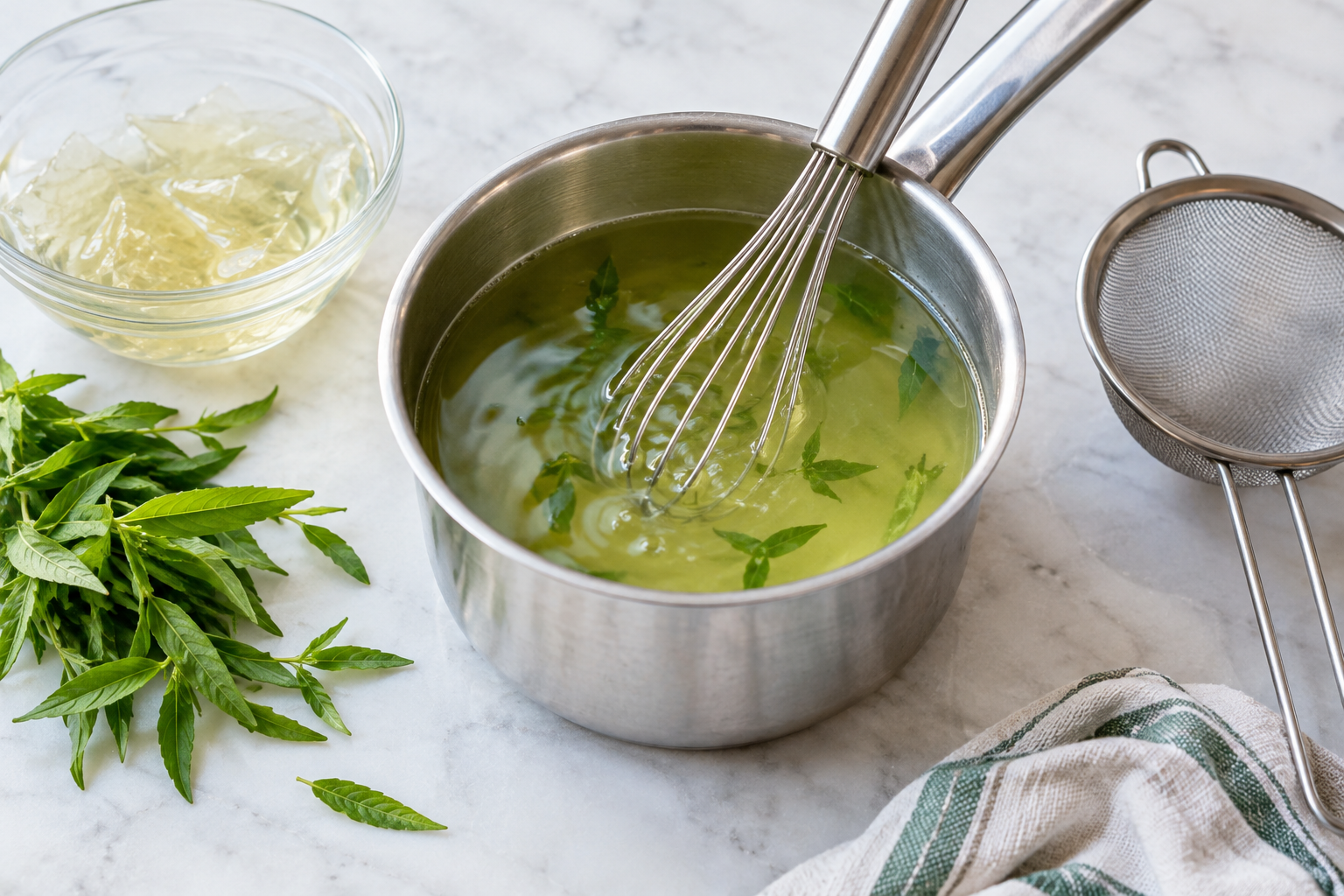
Lemon verbena gives the jelly a gentle, lemony fragrance without the pronounced flavour of lemon juice. The leaves steep briefly in hot water, making a clear infusion with a light herbal aroma. Use fresh leaves if you can find them, for example from an herb plant or a well-stocked greengrocer. Dried lemon verbena works too: start with about 5 grams and taste the infusion after a few minutes, as dried herbs can develop an intense flavour more quickly.
The jelly is deliberately soft. Eight grams of gelatin to half a litre of infusion gives you cubes that hold their shape but don’t feel firm or rubbery on the spoon. First soak the gelatin sheets in cold water, then dissolve them in the warm, strained infusion. Don’t let the mixture boil after adding the gelatin. A wide, shallow dish gives you a layer that sets quickly and evenly; loosen the cubes with a sharp knife just before serving.
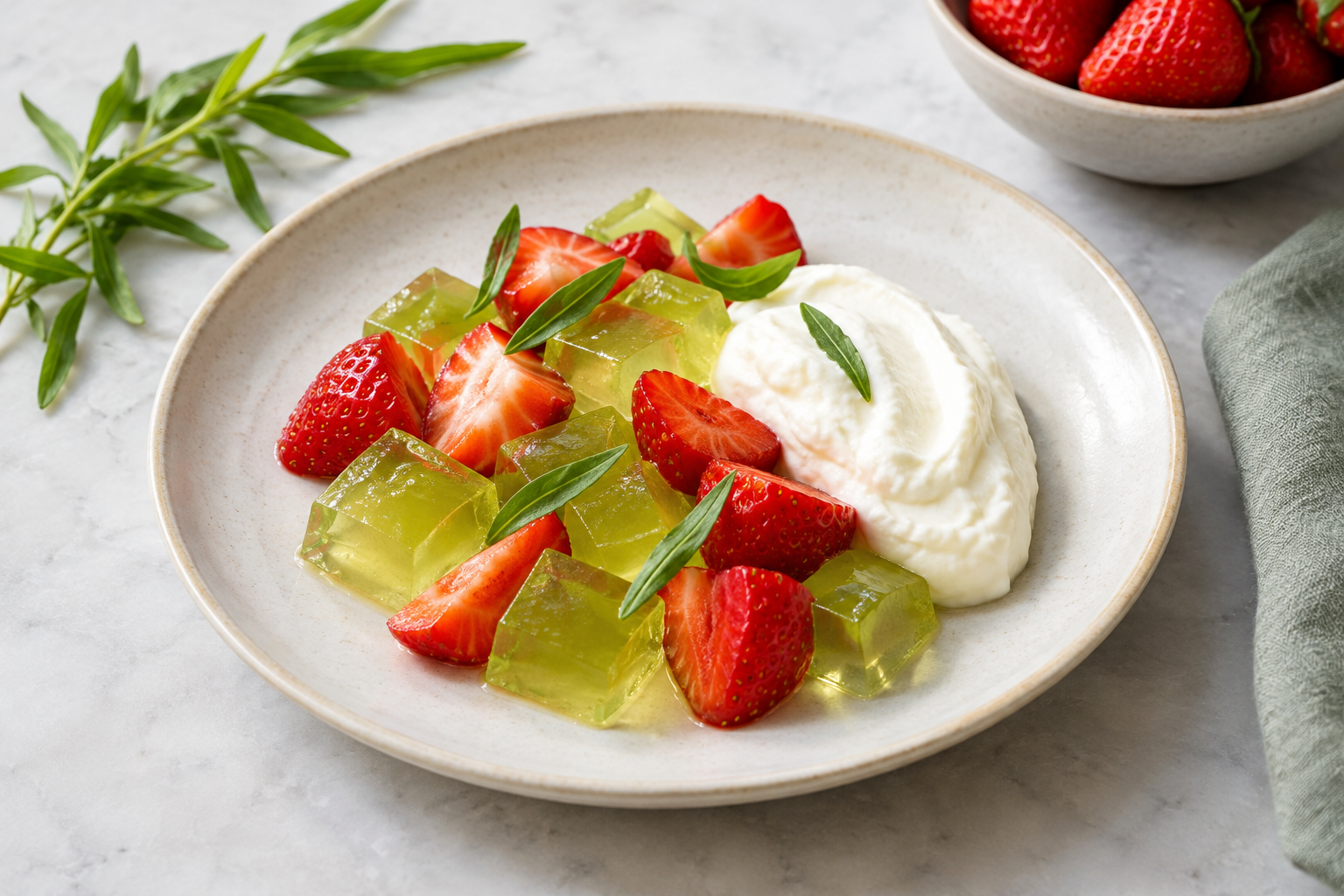
Strawberries are at their best when ripe and fragrant, usually during the Dutch strawberry season from late spring through summer. Choose fruit that’s firm enough to cut but already has a noticeable aroma. Out of season, you can use ripe shop-bought strawberries; leave small ones whole or halve larger ones. The jelly is lightly sweetened so the fruit still shines through. If the fruit is very sweet, a little extra lemon juice over the strawberries can sharpen the flavours, but it isn’t essential to the basic recipe.
The yogurt cream provides a fresh, creamy contrast to the smooth jelly and juicy berries. Greek yogurt makes the cream richer; full-fat natural yogurt works too, but the result may be a little thinner. Whip the cream to soft peaks first, then fold in the yogurt to keep the mixture light. You can make the jelly a day ahead and store it covered in the fridge. It’s best to cut the fruit and make the yogurt cream on the day you serve it. Serve everything chilled, in shallow glasses or on a plate, and bring the components together just before eating.
 Main course

