ABOUT THIS RECIPEA Herby Note with the Lemon
Olive oil gives this cake a different texture from butter: the crumb stays tender and lightly moist, even after the cake has cooled. Choose a mild extra-virgin olive oil without pronounced bitterness or a peppery aftertaste, so the lemon and rosemary remain distinct. Since the oil is liquid, there’s no need to soften it first or beat it with the sugar until creamy.
Lemon zest adds plenty of fragrance without much extra moisture. Grate only the yellow part of the peel; the white pith underneath can taste bitter. Lemon juice adds a fresher, slightly tart flavor, but also thins the batter. So keep the amount modest and measure the juice. A small amount of finely chopped rosemary is enough: its flavor becomes more pronounced as the cake bakes, and too much can quickly overpower the other flavors.
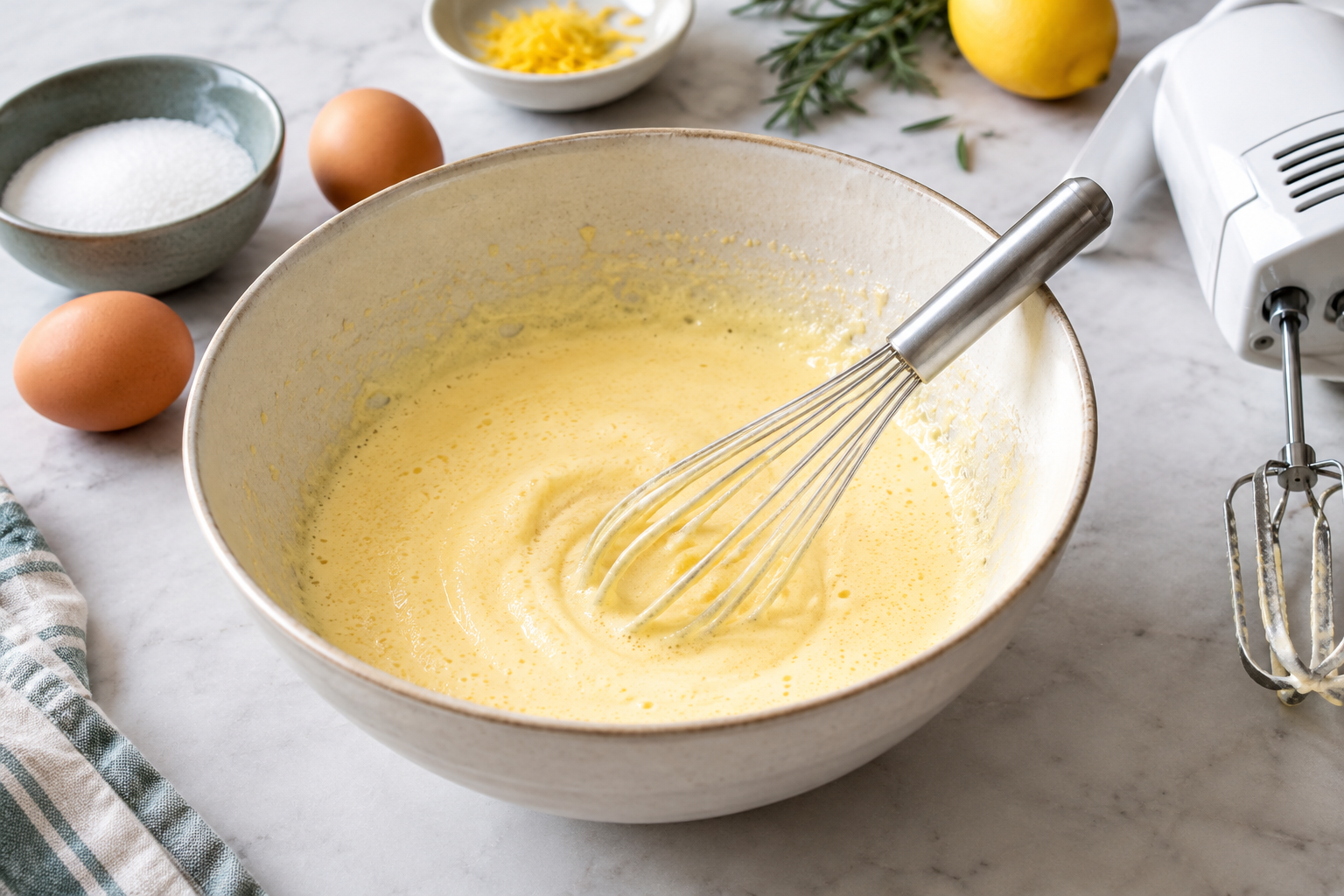
Beating the eggs and sugar until light and fluffy helps give the cake a fine, even crumb. Take a few minutes to do this, until the mixture is lighter in color and visibly thicker. After adding the flour, mix only until no dry patches remain. Stirring for too long develops gluten and can make the cake dense or tough. A 20-centimeter round tin makes a low cake that’s easy to cut into thin wedges; check it with a skewer toward the end of the baking time, as ovens vary.
Fresh rosemary is best; chop it finely so you don’t get large, tough pieces in a slice. If you don’t have fresh sprigs, you can use dried rosemary, but use about a third as much and rub it between your fingers to crumble it. For a slightly softer citrus flavor, you can replace some of the lemon juice with milk. It’s best to keep the rosemary: that herbal note is what makes this combination different from an ordinary lemon cake.
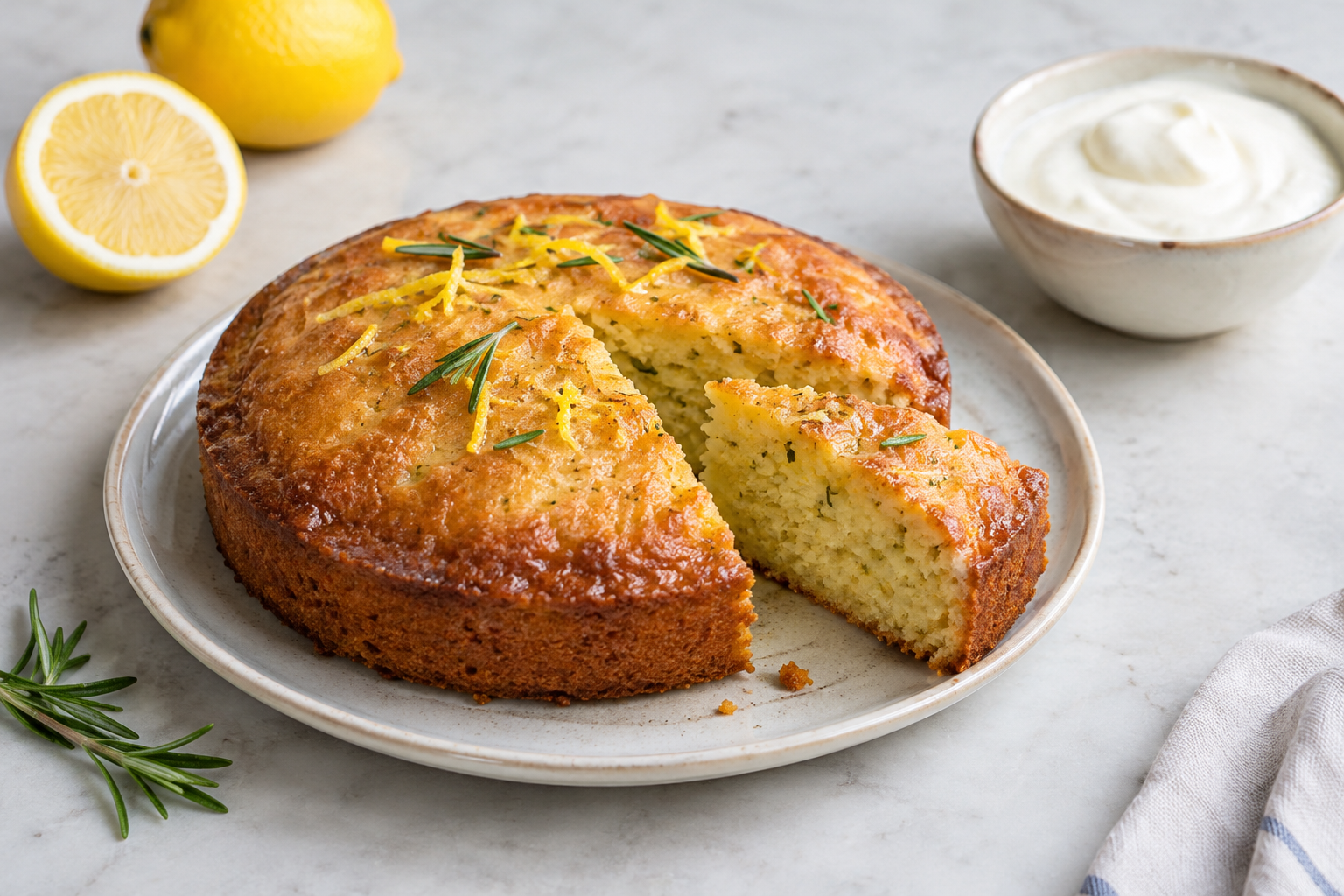
Let the cake cool in the tin first and slice it only afterward; the crumb is more delicate while warm. A thin slice is lovely with coffee or tea. With unsweetened yogurt or crème fraîche and, for example, orange segments or berries, it makes a simple dessert. Store the cooled cake covered at room temperature and serve the dairy on the side at the table.
 Main course

