ABOUT THIS RECIPEA rich sauce, a different noodle
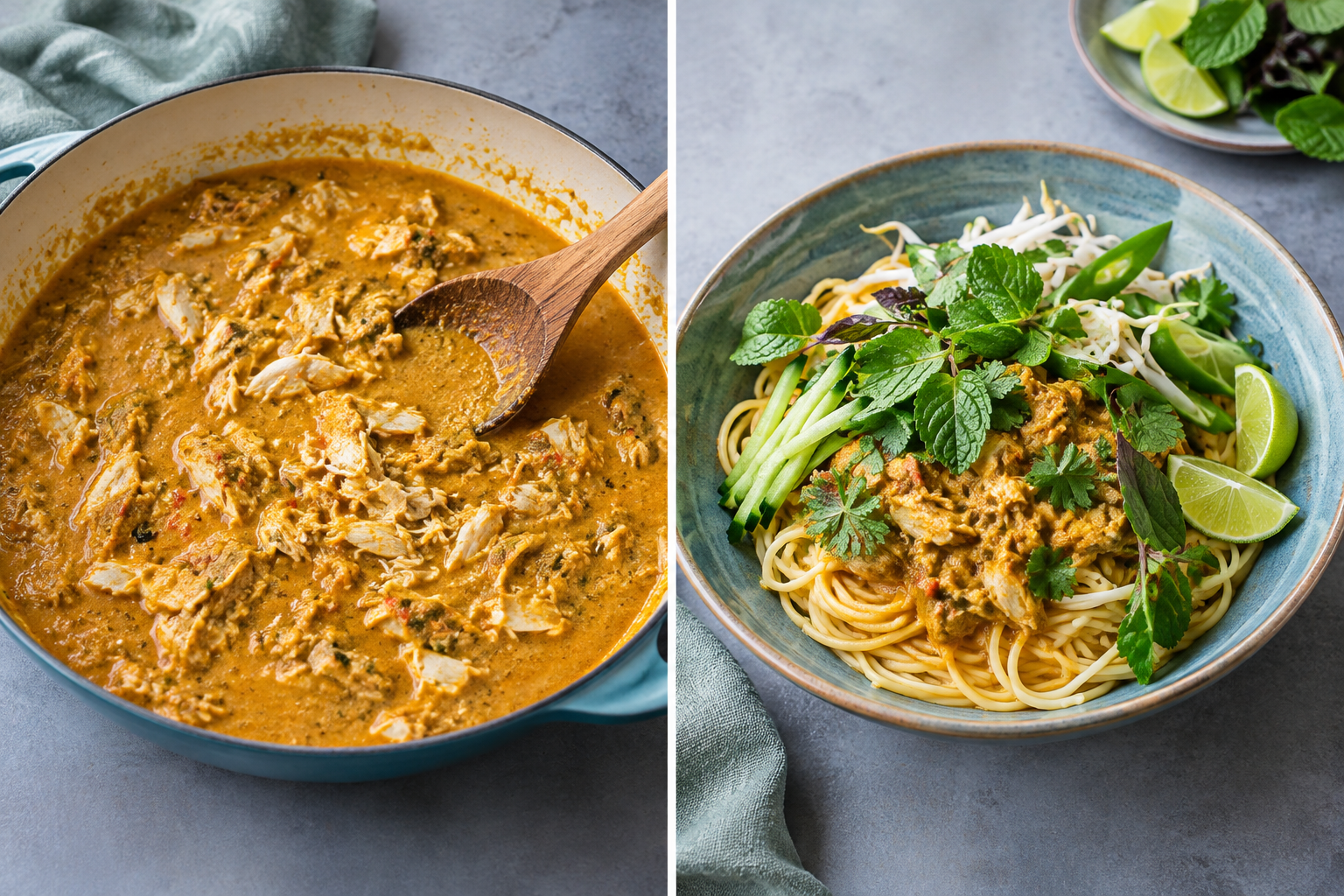
Laksa Johor is a Malaysian laksa from the state of Johor, in the south of the peninsula. There are many regional kinds of laksa, and the Johor version is recognisable by its thick fish-and-coconut-based sauce and its spaghetti. That combination isn’t a random stand-in for rice noodles: the firm strands soak up the rich sauce and give the dish its own character. Laksas from other regions may be thinner, made with a different fish base or served with different noodles.
Mackerel is a practical, flavourful choice of fish here. Its firm, fatty flesh flakes easily into small pieces after poaching and gives the sauce body. Other kinds of fish are also used in Johor; choose a firm-fleshed fish and carefully remove any bones. Dried shrimp add a concentrated, salty umami flavour. Soak them briefly to make them easier to grind finely. If you don’t have dried shrimp, you can leave them out, but the sauce will have less depth of flavour.
The fragrant base, often called rempah, is made from ground aromatics and spices. Lemongrass, shallot, garlic, ginger, galangal and chilli create a fragrant, fresh and mildly spicy foundation. Take your time frying the paste in oil: the raw, sharp notes fade and the aromas become rounder. Stir regularly and don’t turn the heat too high, as finely ground aromatics can burn quickly. Kerisik, toasted coconut ground into a paste, makes the sauce richer and adds a roasted flavour. If you can’t find it, leave it out; extra coconut milk is not an equivalent substitute.
The sauce should be thick but spoonable. Coconut milk mellows the spices, while tamarind provides a subtle sour counterpoint. Adjust the amount of chilli to taste, but keep enough heat so the fresh garnishes don’t overpower everything. Serve the spaghetti separately or arrange it in nests on the plates and spoon the sauce over it. Thin strips of cucumber, bean sprouts and yardlong beans add crunch; mint and Vietnamese coriander bring a fresh, herbal note. Squeeze over the lime at the table.
Fresh herbs and cucumber are available all year round, but they’re often especially appealing in the warmer months as a fresh, crunchy contrast to the warm sauce. If you’re not using Vietnamese coriander, add extra mint; the flavour will change, but the dish will remain balanced. Cool any leftover sauce promptly, cover and refrigerate for up to two days. Reheat the sauce thoroughly and cook the spaghetti fresh, so it doesn’t soften in the sauce.

 Main course

