ABOUT THIS RECIPETwo layers, one steamer
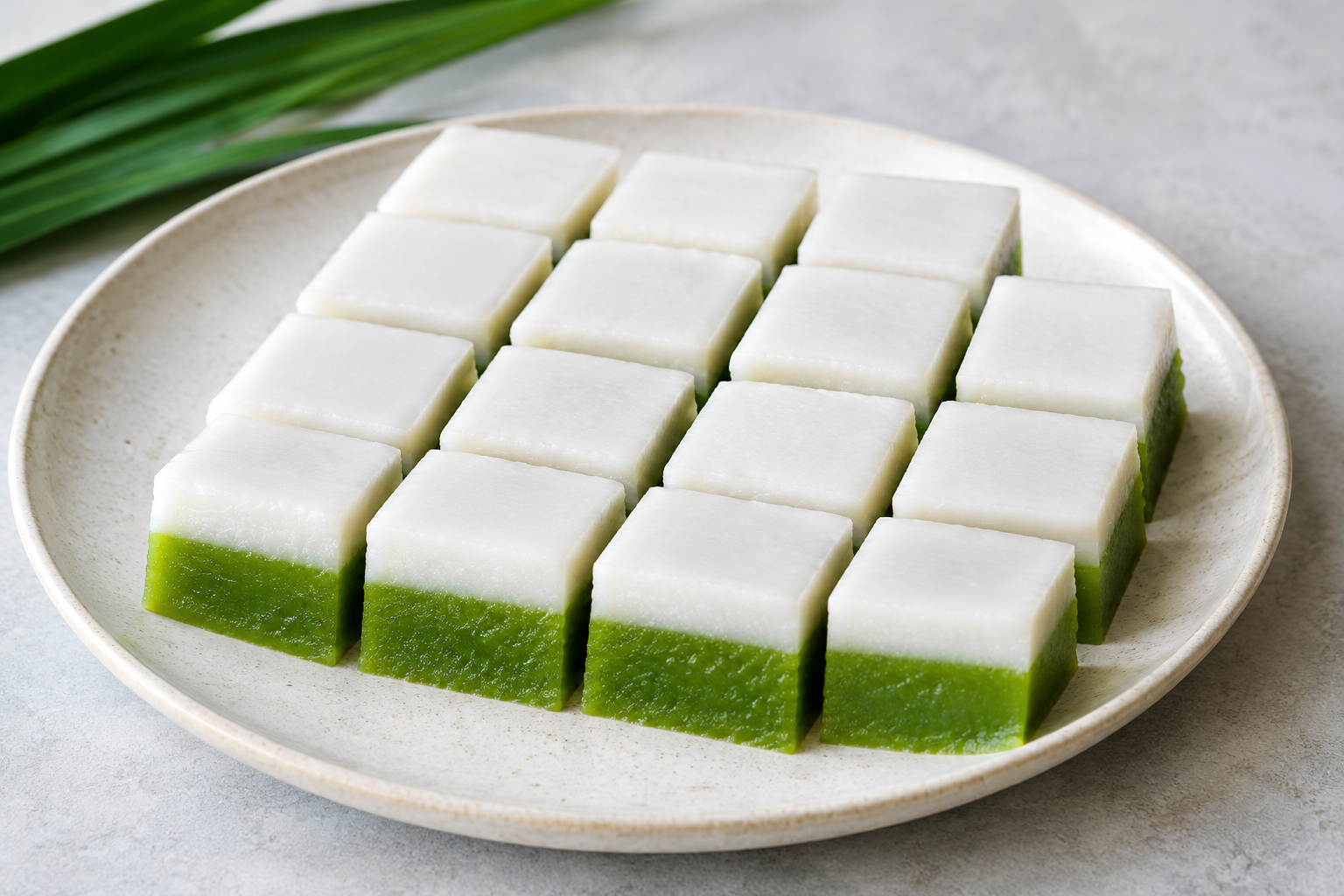
Kuih talam is a Malaysian steamed kuih with two distinct layers: pandan on the bottom and coconut on top. It isn’t an oven-baked cake, but a compact, soft treat that gets its structure from rice flour and tapioca starch. Rice flour gives it firmness; tapioca makes the bite a little springier. The pandan layer is fresh and aromatic, while the coconut layer has a milder flavor and a little salt keeps it from tasting flat. Together, they make a subtly sweet dessert, not an intensely sugary one.
Fresh pandan leaves give a gentle, herbaceous aroma and a natural green color. Blend them with water and strain the mixture well so no fibers remain in the layer. Pandan is available year-round at many Asian grocery stores, fresh or frozen; thawed leaves work too. If you can’t find fresh pandan, use pandan extract according to the instructions on the bottle and top it up with water to 250 milliliters. The color may be brighter and the flavor more concentrated, so add the extract gradually.
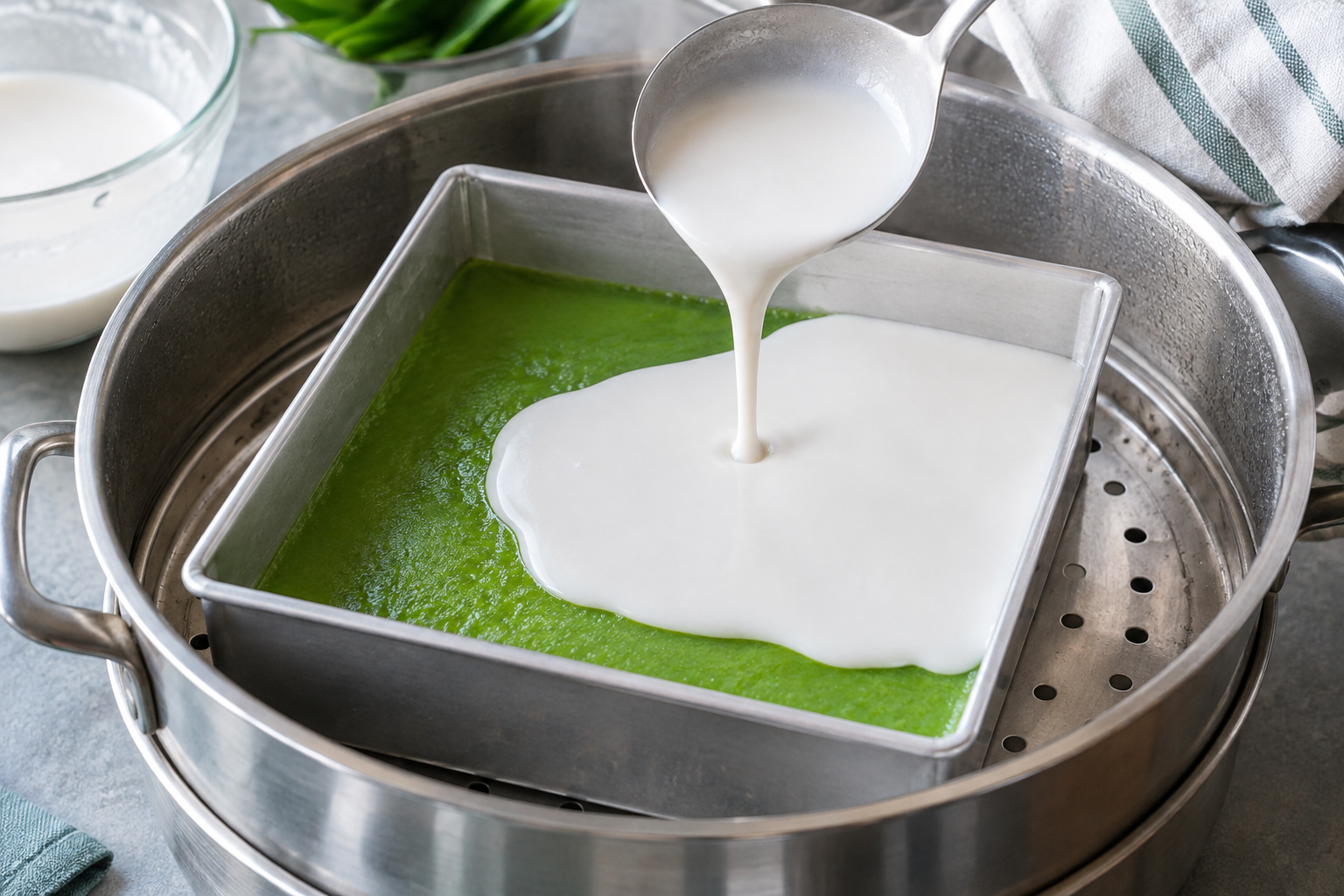
Steaming over steady, moderate heat matters more than boiling vigorously. Wrapping a cloth around the lid catches condensation so water droplets don’t fall onto the surface. The green layer should be cooked and firm enough to support the top layer, but still warm when you pour on the coconut layer. Stir both bowls of batter again just before filling the pan: the rice flour and tapioca can settle to the bottom. Pour the second layer gently over a spoon so you don’t break through the first.
Use full-fat canned coconut milk for a creamy, even top layer; stir or shake the can well first, as the fat may have separated. Light coconut milk can make the layer less rich and softer. It’s best to keep the ratio of rice flour to tapioca as written: rice flour alone gives a less elastic bite, while too much tapioca makes the kuih sticky. A square pan about twenty centimeters across makes squares with two clearly visible layers.
Let the kuih cool completely before cutting; the center is still soft while warm, and the layers may shift. Use a thin, lightly greased knife and wipe it clean between cuts for neat edges. Serve the squares for dessert or with tea, optionally alongside fresh fruit without added sweetness. Store leftovers covered in the refrigerator and let them come briefly to room temperature before serving so the texture softens again.
 Main course

