ABOUT THIS RECIPEA soft exterior, a syrupy centre
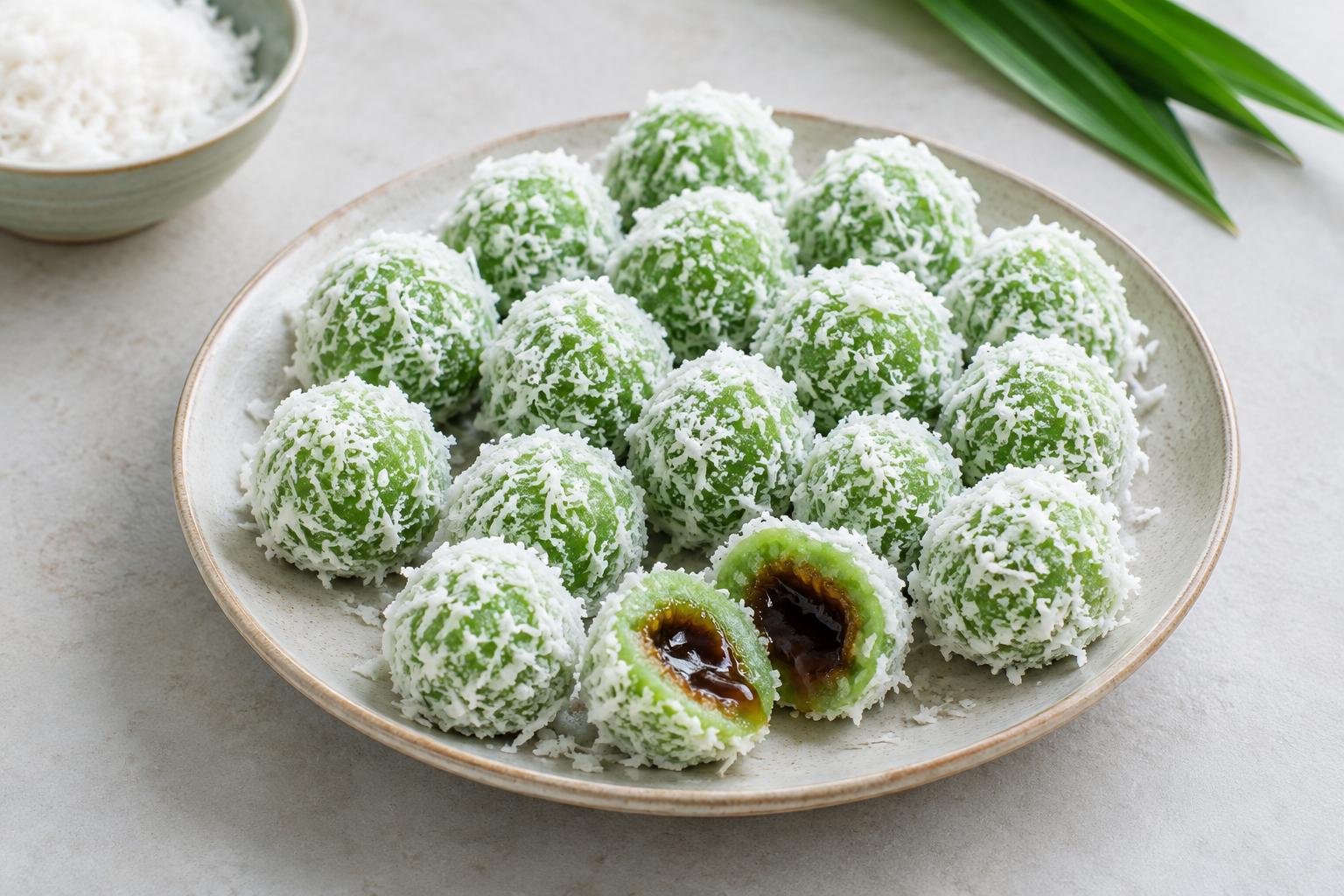
Onde-onde is a small kuih (snack or sweet treat) with a striking contrast: elastic dough made from glutinous rice flour, fragrant pandan and gula melaka that turns soft and syrupy after cooking. The balls are coated in fresh grated coconut. Together, the flavours are sweet, green and mildly savoury; the coconut makes them less sticky and gives each bite a soft, moist texture.
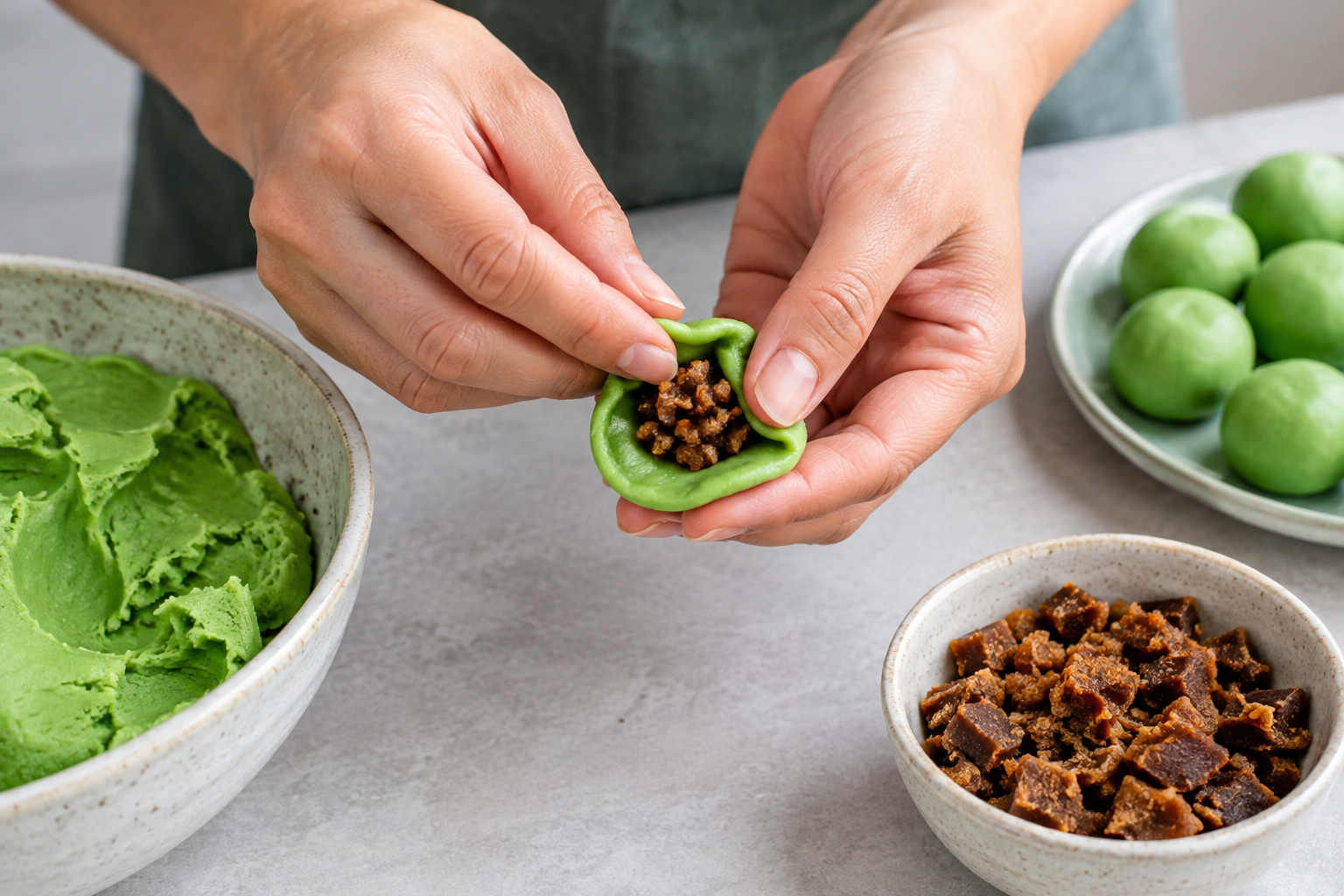
The name and shape vary by region and country. In Malaysia and Singapore, onde-onde often refers to this type of ball made with palm sugar and coconut. In Indonesia, a similar glutinous rice snack with gula jawa is also known as klepon; there, onde-onde can refer to a different snack. So the names are not interchangeable everywhere. Gula melaka is Malaysian palm sugar, usually sold in blocks. Chop it small enough to fit in the centre of the balls: large pieces make it harder to seal the dough properly.
Glutinous rice flour is not the same as regular rice flour. Its high starch content gives the dough its characteristic stretchy, soft texture after cooking. Add the water gradually: the right amount depends on the flour and the strength of the pandan extract. The dough should be pliable and easy to seal without deep cracks, but it shouldn’t stick to your hands. Seal each ball carefully; a small hole can let the sugar escape during cooking. The balls are cooked once they float to the surface. Don’t let them cook for longer than necessary, or they’ll become more fragile.
Pandan has a grassy, vanilla-like aroma and a natural green colour that can vary depending on the extract. Use unsweetened pandan extract; pandan paste is often more concentrated and may contain colouring or sugar, so follow the instructions on the label. You can also make the balls without pandan, leaving them uncoloured, but they won’t have that distinctive aroma. Fresh coconut is best for a soft, juicy coating. It can be hard to find outside its season; thawed frozen coconut is a good alternative. Desiccated coconut is drier and gives a different texture.
Serve the onde-onde on the day you make them, at room temperature or still slightly warm, so the sugar inside stays soft. They go well with tea or coffee and are small enough to serve after a meal. If you want to prepare them ahead, you can keep the unfilled dough balls covered for a short while as you bring a pan of water to the boil. The cooked balls are best fresh; when reheated, the coconut can dry out and the syrup can run out of the centre.
 Main course

