ABOUT THIS RECIPESteamed layer by layer
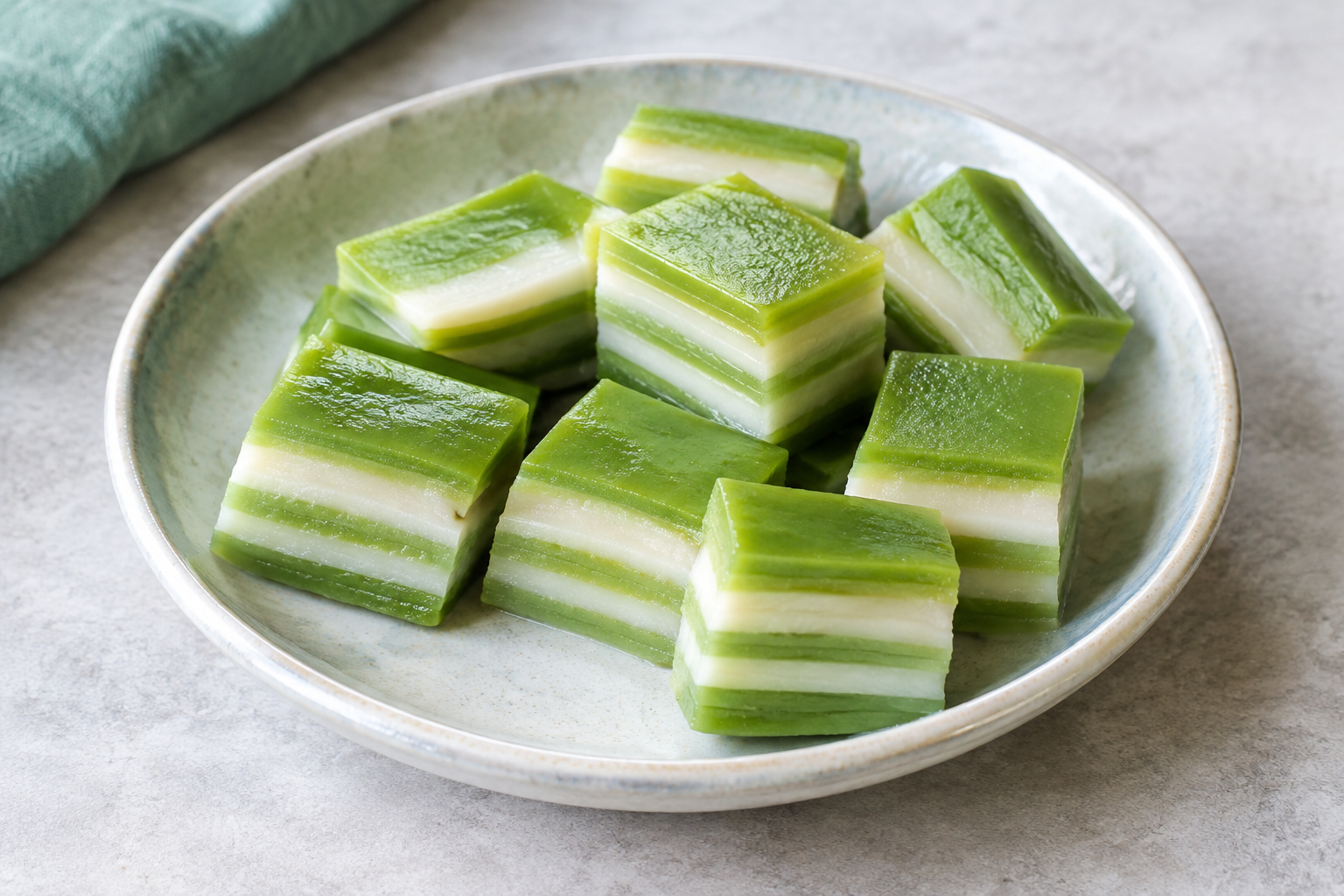
Kuih lapis literally means layer cake; the name is used for various steamed cakes in Southeast Asia. This version builds its layers from rice flour, tapioca flour and coconut milk. The rice flour gives the cake its body, while the tapioca flour lends it a gentle springiness. The result isn’t light like a baked cake, but soft and a little chewy. Coconut gives it a rounded flavor; pandan adds a distinctive green aroma that brings to mind vanilla with grassy, floral notes.
Pandan extract is a practical choice for the green stripes, since it provides both flavor and color at once. Use an extract without added sugar if available, and add it gradually: the color will become a little less vibrant as it steams. The other half of the batter stays uncolored and forms the coconut layers. Pandan leaves can also be used, but you’ll need to make your own extract, which makes it harder to measure the liquid. Don’t use a thick pandan paste without checking the amount of liquid; some varieties are highly concentrated.
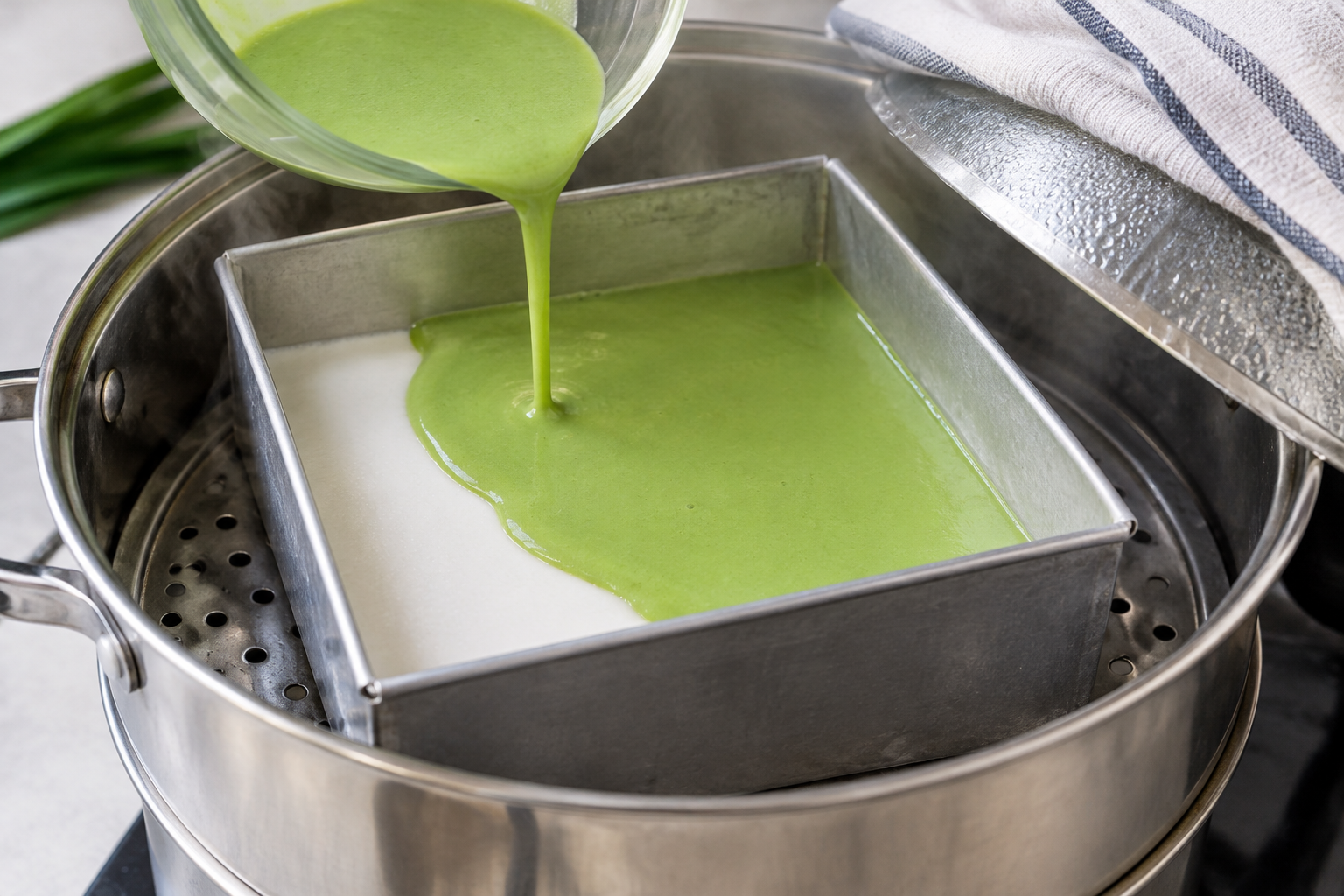
The layers are steamed separately so the batter doesn’t turn into one cake. Each layer should become just firm and glossy before the next one goes on. Keeping the layers an even thickness helps the cake cook through evenly. Keep the steamer at a steady temperature, but don’t let the water touch the bottom of the cake pan. Condensation can cause holes or a wet surface; wrapping a cloth around the lid catches drips. Give the batter a quick stir before each scoop so the flour doesn’t settle to the bottom.
A square pan makes it easy to cut the cake into squares or diamonds later. Lightly grease the pan and line only the base with baking paper; this keeps the sides neat while allowing you to unmold the cake once it has cooled. Let it cool completely before cutting. A lightly greased knife helps, but wipe it clean between cuts to keep the white and green layers distinct. Serve the pieces at room temperature, when their elastic texture is most noticeable.
This cake is great to make ahead. Store it covered in the fridge and eat it within three days. Chilling makes steamed cakes firmer, so let the portion you want come to room temperature before serving; you can also steam it again briefly and gently, until the cake feels soft again. Serve small pieces with tea or coffee, or as part of an assortment of sweet kuih. Since the flavor is mild, a small portion works well alongside other sweets without needing any extra sauce.
 Main course

