ABOUT THIS RECIPEA green crêpe with dark palm sugar
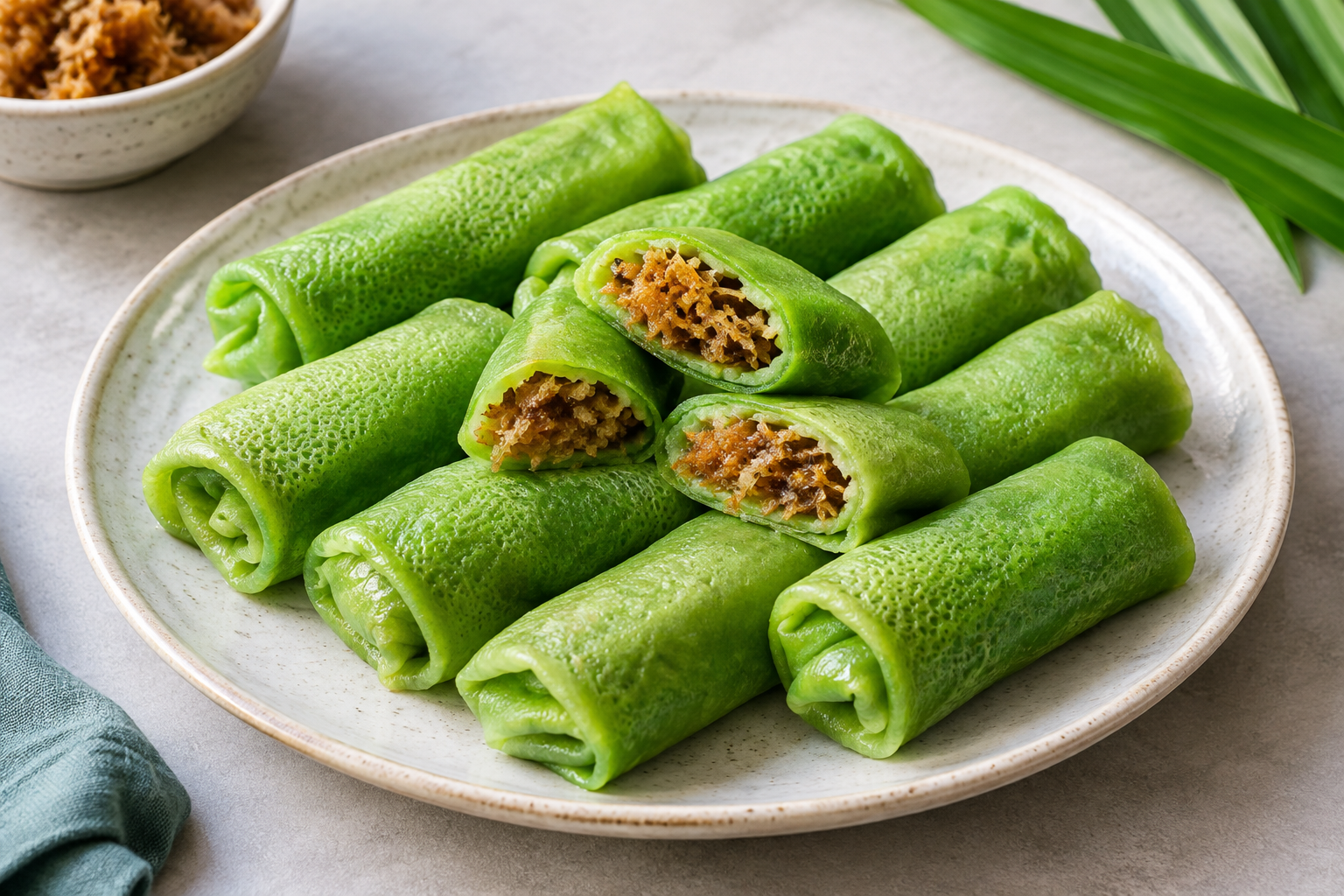
Kuih ketayap consists of thin, green crêpes filled with grated coconut and gula melaka, Malaysian palm sugar. The flavor is fragrant and well-rounded: pandan gives it a grassy, vanilla-like aroma, while the palm sugar adds a deep caramel flavor. The coconut stays soft and slightly fibrous, so the filling doesn’t turn into a smooth paste. The crêpes are made to be rolled, so they’re thinner and more supple than a sturdy Dutch pancake.
Traditionally, the color and aroma come from pandan leaves. In this recipe, pandan extract provides a practical, easy-to-measure flavor without the need for a blender. Strength varies by brand, so start with the stated amount and only add more if the aroma is barely noticeable in the batter. A subtle green color is enough; there’s no need for food coloring. Gula melaka is available at Asian grocery stores. If you can’t find it, dark palm sugar works well; regular brown sugar tastes a little different, but can also be used.
For the filling, the palm sugar needs to dissolve and most of the liquid should be absorbed by the coconut. That way, the mixture stays moist without syrup running out of the rolled crêpe. Fresh or thawed grated coconut is best. Dried coconut also works, but absorbs more liquid and gives a drier bite; if the coconut is still firm, add an extra tablespoon of water while cooking. A piece of pandan leaf adds extra aroma, but remove it from the pan before filling the crêpes.
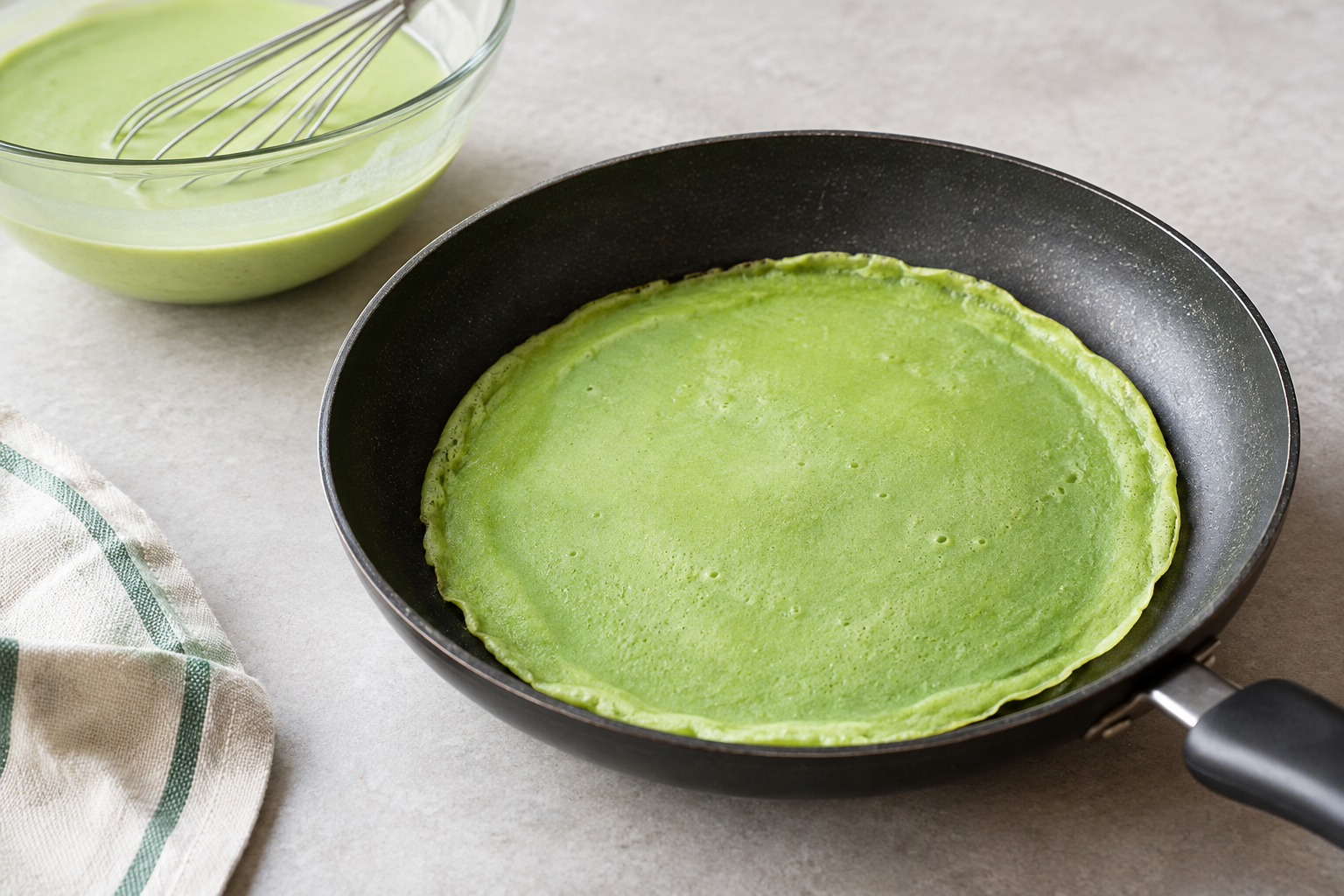
Thin batter and moderate heat matter more than a high temperature. If the crêpes brown too quickly, the edges become stiff and tear when rolled. A good crêpe is just set, supple, and at most lightly golden underneath. If needed, let the pan cool briefly between crêpes. Fill them while they’re still warm and pliable, but don’t let the coconut filling get boiling hot; the rolls will be more comfortable to handle.
Serve kuih ketayap as a dessert or with tea, at room temperature or still slightly warm. It’s a different type of kuih from kuih seri muka: that usually consists of a layer of glutinous rice topped with a pandan layer, while ketayap is a filled crêpe. Cover any leftover rolls and refrigerate them within two hours of preparation. Eat them within two days; if you like, warm them briefly in a covered pan over low heat so the crêpes become supple without drying out.
 Main course

