ABOUT THIS RECIPEThe tofu is the star
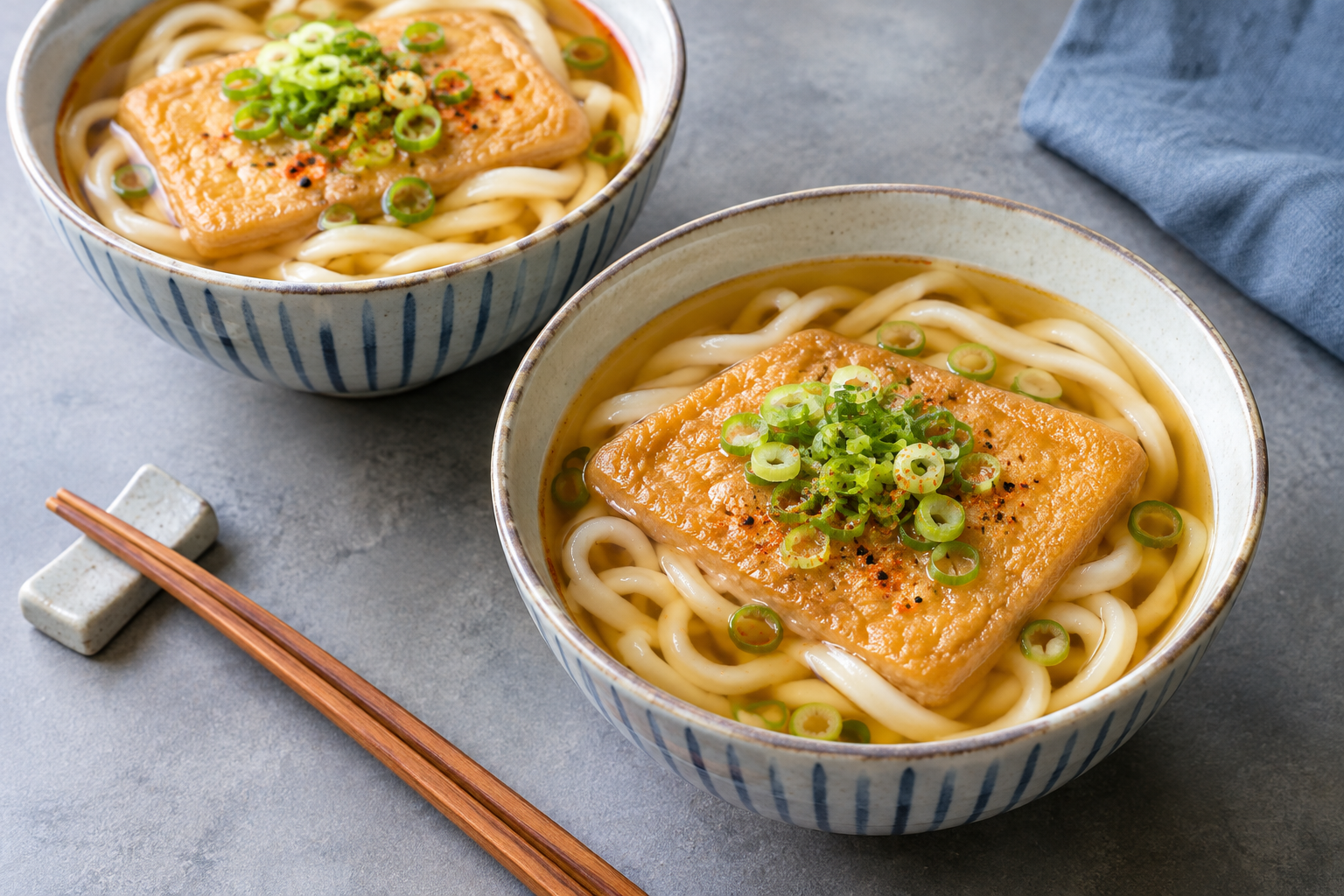
Kitsune udon is often associated with the Kansai region, and Osaka in particular. Kitsune means fox; in Japan, the name is linked to fried tofu, a much-loved topping. The dish itself is simple: udon in dashi, topped with aburaage that is seasoned separately. The combination of soft noodles, clear broth and sweet-and-salty tofu makes every bite a little different, without the need for lots of toppings.
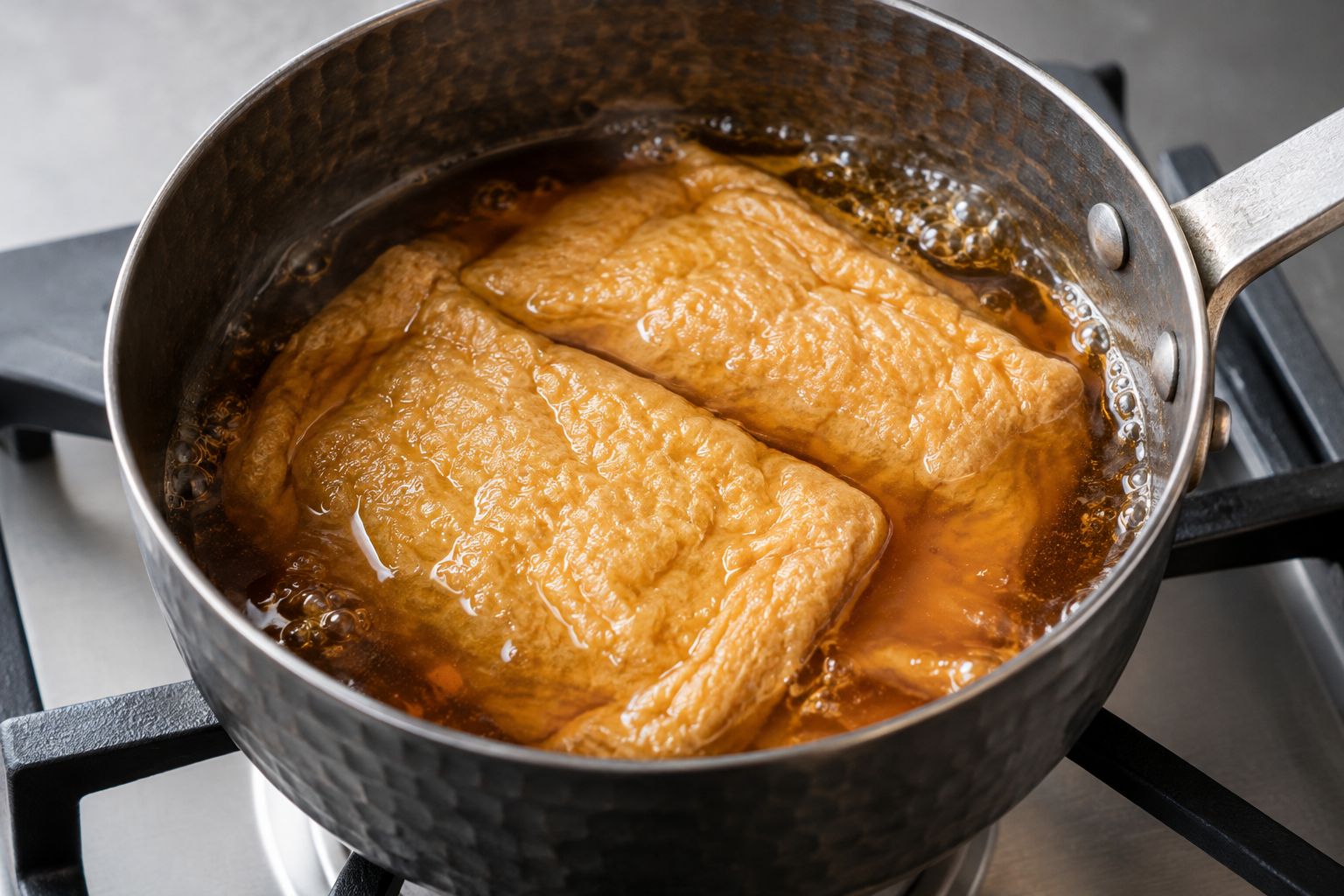
Aburaage are thin slices of tofu that are deep-fried, giving them a light, airy texture. In this version, they are gently simmered with soy sauce, mirin and sugar. They soak up the flavor while still tasting like tofu, rather than becoming just a sweet garnish. Pouring boiling water over them briefly removes some of the surface oil; it’s a useful step if the tofu feels very oily, but there’s no need to squeeze the slices.
The dashi is made with kombu and katsuobushi: dried bonito flakes. Kombu adds gentle, rounded umami, while bonito brings a savory, slightly smoky flavor. Let the kombu steep in cold water and heat it gently; boiling it hard can make the broth cloudy and its flavor less refined. Add the bonito only after taking the pan off the heat, then strain the broth without pressing the flakes. For a quicker weeknight version, instant dashi prepared according to the package directions can stand in for the homemade broth.
In Kansai, the broth is generally lighter in color than in some other Japanese udon styles, partly because light soy sauce is used. Light doesn’t mean bland: kombu, bonito and a measured amount of soy sauce give the broth depth. Light soy sauce is often saltier than regular Japanese soy sauce, so taste before adding extra salt. If you use regular soy sauce, the broth will be darker, but the dish will still be well balanced if you measure carefully.
Choose fresh or frozen udon for a soft, elastic bite; cook them according to the package directions and briefly rinse them after cooking if they feel starchy. The soup is best as soon as the noodles and broth come together, since udon will otherwise absorb the liquid. Serve with thinly sliced spring onions and, if you like, a pinch of shichimi for a little heat. Leftover broth and tofu can be stored separately, covered, in the refrigerator and reheated thoroughly; it’s best to store the noodles separately so they don’t turn mushy.
 Main course

