ABOUT THIS RECIPEPotatoes in a spiced sauce
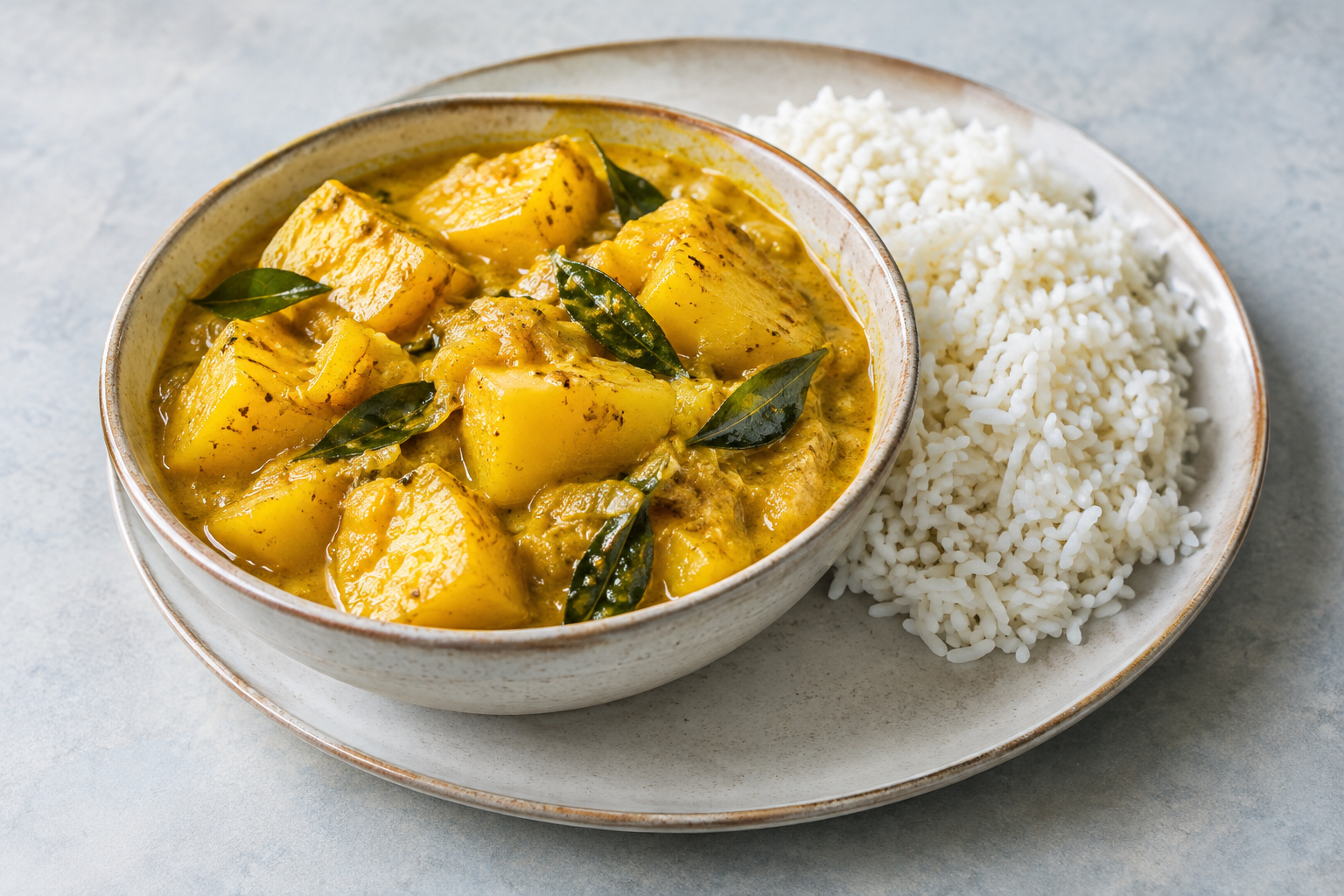
Kari kentang means potato curry; in Malaysia, mamak often refers to eateries and dishes associated with the Malaysian Indian Muslim community. The cuisine has many variations, and potato curry is no exception—it doesn’t have one fixed recipe. This version keeps potato as the main ingredient and builds its flavor with onion, garlic, ginger, curry leaves and spices. Coconut milk rounds out the sauce, while lime provides a fresh contrast at the end.
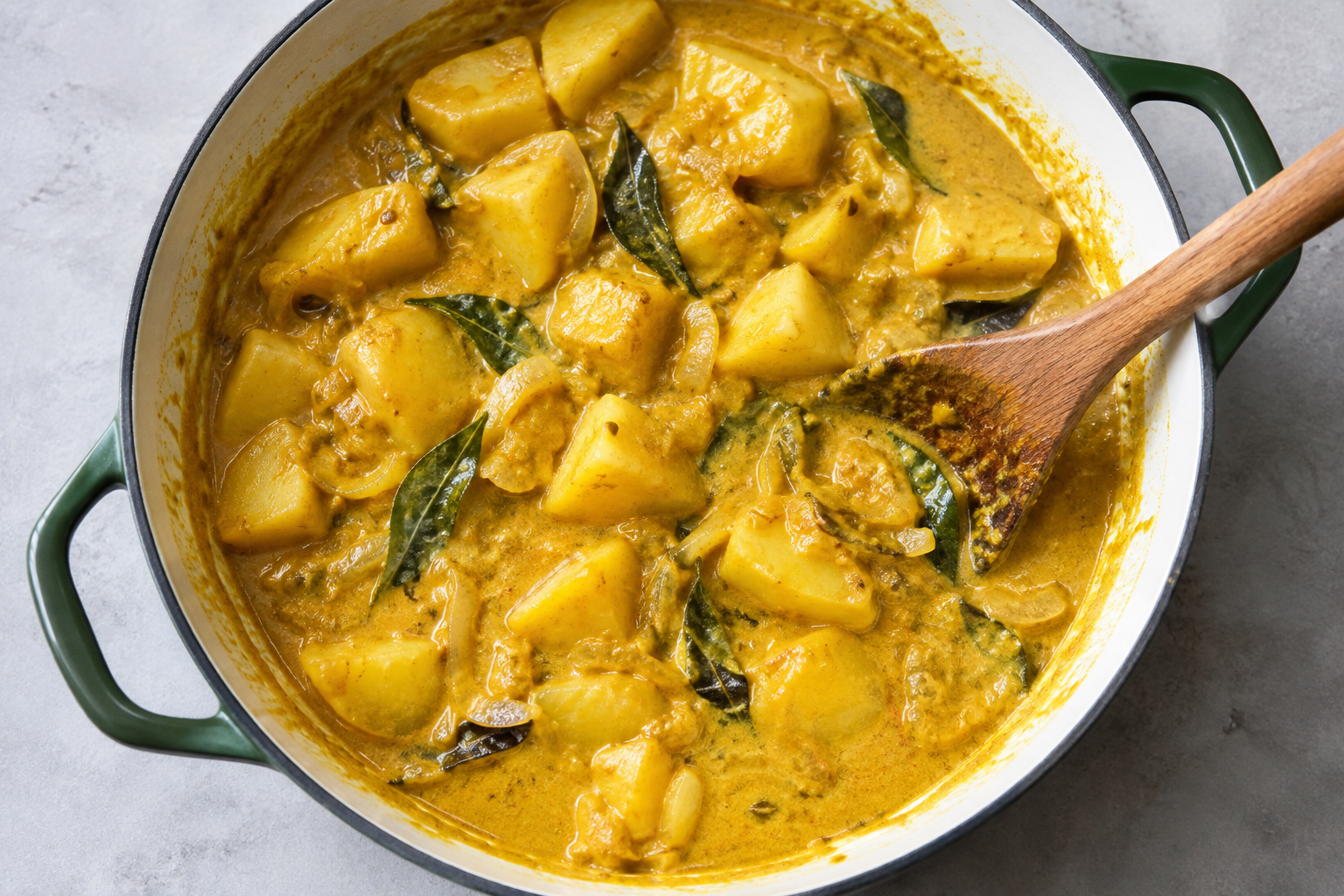
For best results, choose waxy potatoes so the pieces hold their shape as they cook. Peel them and cut them into pieces about three centimeters across; evenly sized pieces cook more evenly. Potatoes are available year-round. New potatoes are an option in spring and summer, but they are often smaller and may cook faster, so check them sooner. Floury potatoes make the sauce a little thicker, but stir carefully to keep the pieces from falling apart.
Curry leaves have their own citrusy, aromatic flavor and are not the same as bay leaves. Fresh or frozen leaves work well; if they’re unavailable, leave them out rather than substituting bay leaves. Use a Malaysian or Indian curry powder you enjoy, and adjust the amount of chili powder to your taste. Curry powders vary in heat and composition, so taste the sauce toward the end and add salt or more lime if needed.
The spices should fry briefly in the oil to release their aroma, but they shouldn’t darken: burnt spices taste bitter. Once the coconut milk is added, the potatoes simmer gently in the sauce. Leaving the pan uncovered lets the kari reduce and thicken, so the flavors cling to the potatoes instead of disappearing into a thin broth. Stir along the bottom of the pan now and then, and add a splash of water if the sauce thickens before the potatoes are tender.
Serve the kari as a main course with steamed rice or roti. Rice soaks up the sauce, while roti is handy for mopping up the last spiced bits on the plate. A bowl of cucumber or a simple raw vegetable salad makes a refreshing side, but isn’t essential. Once cooled, store leftovers in a sealed container in the refrigerator and reheat thoroughly in a pan over low heat; stir gently and add a little water if the sauce has thickened.
 Main course

